
×
 
 Back to all courses

Certified Information Systems Auditor (CISA) - Feb 2026 Intake

0%

Overview

Embark on a transformative journey with our comprehensive CISA course, meticulously designed to equip you with the knowledge and skills needed to conquer the ISACA CRISC Exam. Our mission is clear: to ensure your readiness for CISA certification and empower you to effectively manage the risks faced by your organization. Enrol now to enhance your skills and advance your career through this comprehensive CISA course in Singapore.

The course is prepared and delivered based on content from the ISACA CISA (Certified Information Systems Auditor) Review Manual 27th edition, making it an excellent resource for anyone who is seeking CISA certification in Singapore. The course covers five (5) domains, including Information System Auditing Process; Management and Governance of IT; Information Systems Acquisition, Implementation, and Development; Information Systems Operation; and Business Resilience and Protection of Information Assets.

For more information, please click here.

Course Description & Learning Outcomes

The CISA course is conducted over four days, and the content is organised into five domains. Topics covered in each of the domains are as shown below:

Domain 1: Information System Auditing Process

  • Planning

    - IS Audit Standards, Guidelines, and Codes of Ethics

    - Types of Controls

    - Types of Audits and Assessments

    - Risk-Based Audit Planning

    - Business Processes

  • Execution

    - Data Analytics

    - Quality Assurance and Improvement of the Audit Process

    - Sampling Methodology

    - Audit Evidence Collection Techniques

    - Audit Project Management

    - Reporting and Communication and Reporting Techniques


Domain 2: Governance and Management of IT 

  •  IT Governance

    - IT Strategy and IT Governance

    - IT-Related Frameworks

    - IT Policies, Procedures and Standards

    - Organisational Structure

    - Enterprise Architecture

    - Enterprise Risk Management

    - Maturity Models

    - Organisation Affecting Laws, Regulations, and Industry Standards

  • IT Management

    - IT Resource Management

    - IT Service Provider Management and Acquisition

    - IT Performance Monitoring and Reporting

    - Quality Assurance and Quality Management of IT

Domain 3: Information Systems Acquisition, Development and implementation 

  • Quality Assurance and Quality Management of IT

    - Project Management and Governance

    - Feasibility Analysis and Business Case

    - System Development Methodologies

    - Control Identification and Design

  • Implementation of Information Systems

    - Testing Methodologies

    - Configuration and Release Management

    - System Migration, Infrastructure Deployment, and Data Conversion

    - Post-implementation Review

Domain 4: Business Resilience and Information Systems Operation

  • Information Systems Operations

    - Common Technology Components

    - IT Asset Management

    - Production Process Automation and Job Scheduling

    - System Interfaces

    - End-User Computing

    - Data Governance

    - Systems Performance Management

    - Problem and Incident Management

    - Configuration, Change, Release, and Patch Management

    - IT Service Level Management

    - Database Management

  •  Business Resilience

    - Business Impact Analysis (BIA)

    - System Resiliency

    - Data Backup, Storage, and Restoration

    - Business Continuity Plan (BCP)

    - Disaster Recovery Plans (DRP)

Domain 5: Protection of Information Assets 

  • Information Asset Security and Control

    - Information Asset Security Frameworks, Standards, and Guidelines

    - Privacy Principles

    - Environmental Controls and Physical Access

    - Identity and Access Management

    - Network and End-Point Security

    - Data Classification

    - Data Encryption and Encryption-Related Techniques

    - Public Key Infrastructure (PKI)

    - Web-Based Communication Techniques

    - Virtualised Environments

    - Wireless, Mobile, and Internet-of-Things (IoT) Devices

  •  Security Event Management

    - Security Awareness Programs and Trainings

    - Information System Attack Techniques and Methods

    - Security Testing Techniques and Tools

    - Security Monitoring Techniques and Tools

    - Incident Response Management

    - Forensics and Evidence Collection

At the end of this course you will:

- Understand the methodology, phases and activities required to plan, assess risk, conduct an audit and communicate the audit progress, findings and recommendations, including relevant considerations for CISA certification in Singapore.

- Understand the methodology and activities required for IT Strategy Alignment, IT Organisational structure, Implementation and Management of T policies and policies and Practices Compliance to regulatory and legislation requirements and knowledge to evaluate their effectiveness.

- Understand the definitions, methodology and activities required for systems development life cycle, systems implementation and knowledge required to evaluate their effectiveness.

- Understand the definitions, methodology and phases involved in Business continuity, IT Service Operations.

- Understand the components of Physical Security, Logical Access Security, data classification, data life cycle, Security Controls, Threat and Vulnerability Assessment, Security Testing, Security Operations, Security Incident Process, and evaluate their effectiveness, aligning with the principles covered in a CISA course.

Schedule

Start Date: 23 Feb 2026, Monday
End Date: 26 Feb 2026, Thursday

Duration: 4 Days, 32.5 hours Timing: 9am - 6pm Delivery Modes: Facilitated Classroom / Virtual Training

Location: 3 Kallang Jct, #04-02 Vanguard Campus, Singapore 339265, 339265

Pricing

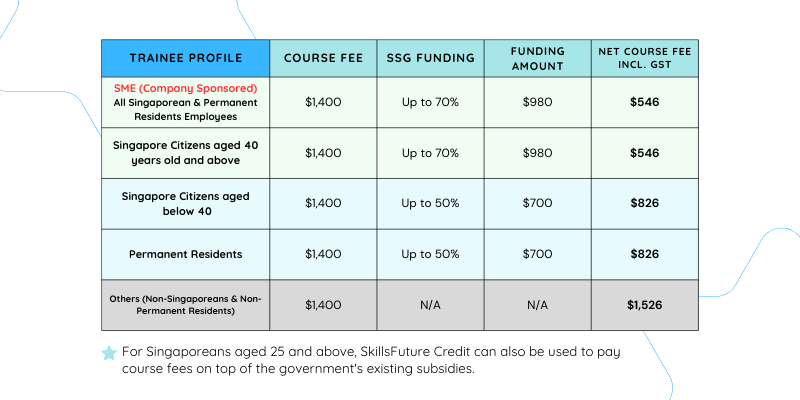
Course fees: If you meet the eligibility criteria, course fees can be subsidised by up to 70%. Moreover, SkillsFuture Credit can be applied to cover course fees in addition to existing government subsidies.

Course Pricing

Skills Covered

PROFICIENCY LEVEL GUIDE
Beginner: Introduce the subject matter without the need to have any prerequisites.
Proficient: Requires learners to have prior knowledge of the subject.
Expert: Involves advanced and more complex understanding of the subject.

  • Cybersecurity (Proficiency level: Expert)
 Back to all courses

CompTIA Security+ - May 2026 Intake

0%

Overview

CompTIA Security+ is the pinnacle of cybersecurity, including the most in-demand skills in zero trust, current threats, risk, automation, IoT, and more. Once you are certified, you will grasp the fundamental skills required for career success – and employers will notice.

The CompTIA Security+ examination certifies that you possess the necessary abilities and knowledge to:

- Monitor and protect hybrid environments that include mobile, IoT, cloud, and operational technologies.

- Demonstrate an understanding of applicable policies and regulations, including risk, compliance, and governance concepts.

- Assess the security posture of an enterprise environment and recommend and implement appropriate security solutions.

- Detect, analyse, and respond to security problems and events.

CompTIA Security+ is ISO 17024 compliant and has been authorised by the US Department of Defence to fulfil directive 8140/8570.01-M criteria. ANSI certification is valued by regulators and governments because it instils trust and confidence in the outcomes of an approved programme. Since 1 Jan 2011, over 2.3 million CompTIA ANSI/ISO-accredited examinations have been given.

Course Description & Learning Outcomes

Course Outline

  1. Security Fundamentals

    - Information Security Controls & Cycle

    - Fundamentals of Cryptography

    - Fundamentals of Security Policy

    - Methods of Authentication

  1. Identifying Security Threats and Vulnerabilities

    - Malware

    - Social Engineering

    - Software-Based Threats

    - Network-Based Threats

    - Physical Vulnerabilities and Threats

    - Wireless Vulnerabilities and Threats

  1. Managing Data, Application, and Host Security

    - Manage Data Security

    - Manage Application Security

    - Manage Device and Host Security

    - Manage Mobile Security

  1. Implementing Network Security

    - Configure Security Parameters on Network Devices and Technologies

    - Network Design Components and Elements

    - Secure Wireless Traffic

    - Apply Principles of Secure Network Administration

    - Implement Networking Services and Protocols

  1. Implementing Account Management, Access Control and Authentication

    - Implement Account Management Security Controls

    - Authentication Services and Access Control

  1. Managing Certificates

    - Install a Certificate Authority (CA) Hierarchy

    - Enrol Certificates

    - Secure Network Traffic by Using Certificates

    - Restore and Back Up Certificates and Private Keys

    - Revoke and Renew Certificates

    - Restore Certificates and Private Keys

  2. Implementing Compliance and Operational Security

    - Physical Security

    - Legal Compliance

    - Security Training and Awareness

    - Integrate Systems and Data with Third Parties

  3. Management of Risk

    - Risk Analysis

    - Implement Vulnerability Assessment Tools and Techniques

    - Scan for Vulnerabilities

    - Mitigation and Deterrent Techniques

  4. Managing and Troubleshooting Security Incidents

    - Recover from a Security Incident

    - Respond to Security Incidents

  5. Business Continuity and Disaster Recovery Planning

    - Business Continuity

    - Plan for Disaster Recovery

Threats, Vulnerabilities & Mitigations

This course focuses on responding to common threats, security incidents, vulnerabilities, and cyberattacks, as well as effective mitigation strategies and safeguarding hybrid settings.

Security Architecture

Includes security implications of various architecture models, enterprise infrastructure security concepts, and data protection measures.

General Security Concepts

Includes fundamental cybersecurity concepts and language to lay the groundwork for security controls reviewed throughout the examination.

Security Program Management & Oversight

Updated to better represent the communication and reporting abilities necessary for Security+ job responsibilities in compliance, governance, assessment, security awareness and risk management.

Security Operations

This includes implementing and improving security and vulnerability management approaches, as well as understanding the security implications of proper software, hardware, and data management.

Fo more information, please click here.

Schedule

Start Date: 11 May 2026, Monday
End Date: 15 May 2026, Friday

Duration: 5 Days, 40 hours Timing: 9am - 6pm Delivery Modes: Facilitated Classroom / Virtual Training

Location: 3 Kallang Junction, #04-02 Vanguard Campus, S 339265, 339265

Pricing

Course fees: If you meet the eligibility criteria, course fees can be subsidised by up to 70%. Moreover, SkillsFuture Credit can be applied to cover course fees in addition to existing government subsidies.

Course Pricing

Skills Covered

PROFICIENCY LEVEL GUIDE
Beginner: Introduce the subject matter without the need to have any prerequisites.
Proficient: Requires learners to have prior knowledge of the subject.
Expert: Involves advanced and more complex understanding of the subject.

  • Cybersecurity (Proficiency level: Proficient)
 Back to all courses

CompTIA Security+ - Feb 2026 Intake

0%

Overview

CompTIA Security+ is the pinnacle of cybersecurity, including the most in-demand skills in zero trust, current threats, risk, automation, IoT, and more. Once you are certified, you will grasp the fundamental skills required for career success – and employers will notice.

The CompTIA Security+ examination certifies that you possess the necessary abilities and knowledge to:

- Monitor and protect hybrid environments that include mobile, IoT, cloud, and operational technologies.

- Demonstrate an understanding of applicable policies and regulations, including risk, compliance, and governance concepts.

- Assess the security posture of an enterprise environment and recommend and implement appropriate security solutions.

- Detect, analyse, and respond to security problems and events.

CompTIA Security+ is ISO 17024 compliant and has been authorised by the US Department of Defence to fulfil directive 8140/8570.01-M criteria. ANSI certification is valued by regulators and governments because it instils trust and confidence in the outcomes of an approved programme. Since 1 Jan 2011, over 2.3 million CompTIA ANSI/ISO-accredited examinations have been given.

Course Description & Learning Outcomes

Course Outline

  1. Security Fundamentals

    - Information Security Controls & Cycle

    - Fundamentals of Cryptography

    - Fundamentals of Security Policy

    - Methods of Authentication

  1. Identifying Security Threats and Vulnerabilities

    - Malware

    - Social Engineering

    - Software-Based Threats

    - Network-Based Threats

    - Physical Vulnerabilities and Threats

    - Wireless Vulnerabilities and Threats

  1. Managing Data, Application, and Host Security

    - Manage Data Security

    - Manage Application Security

    - Manage Device and Host Security

    - Manage Mobile Security

  1. Implementing Network Security

    - Configure Security Parameters on Network Devices and Technologies

    - Network Design Components and Elements

    - Secure Wireless Traffic

    - Apply Principles of Secure Network Administration

    - Implement Networking Services and Protocols

  1. Implementing Account Management, Access Control and Authentication

    - Implement Account Management Security Controls

    - Authentication Services and Access Control

  1. Managing Certificates

    - Install a Certificate Authority (CA) Hierarchy

    - Enrol Certificates

    - Secure Network Traffic by Using Certificates

    - Restore and Back Up Certificates and Private Keys

    - Revoke and Renew Certificates

    - Restore Certificates and Private Keys

  2. Implementing Compliance and Operational Security

    - Physical Security

    - Legal Compliance

    - Security Training and Awareness

    - Integrate Systems and Data with Third Parties

  3. Management of Risk

    - Risk Analysis

    - Implement Vulnerability Assessment Tools and Techniques

    - Scan for Vulnerabilities

    - Mitigation and Deterrent Techniques

  4. Managing and Troubleshooting Security Incidents

    - Recover from a Security Incident

    - Respond to Security Incidents

  5. Business Continuity and Disaster Recovery Planning

    - Business Continuity

    - Plan for Disaster Recovery

Threats, Vulnerabilities & Mitigations

This course focuses on responding to common threats, security incidents, vulnerabilities, and cyberattacks, as well as effective mitigation strategies and safeguarding hybrid settings.

Security Architecture

Includes security implications of various architecture models, enterprise infrastructure security concepts, and data protection measures.

General Security Concepts

Includes fundamental cybersecurity concepts and language to lay the groundwork for security controls reviewed throughout the examination.

Security Program Management & Oversight

Updated to better represent the communication and reporting abilities necessary for Security+ job responsibilities in compliance, governance, assessment, security awareness and risk management.

Security Operations

This includes implementing and improving security and vulnerability management approaches, as well as understanding the security implications of proper software, hardware, and data management.

Fo more information, please click here.

Schedule

Start Date: 09 Feb 2026, Monday
End Date: 13 Feb 2026, Friday

Duration: 5 Days, 40 hours Timing: 9am - 6pm Delivery Modes: Facilitated Classroom / Virtual Training

Location: 3 Kallang Junction, #04-02 Vanguard Campus, S 339265, 339265

Pricing

Course fees: If you meet the eligibility criteria, course fees can be subsidised by up to 70%. Moreover, SkillsFuture Credit can be applied to cover course fees in addition to existing government subsidies.

Course Pricing

Skills Covered

PROFICIENCY LEVEL GUIDE
Beginner: Introduce the subject matter without the need to have any prerequisites.
Proficient: Requires learners to have prior knowledge of the subject.
Expert: Involves advanced and more complex understanding of the subject.

  • Cybersecurity (Proficiency level: Proficient)
 Back to all courses

Collaborative IP for the Innovation Ecosystem of a Smart Nation

0%

Overview

Collaboration is the new competitive edge – and intellectual property (IP) plays a vital role in making it work. Whether you’re in R&D, business, or the innovation ecosystem, your ability to manage intellectual assets is central to success. This focused webinar reveals how having the right IP skillset can strengthen collaborations, reduce risks, and unlock new growth opportunities in the digital economy.

Join us to learn how you can:

  • Manage and share intellectual assets to build trust in collaborations

  • Use IP skills as a strategic tool to unlock value in partnerships

  • Avoid common pitfalls and turn collaborations into a growth advantage

*This session is HIGHLY recommended for anyone in the tech industry who is involved in innovation and managing growth in their organisations. 

Course Description & Learning Outcomes

Learning Objectives

  1. Introduction of IP

  2. IP in the Digital Economy

  3. Scenarios of Collaborative IP

  4. Support for PMEs and Companies from NTUC PME

Schedule

Date: 23 Oct 2025, Thursday
Time: 2:00 PM - 3:10 PM (GMT +8:00) Kuala Lumpur, Singapore
Location: Online

Agenda

Day/TimeAgenda Activity/Description
2:00pm – 2:45pm- Introduction of IP - IP in the Digital Economy - Scenarios of Collaborative IP
2:45pm – 2:55pmNTUC PME: Supporting PMEs and Companies
2:55pm – 3:10pmQ&A

Pricing

Course fees: Complimentary

Skills Covered

PROFICIENCY LEVEL GUIDE
Beginner: Introduce the subject matter without the need to have any prerequisites.
Proficient: Requires learners to have prior knowledge of the subject.
Expert: Involves advanced and more complex understanding of the subject.

  • Stakeholder Management (Proficiency level: Beginner)

Speakers

Trainer's Profile:

Ng Chong Yuan, Head of Faculty, IPOS International
Ng Chong Yuan

Ng Chong Yuan is a Singapore-qualified Advocate & Solicitor with diverse in-house experience in technology businesses spanning about a decade. Currently, as the Head of Faculty at IPOS International, he not only teaches but also oversees the curation and development of the Academy’s courses designed for university students and working professionals seeking to acquire or deepen their skills in the practice and management of intellectual property (IP) and trade secrets. Prior to joining IP Academy, he was practising law at an international law firm, specializing in Intellectual Property (IP), Technology and Commercial Laws.

Partners

NTUC PME
 Back to all courses

ITIL® Foundation - May 2026 Intake

0%

Overview

ITIL® Foundation introduces candidates to the key concepts of digital product and service management and establishes a common language for effective practice across organizations. It provides an overview of the ITIL framework, including its guiding principles, core models and fundamental concepts and explains how these elements are used to create, deliver and continually improve products and services.

ITIL Foundation enables candidates to understand how value is co-created through the effective management of products and services, and how organizations apply ITIL guidance to improve performance, collaboration and outcomes. It also explains how the ITIL framework has evolved to support modern technologies, data-driven decision-making, automation, artificial intelligence and contemporary ways of working, while remaining adaptable to different organizational contexts and levels of maturity.

Course Description & Learning Outcomes

Course Outline

  1. ITIL Terms and Definitions

    • Product and Service: Defining digital product and service management, product, service, digital products/services, continual improvement, the Product and Service Lifecycle, goods, utility, warranty, user experience, and sustainability.

    • Experience, Strategy and Transformation: Defining experience, trust, UX, CX, experience level agreements, human-centred design, strategy, business/digital strategy, vision, mission, VUCA, leadership, change, and business as usual (BAU).

    • Service Offerings: Defining and explaining service offerings, interactions, service actions, transfer of goods, and access to resources.

    • Value and Value Co-creation: Defining value, cost, risk, output, and outcome. Explaining the difference between output and outcome and how feedback, utility, and sustainability contribute to co-creation.

    • Service Relationships: Defining organizations, service providers, consumers, and vendors. Understanding the differences between these roles and different relationship types (basic, cooperative, collaborative).

    • Service Management Roles and Concepts: Defining sponsor, customer, user roles, service quality, service level, and Service Level Agreements (SLA).

  2. Four Dimensions of Product and Service Management

    • The Four Dimensions: Listing the dimensions (organizations and people, partners and suppliers, information and technology, value streams and processes).

    • Holistic Approach and External Factors: Understanding the importance of each dimension, the necessity of a holistic approach, and external PESTLE factors (Political, Economical, Social, Technological, Legal, Environmental).

  3. ITIL Product and Service Lifecycle

    • Lifecycle Activities: Listing and understanding the lifecycle activities: discover, design, acquire, build, transition, operate, deliver, and support.

    • Nature of Activities: Understanding that lifecycle activities are non-linear, non-sequential, and iterative.

    • Purpose of Activities: Knowing the specific purpose of each individual activity within the lifecycle (e.g., the purpose of ‘discover’, ‘design’, ‘support’, etc.).

  4. ITIL Value System

    • Value System Components: Knowing the components (Guiding principles, Governance, Value chain, Management practices, Continual improvement) and explaining the system’s purpose.

    • Guiding Principles: Listing the principles and understanding how to use each one (e.g., Focus on value, Start where you are, Think and work holistically).

    • Governance: Defining governance and explaining its enabling nature and activities.

    • Value Chain: Defining value chain, product specifications, incident, release, and continuous integration/deployment. Understanding success metrics and how the operating model is supported by value chain activities.

    • Management Practices: Defining management practices, knowing the groups (general vs. product/service), and understanding the role and benefits of ITIL Practice Guides.

    • Continual Improvement Model: Listing and understanding the steps of the ITIL Continual Improvement Model.

  5. Value Stream Identification, Mapping, and Management

    • Value Stream Concepts: Defining value streams (core and enabling), value stream mapping, and complexity thinking.

    • Application and Mapping: Understanding how to optimize workflows for complexity and the relationship between value stream mapping and management.

  6. ITIL and Artificial Intelligence (AI)

    • AI Fundamentals: Defining AI, AI maturity, GenAI, and Agentic AI.

    • AI in the Lifecycle: Understanding how AI assists in product development, process automation, and how it is leveraged throughout the ITIL value chain.

    • AI Governance: Defining AI governance and understanding the ITIL AI Capability Model.

  7. ITIL and Other Frameworks

    • ITIL and DevOps: Understanding how ITIL collaborates with and complements DevOps practices in the product development lifecycle.

    • ITIL and PRINCE2: Understanding the importance of project management and how ITIL and PRINCE2 work together.

For more information, please click here

Schedule

Start Date: 04 May 2026, Monday
End Date: 06 May 2026, Wednesday

Duration: 3 Days, 22.5 hours Timing: 9am - 5.30pm Delivery Modes: Facilitated Classroom / Virtual Training

Location: 3 Kallang Jct, #04-02 Vanguard Campus, Singapore 339265, 339265

Pricing

Course fees: Please email [email protected] for course fee

Skills Covered

PROFICIENCY LEVEL GUIDE
Beginner: Introduce the subject matter without the need to have any prerequisites.
Proficient: Requires learners to have prior knowledge of the subject.
Expert: Involves advanced and more complex understanding of the subject.

  • Information Systems (Proficiency level: Beginner)
 Back to all courses

ITIL® Foundation (Version 5) - Apr 2026 Intake

0%

Overview

ITIL® Foundation (Version 5) introduces candidates to the key concepts of digital product and service management and establishes a common language for effective practice across organizations. It provides an overview of the ITIL framework, including its guiding principles, core models and fundamental concepts and explains how these elements are used to create, deliver and continually improve products and services.

ITIL Foundation (Version 5) enables candidates to understand how value is co-created through the effective management of products and services, and how organizations apply ITIL guidance to improve performance, collaboration and outcomes. It also explains how the ITIL framework has evolved to support modern technologies, data-driven decision-making, automation, artificial intelligence and contemporary ways of working, while remaining adaptable to different organizational contexts and levels of maturity.

Course Description & Learning Outcomes

Course Outline

  1. ITIL Terms and Definitions

    • Product and Service: Defining digital product and service management, product, service, digital products/services, continual improvement, the Product and Service Lifecycle, goods, utility, warranty, user experience, and sustainability.

    • Experience, Strategy and Transformation: Defining experience, trust, UX, CX, experience level agreements, human-centred design, strategy, business/digital strategy, vision, mission, VUCA, leadership, change, and business as usual (BAU).

    • Service Offerings: Defining and explaining service offerings, interactions, service actions, transfer of goods, and access to resources.

    • Value and Value Co-creation: Defining value, cost, risk, output, and outcome. Explaining the difference between output and outcome and how feedback, utility, and sustainability contribute to co-creation.

    • Service Relationships: Defining organizations, service providers, consumers, and vendors. Understanding the differences between these roles and different relationship types (basic, cooperative, collaborative).

    • Service Management Roles and Concepts: Defining sponsor, customer, user roles, service quality, service level, and Service Level Agreements (SLA).

  2. Four Dimensions of Product and Service Management

    • The Four Dimensions: Listing the dimensions (organizations and people, partners and suppliers, information and technology, value streams and processes).

    • Holistic Approach and External Factors: Understanding the importance of each dimension, the necessity of a holistic approach, and external PESTLE factors (Political, Economical, Social, Technological, Legal, Environmental).

  3. ITIL Product and Service Lifecycle

    • Lifecycle Activities: Listing and understanding the lifecycle activities: discover, design, acquire, build, transition, operate, deliver, and support.

    • Nature of Activities: Understanding that lifecycle activities are non-linear, non-sequential, and iterative.

    • Purpose of Activities: Knowing the specific purpose of each individual activity within the lifecycle (e.g., the purpose of ‘discover’, ‘design’, ‘support’, etc.).

  4. ITIL Value System

    • Value System Components: Knowing the components (Guiding principles, Governance, Value chain, Management practices, Continual improvement) and explaining the system’s purpose.

    • Guiding Principles: Listing the principles and understanding how to use each one (e.g., Focus on value, Start where you are, Think and work holistically).

    • Governance: Defining governance and explaining its enabling nature and activities.

    • Value Chain: Defining value chain, product specifications, incident, release, and continuous integration/deployment. Understanding success metrics and how the operating model is supported by value chain activities.

    • Management Practices: Defining management practices, knowing the groups (general vs. product/service), and understanding the role and benefits of ITIL Practice Guides.

    • Continual Improvement Model: Listing and understanding the steps of the ITIL Continual Improvement Model.

  5. Value Stream Identification, Mapping, and Management

    • Value Stream Concepts: Defining value streams (core and enabling), value stream mapping, and complexity thinking.

    • Application and Mapping: Understanding how to optimize workflows for complexity and the relationship between value stream mapping and management.

  6. ITIL and Artificial Intelligence (AI)

    • AI Fundamentals: Defining AI, AI maturity, GenAI, and Agentic AI.

    • AI in the Lifecycle: Understanding how AI assists in product development, process automation, and how it is leveraged throughout the ITIL value chain.

    • AI Governance: Defining AI governance and understanding the ITIL AI Capability Model.

  7. ITIL and Other Frameworks

    • ITIL and DevOps: Understanding how ITIL collaborates with and complements DevOps practices in the product development lifecycle.

    • ITIL and PRINCE2: Understanding the importance of project management and how ITIL and PRINCE2 work together.

For more information, please click here

Schedule

Start Date: 06 Apr 2026, Monday
End Date: 08 Apr 2026, Wednesday

Duration: 3 Days, 22.5 hours Timing: 9am - 5.30pm Delivery Modes: Facilitated Classroom / Virtual Training

Location: Online

Pricing

Course fees: If you meet the eligibility criteria, course fees can be subsidised by up to 70%. Moreover, SkillsFuture Credit can be applied to cover course fees in addition to existing government subsidies.

Course Pricing

Skills Covered

PROFICIENCY LEVEL GUIDE
Beginner: Introduce the subject matter without the need to have any prerequisites.
Proficient: Requires learners to have prior knowledge of the subject.
Expert: Involves advanced and more complex understanding of the subject.

  • Information Systems (Proficiency level: Beginner)
 Back to all courses

ITIL® 4 Foundation - Mar 2026 Intake

0%

Overview

Our funded ITIL 4 Foundation training will:

  • Familiarise beginners with the framework of ITIL 4 service management and the ways it has developed to take on modern services, technologies and working methods,

  • Act as a guide for users to apply in their professional development, work, and further studies.

  • Analyse the ideas of the service management framework to assist candidates in preparing for the ITIL 4 Foundation exam.

ITIL 4 foundation online training will help beginners to understand how ITIL 4 keeps ITIL updated by transforming most of the fixed ITSM practices in the broader context of value streams , digital transformation and customer experience while embracing the most current working methods, such as Agile, Lean, and DevOps. ITIL 4 aims to ensure that IT-enabled services are managed and governed in an effective, integrated, and coordinated manner. The funded ITIL 4 foundation training can be adopted and adapted for all types of organisations and services.

Course Description & Learning Outcomes

Course Outline

  1. Key Concepts of Service Management

    - Utility, Warranty, Service

    - Customer, Sponsor, User,

    - Risks, Value, Costs, Outputs, Outcomes

    - Service Relationship Management & Service Offering

    2) ITIL Guiding Principles

    - Begin where you are

    - Focus on value

    - Advance iteratively with feedback

    - Promote and collaborate on visibility

    - Work and think holistically

    - Keep it practical and simple

    - Automate and optimise

    3) Four Dimensions of Service Management

    - People and organisations

    - Information and Technology

    - Suppliers and partners

    - Processes and Value Streams

    4) ITIL Service Value System – components, purpose

    5) The interconnection of the Service Value Chain and Value Stream\

    6) Key ITIL Practices, their purpose, and contribution to the service value stream

    - Information Security Management

    - IT Asset Management

    - Relationship Management

    - Supplier Management

    - Event and Monitoring Management

    - Release Management

    - Service Configuration Management

    - Deployment Management

    - Incident Management

    - Problem Management

    - Service Request Management

    - Service Desk

    - Service Level Management

    - Continual Improvement

    - Change Enablement

For more information, please click here

Schedule

Start Date: 23 Mar 2026, Monday
End Date: 25 Mar 2026, Wednesday

Duration: 3 Days, 22.5 hours Timing: 9am - 5.30pm Delivery Modes: Facilitated Classroom / Virtual Training

Location: 3 Kallang Jct, #04-02 Vanguard Campus, Singapore 339265, 339265

Pricing

Course fees: If you meet the eligibility criteria, course fees can be subsidised by up to 70%. Moreover, SkillsFuture Credit can be applied to cover course fees in addition to existing government subsidies.

Course Pricing

Skills Covered

PROFICIENCY LEVEL GUIDE
Beginner: Introduce the subject matter without the need to have any prerequisites.
Proficient: Requires learners to have prior knowledge of the subject.
Expert: Involves advanced and more complex understanding of the subject.

  • Information Systems (Proficiency level: Beginner)
 Back to all courses

ITIL® 4 Foundation - Feb 2026 Intake

0%

Overview

Our funded ITIL 4 Foundation training will:

  • Familiarise beginners with the framework of ITIL 4 service management and the ways it has developed to take on modern services, technologies and working methods,

  • Act as a guide for users to apply in their professional development, work, and further studies.

  • Analyse the ideas of the service management framework to assist candidates in preparing for the ITIL 4 Foundation exam.

ITIL 4 foundation online training will help beginners to understand how ITIL 4 keeps ITIL updated by transforming most of the fixed ITSM practices in the broader context of value streams , digital transformation and customer experience while embracing the most current working methods, such as Agile, Lean, and DevOps. ITIL 4 aims to ensure that IT-enabled services are managed and governed in an effective, integrated, and coordinated manner. The funded ITIL 4 foundation training can be adopted and adapted for all types of organisations and services.

Course Description & Learning Outcomes

Course Outline

  1. Key Concepts of Service Management

    - Utility, Warranty, Service

    - Customer, Sponsor, User,

    - Risks, Value, Costs, Outputs, Outcomes

    - Service Relationship Management & Service Offering

    2) ITIL Guiding Principles

    - Begin where you are

    - Focus on value

    - Advance iteratively with feedback

    - Promote and collaborate on visibility

    - Work and think holistically

    - Keep it practical and simple

    - Automate and optimise

    3) Four Dimensions of Service Management

    - People and organisations

    - Information and Technology

    - Suppliers and partners

    - Processes and Value Streams

    4) ITIL Service Value System – components, purpose

    5) The interconnection of the Service Value Chain and Value Stream\

    6) Key ITIL Practices, their purpose, and contribution to the service value stream

    - Information Security Management

    - IT Asset Management

    - Relationship Management

    - Supplier Management

    - Event and Monitoring Management

    - Release Management

    - Service Configuration Management

    - Deployment Management

    - Incident Management

    - Problem Management

    - Service Request Management

    - Service Desk

    - Service Level Management

    - Continual Improvement

    - Change Enablement

For more information, please click here

Schedule

Start Date: 23 Feb 2026, Monday
End Date: 25 Feb 2026, Wednesday

Duration: 3 Days, 22.5 hours Timing: 9am - 5.30pm Delivery Modes: Facilitated Classroom / Virtual Training

Location: 3 Kallang Jct, #04-02 Vanguard Campus, Singapore 339265, 339265

Pricing

Course fees: If you meet the eligibility criteria, course fees can be subsidised by up to 70%. Moreover, SkillsFuture Credit can be applied to cover course fees in addition to existing government subsidies.

Course Pricing

Skills Covered

PROFICIENCY LEVEL GUIDE
Beginner: Introduce the subject matter without the need to have any prerequisites.
Proficient: Requires learners to have prior knowledge of the subject.
Expert: Involves advanced and more complex understanding of the subject.

  • Information Systems (Proficiency level: Beginner)
 Back to all courses

ITIL® 4 Foundation - Jan 2026 Intake

0%

Overview

Our funded ITIL 4 Foundation training will:

  • Familiarise beginners with the framework of ITIL 4 service management and the ways it has developed to take on modern services, technologies and working methods,

  • Act as a guide for users to apply in their professional development, work, and further studies.

  • Analyse the ideas of the service management framework to assist candidates in preparing for the ITIL 4 Foundation exam.

ITIL 4 foundation online training will help beginners to understand how ITIL 4 keeps ITIL updated by transforming most of the fixed ITSM practices in the broader context of value streams , digital transformation and customer experience while embracing the most current working methods, such as Agile, Lean, and DevOps. ITIL 4 aims to ensure that IT-enabled services are managed and governed in an effective, integrated, and coordinated manner. The funded ITIL 4 foundation training can be adopted and adapted for all types of organisations and services.

Course Description & Learning Outcomes

Course Outline

  1. Key Concepts of Service Management

    - Utility, Warranty, Service

    - Customer, Sponsor, User,

    - Risks, Value, Costs, Outputs, Outcomes

    - Service Relationship Management & Service Offering

    2) ITIL Guiding Principles

    - Begin where you are

    - Focus on value

    - Advance iteratively with feedback

    - Promote and collaborate on visibility

    - Work and think holistically

    - Keep it practical and simple

    - Automate and optimise

    3) Four Dimensions of Service Management

    - People and organisations

    - Information and Technology

    - Suppliers and partners

    - Processes and Value Streams

    4) ITIL Service Value System – components, purpose

    5) The interconnection of the Service Value Chain and Value Stream\

    6) Key ITIL Practices, their purpose, and contribution to the service value stream

    - Information Security Management

    - IT Asset Management

    - Relationship Management

    - Supplier Management

    - Event and Monitoring Management

    - Release Management

    - Service Configuration Management

    - Deployment Management

    - Incident Management

    - Problem Management

    - Service Request Management

    - Service Desk

    - Service Level Management

    - Continual Improvement

    - Change Enablement

For more information, please click here

Schedule

Start Date: 05 Jan 2026, Monday
End Date: 07 Jan 2026, Wednesday

Duration: 3 Days, 22.5 hours Timing: 9am - 5.30pm Delivery Modes: Facilitated Classroom / Virtual Training

Location: 3 Kallang Jct, #04-02 Vanguard Campus, Singapore 339265, 339265

Pricing

Course fees: If you meet the eligibility criteria, course fees can be subsidised by up to 70%. Moreover, SkillsFuture Credit can be applied to cover course fees in addition to existing government subsidies.

Course Pricing

Skills Covered

PROFICIENCY LEVEL GUIDE
Beginner: Introduce the subject matter without the need to have any prerequisites.
Proficient: Requires learners to have prior knowledge of the subject.
Expert: Involves advanced and more complex understanding of the subject.

  • Information Systems (Proficiency level: Beginner)
 Back to all events

Smart Technology Dominance: How Big Tech Defines Future

0%

Overview

In 2025, the world’s largest technology companies are spending record amounts on smart technologies and artificial intelligence - AI. Reports show that Amazon, Alphabet, Microsoft, and Meta together may invest more than US$364 billion this year in AI infrastructure, cloud platforms, and data centers. Investors have welcomed this growth, even though some experts question whether such high spending can last.

At the same time, researchers warn that when only a few companies control most of the AI market, it creates risks for competition, innovation, and governance. These issues affect not only the technology industry but also the wider economy.

This panel brings together experts in smart technologies, AI governance, and investment to discuss how Big Tech’s huge spending on artificial intelligence is changing technology and society.

  • Why are major technology companies investing so heavily in smart technologies, and what does this mean for the technology landscape?

  • How these investments affect venture capital, institutional investors, and startups.

  • Risks of depending on only a few companies to provide most of the world’s smart technology infrastructure.

  • Opportunities and challenges this creates for Singapore and the Asia‑Pacific region as technology and investment come together.

Event Agenda

6pm: Registration · Professional Networking

7pm: Welcome Remarks

710pm: Panel Discussion

745pm: Q&A

815pm: Professional Networking

9pm: End

Event Partner: Asia Institute of Mentoring (AIM) is a non‑profit in Singapore that works to build a strong culture of mentoring across Asia. It supports leaders, entrepreneurs, and professionals through structured programs that focus on leadership, career growth, resilience, well‑being, and the human impact of technology.

As an event partner, AIM shares its mission of growing human potential and promoting inclusive, values‑based leadership, with a focus on AI & Humanity and sustainable leadership.

Linkedin Local™ - Singapore events are live, in-person experiences that bring together LinkedIn members in Singapore.

Brought to you by LinkedIn Local™ - Singapore, these professional events are to educate and inspire, strengthen existing LinkedIn connections and build new ones.

Supporting Image

Schedule

Date: 25 Nov 2025, Tuesday
Time: 6:00 PM - 9:00 PM (GMT +8:00) Kuala Lumpur, Singapore
Location: 32 Carpenter Street, 059911

Speakers

Speaker's Profile:

Xu Tianyu, Generative AI Educator, Chairman - RIMAS GenAI Risk Chapter, Risk and Insurance Management Association of Singapore (RIMAS)
Xu Tianyu

Xu Tianyu is the Head of the Generative AI Risk Chapter at the Risk and Insurance Management Association of Singapore (RIMAS). In this role, he helps organizations understand and manage the risks of using generative AI, while promoting responsible and safe adoption of the technology. He has more than ten years of experience working with technology companies, agencies, and brands. His work covers AI‑driven content, consumer research, and data analytics. Tianyu also runs TYAI, a consultancy focused on human‑AI collaboration, and teaches widely as a bestselling Udemy instructor with over 1,000 hours of practical AI training. Recognised as a LinkedIn Top Voice, he is also the co‑author of Will ChatGPT Take My Job? His leadership at RIMAS and hands‑on experience make him a trusted voice on how big tech’s AI investments connect with risk, governance, and financial markets.

Speaker's Profile:

Maya Hari, Impact Investor, Modern Manifesto Ventures
Maya Hari

Maya Hari is an impact investor and global tech leader with deep experience in scaling platforms and backing purpose-driven innovation. She is the co-founder of The Modern Manifesto, a venture capital firm investing in early-stage startups across climate tech, AI, SaaS, and digital health. Maya was Managing Director for Asia Pacific at X (formerly Twitter), and previously served as Vice President of Global Strategy and Operations, leading platform growth across key international markets. She later became CEO of Terrascope, a climate tech venture backed by Olam Group, helping businesses measure and manage their carbon footprint using smart technology. Over her career, Maya has held senior executive roles at Google, Microsoft, Cisco, and Samsung, with leadership spanning technology, AI, digital media, e-commerce, and SaaS. She also serves on the boards of Axiata Group, Saint-Gobain, Singlife, and Singapore’s Infocomm Media Development Authority (IMDA).

Moderator's Profile:

JP Ong, On-Air Reporter, CNBC Asia
JP Ong

JP Ong is based in Singapore as CNBC’s Reporter for Southeast Asia, where he breaks economic developments and covers financial markets news across the region. JP started out as a Markets Reporter for Bloomberg TV Philippines, and briefly served as an Anchor for One News’ morning program ‘Business World Live’. He then worked at Singapore Press Holdings’ radio station ‘Money FM 89.3’ as the Finance Presenter for the afternoon show, covering Singapore and global markets, as well as managing the weekly programs ‘Across the ASEAN’ and ‘Forex Fridays’. Prior to joining the media, JP worked in the manufacturing and finance industries. He holds a Dual Degree MBA from Tsinghua University and HEC Paris, along with a Bachelor of Arts in Economics and Operations Research from Columbia University.

Partners

Risk and Insurance Management Association of Singapore (RIMAS)Modern Manifesto VenturesCNBCAsia Institute of Mentoring - AIMSingapore Global Network - SGN

Be part of Singapore's fastest growing Deep Tech Community

Receive the latest updates on ecosystem events and programmes!