
×
 
 Back to all courses

[May 2025] Information Systems Security Professional (CISSP)

0%

Overview

If you are seeking to establish yourself as a reputable information security professional, the Certified Information Systems Security Professional (CISSP) certification is widely recognised in Singapore and internationally. Engaging in CISSP online training can validate your managerial and technical expertise, demonstrating your capability to effectively engineer, design, and oversee an organisation's security framework. The CISSP Common Body of Knowledge (CBK) covers a comprehensive range of topics, ensuring its relevance and applicability across various domains within the information security field.

At the end of this course, you will be able to gain comprehensive and up-to-date knowledge that aligns with the certification requirements of (ISC)² (International Information System Security Certification Consortium, Inc.), renowned as the gold standard for security professionals. This certification is essential for a career in security-related roles, equipping you with the skills necessary to safeguard your organization against sophisticated cyber-attacks. You will also develop a solid background in security concerns, communications, infrastructure, basic cryptography, and operations, along with hands-on experience to effectively design, implement, and manage a security program.

Course Description & Learning Outcomes

Course Outline

The 5-day course heavily focuses on the eight fundamental domains of Information Security.

Domain 1: Risk and Security Management

1.1 Understand and apply concepts of integrity, confidentiality and availability

1.2 Assess and apply security governance principles

1.3 Establish compliance requirements

1.4 Understand regulatory and legal issues that concern information security in a global context

1.5 Understand, promote, and adhere to professional ethics

1.6 Develop, document, and implement security policy, procedures, standards and guidelines

1.7 Analyse, identify and prioritise Business Continuity (BC) requirements

1.8 Enforce and contribute to personnel security guidelines and procedures

1.9 Apply and understand risk management concepts

1.10 Apply and understand threat modelling methodologies and concepts

1.11 Implement risk-based management concepts in the supply chain

1.12 Maintain and establish a security education, awareness and training program

Domain 2: Asset Security

2.1 Identify and classify assets and information

2.2 Determine and maintain asset ownership and information

2.3 Protect privacy

2.4 Ensure proper asset retention

2.5 Determine data security controls

2.6 Establish information and asset handling requirements

Domain 3: Security Architecture and Engineering

3.1 Manage and Implement engineering processes using secure design principles

3.2 Recognise the basic concepts of security models

3.3 Select controls based on systems security requirements

3.4 Recognise security capabilities of information systems (e.g., encryption/decryption, memory protection, Trusted Platform Module (TPM),

3.5 Mitigate and assess the vulnerabilities of security architectures, solution elements and designs

3.6 Mitigate and assess weaknesses in web-based systems

3.7 Mitigate and assess weaknesses in mobile systems

3.8 Mitigate and assess weaknesses in embedded devices

3.9 Apply cryptography

3.10 Apply security principles to facility and site design

3.11 Implement facility and site security controls

Domain 4: Communication and Network Security

4.1 Apply secure design concepts in network architectures

4.2 Secure network components

4.3 Apply secure communication channels according to design

Domain 5: Identity and Access Management (IAM)

5.1 Control logical and physical access to assets

5.2 Manage authentication and identification of people, devices, and service

5.3 Integrate identity as a third-party service

5.4 Manage and implement authorisation mechanisms

5.5 Manage the identity and access provisioning lifecycle

Domain 6: Security Assessment and Testing

6.1 Design and verify tests, assessments and audit strategies

6.2 Manage security control testing

6.3 Manage security process data (e.g., technical and administrative)

6.4 Examine test output and generate a report

6.5 Manage or facilitate security audits

Domain 7: Security Operations

7.1 Support and understand investigations

7.2 Understand requirements for investigation types

7.3 Conduct monitoring and logging activities

7.4 Securely provisioning resources

7.5 Apply and understand foundational security operations concepts

7.6 Apply resource protection techniques

7.7 Conduct incident management

7.8 Maintain and operate detective and preventive measures

7.9 Support and implement patch and vulnerability management

7.10 Understand and Engage in change management processes

7.11 Apply recovery strategies

7.12 Apply Disaster Recovery (DR) processes

7.13 Test Disaster Recovery Plans (DRP)

7.14 Participate in Business Continuity (BC) exercises and planning

7.15 Manage and implement physical security

7.16 Address security concerns and personnel safety

Domain 8: Software Development Security

8.1 Understand and incorporate security in the Software Development Life Cycle (SDLC)

8.2 Recognise and apply security controls in development environments

8.3 Evaluate the benefits of software security

8.4 Evaluate the security impact of acquired software

8.5 Define and implement secure coding standards and guidelines

For more information, please click here.

Schedule

Start Date: 05 May 2025, Monday
End Date: 09 May 2025, Friday

Duration: 5 Days, 35 hours Timing: 9am - 5pm Location: Classroom

Location: 3 Kallang Jct, #04-02 Vanguard Campus, Singapore 339265, 339265

Pricing

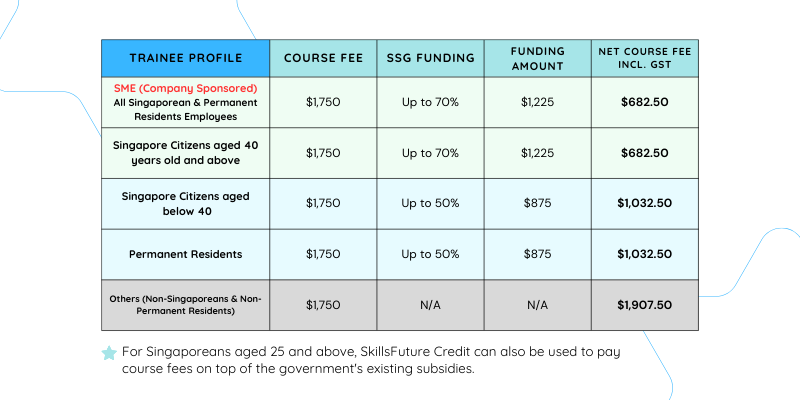
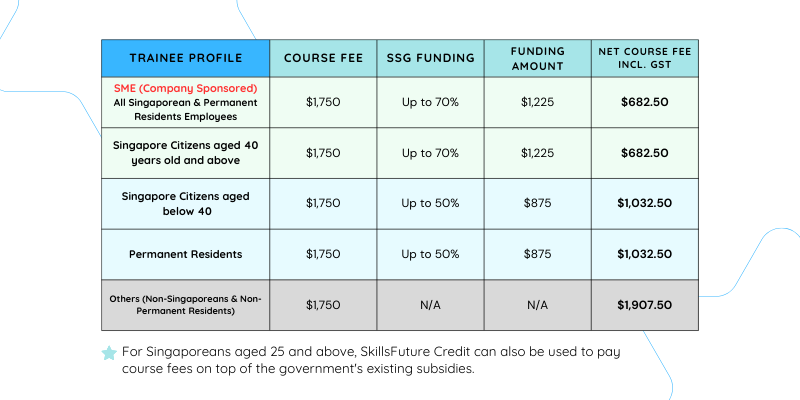
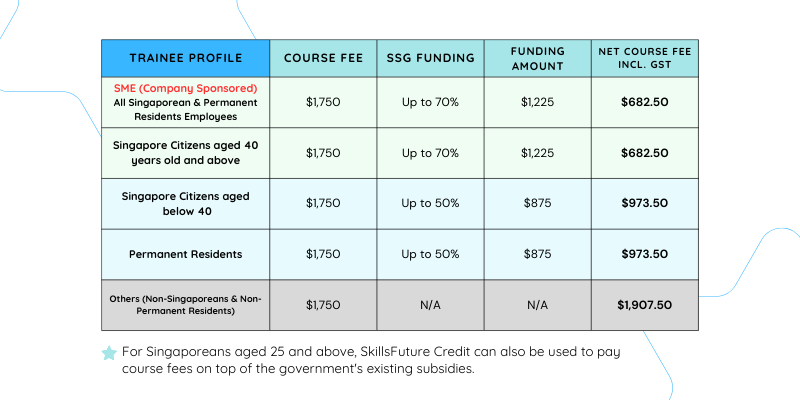
Course fees: If you meet the eligibility criteria, course fees can be subsidised by up to 70%. Moreover, SkillsFuture Credit can be applied to cover course fees in addition to existing government subsidies.
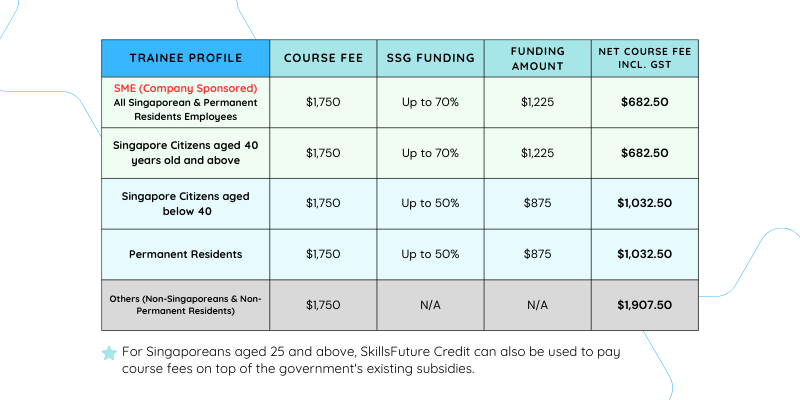
Course Pricing

Skills Covered

PROFICIENCY LEVEL GUIDE
Beginner: Introduce the subject matter without the need to have any prerequisites.
Proficient: Requires learners to have prior knowledge of the subject.
Expert: Involves advanced and more complex understanding of the subject.

  • Software Development (Proficiency level: Expert)
  • Cybersecurity (Proficiency level: Expert)
 Back to all courses

[May 2025] Certified Information Systems Auditor (CISA)

0%

Overview

Embark on a transformative journey with our comprehensive CISA course, meticulously designed to equip you with the knowledge and skills needed to conquer the ISACA CRISC Exam. Our mission is clear: to ensure your readiness for CISA certification and empower you to effectively manage the risks faced by your organization. Enrol now to enhance your skills and advance your career through this comprehensive CISA course in Singapore.

The course is prepared and delivered based on content from the ISACA CISA (Certified Information Systems Auditor) Review Manual 27th edition, making it an excellent resource for anyone who is seeking CISA certification in Singapore. The course covers five (5) domains, including Information System Auditing Process; Management and Governance of IT; Information Systems Acquisition, Implementation, and Development; Information Systems Operation; and Business Resilience and Protection of Information Assets.

For more information, please click here.

Course Description & Learning Outcomes

The CISA course is conducted over four days, and the content is organised into five domains. Topics covered in each of the domains are as shown below:

Domain 1: Information System Auditing Process

  • Planning

    - IS Audit Standards, Guidelines, and Codes of Ethics

    - Types of Controls

    - Types of Audits and Assessments

    - Risk-Based Audit Planning

    - Business Processes

  • Execution

    - Data Analytics

    - Quality Assurance and Improvement of the Audit Process

    - Sampling Methodology

    - Audit Evidence Collection Techniques

    - Audit Project Management

    - Reporting and Communication and Reporting Techniques


Domain 2: Governance and Management of IT 

  •  IT Governance

    - IT Strategy and IT Governance

    - IT-Related Frameworks

    - IT Policies, Procedures and Standards

    - Organisational Structure

    - Enterprise Architecture

    - Enterprise Risk Management

    - Maturity Models

    - Organisation Affecting Laws, Regulations, and Industry Standards

  • IT Management

    - IT Resource Management

    - IT Service Provider Management and Acquisition

    - IT Performance Monitoring and Reporting

    - Quality Assurance and Quality Management of IT

Domain 3: Information Systems Acquisition, Development and implementation 

  • Quality Assurance and Quality Management of IT

    - Project Management and Governance

    - Feasibility Analysis and Business Case

    - System Development Methodologies

    - Control Identification and Design

  • Implementation of Information Systems

    - Testing Methodologies

    - Configuration and Release Management

    - System Migration, Infrastructure Deployment, and Data Conversion

    - Post-implementation Review

Domain 4: Business Resilience and Information Systems Operation

  • Information Systems Operations

    - Common Technology Components

    - IT Asset Management

    - Production Process Automation and Job Scheduling

    - System Interfaces

    - End-User Computing

    - Data Governance

    - Systems Performance Management

    - Problem and Incident Management

    - Configuration, Change, Release, and Patch Management

    - IT Service Level Management

    - Database Management

  •  Business Resilience

    - Business Impact Analysis (BIA)

    - System Resiliency

    - Data Backup, Storage, and Restoration

    - Business Continuity Plan (BCP)

    - Disaster Recovery Plans (DRP)

Domain 5: Protection of Information Assets 

  • Information Asset Security and Control

    - Information Asset Security Frameworks, Standards, and Guidelines

    - Privacy Principles

    - Environmental Controls and Physical Access

    - Identity and Access Management

    - Network and End-Point Security

    - Data Classification

    - Data Encryption and Encryption-Related Techniques

    - Public Key Infrastructure (PKI)

    - Web-Based Communication Techniques

    - Virtualised Environments

    - Wireless, Mobile, and Internet-of-Things (IoT) Devices

  •  Security Event Management

    - Security Awareness Programs and Trainings

    - Information System Attack Techniques and Methods

    - Security Testing Techniques and Tools

    - Security Monitoring Techniques and Tools

    - Incident Response Management

    - Forensics and Evidence Collection

At the end of this course you will:

- Understand the methodology, phases and activities required to plan, assess risk, conduct an audit and communicate the audit progress, findings and recommendations, including relevant considerations for CISA certification in Singapore.

- Understand the methodology and activities required for IT Strategy Alignment, IT Organisational structure, Implementation and Management of T policies and policies and Practices Compliance to regulatory and legislation requirements and knowledge to evaluate their effectiveness.

- Understand the definitions, methodology and activities required for systems development life cycle, systems implementation and knowledge required to evaluate their effectiveness.

- Understand the definitions, methodology and phases involved in Business continuity, IT Service Operations.

- Understand the components of Physical Security, Logical Access Security, data classification, data life cycle, Security Controls, Threat and Vulnerability Assessment, Security Testing, Security Operations, Security Incident Process, and evaluate their effectiveness, aligning with the principles covered in a CISA course.

Schedule

Start Date: 05 May 2025, Monday
End Date: 08 May 2025, Thursday

Duration: 4 Days, 32.5 hours Timing: 9am - 6pm

Location: 3 Kallang Jct, #04-02 Vanguard Campus, Singapore 339265, 339265

Pricing

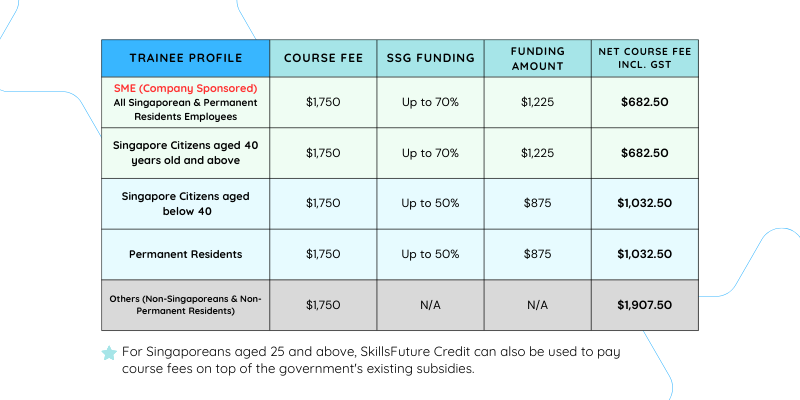
Course fees: If you meet the eligibility criteria, course fees can be subsidised by up to 70%. Moreover, SkillsFuture Credit can be applied to cover course fees in addition to existing government subsidies.

Course Pricing

Skills Covered

PROFICIENCY LEVEL GUIDE
Beginner: Introduce the subject matter without the need to have any prerequisites.
Proficient: Requires learners to have prior knowledge of the subject.
Expert: Involves advanced and more complex understanding of the subject.

  • Cybersecurity (Proficiency level: Expert)
 Back to all courses

[Apr 2025] Information Systems Security Professional (CISSP)

0%

Overview

If you are seeking to establish yourself as a reputable information security professional, the Certified Information Systems Security Professional (CISSP) certification is widely recognised in Singapore and internationally. Engaging in CISSP online training can validate your managerial and technical expertise, demonstrating your capability to effectively engineer, design, and oversee an organisation's security framework. The CISSP Common Body of Knowledge (CBK) covers a comprehensive range of topics, ensuring its relevance and applicability across various domains within the information security field.

At the end of this course, you will be able to gain comprehensive and up-to-date knowledge that aligns with the certification requirements of (ISC)² (International Information System Security Certification Consortium, Inc.), renowned as the gold standard for security professionals. This certification is essential for a career in security-related roles, equipping you with the skills necessary to safeguard your organization against sophisticated cyber-attacks. You will also develop a solid background in security concerns, communications, infrastructure, basic cryptography, and operations, along with hands-on experience to effectively design, implement, and manage a security program.

Course Description & Learning Outcomes

Course Outline

The 5-day course heavily focuses on the eight fundamental domains of Information Security.

Domain 1: Risk and Security Management

1.1 Understand and apply concepts of integrity, confidentiality and availability

1.2 Assess and apply security governance principles

1.3 Establish compliance requirements

1.4 Understand regulatory and legal issues that concern information security in a global context

1.5 Understand, promote, and adhere to professional ethics

1.6 Develop, document, and implement security policy, procedures, standards and guidelines

1.7 Analyse, identify and prioritise Business Continuity (BC) requirements

1.8 Enforce and contribute to personnel security guidelines and procedures

1.9 Apply and understand risk management concepts

1.10 Apply and understand threat modelling methodologies and concepts

1.11 Implement risk-based management concepts in the supply chain

1.12 Maintain and establish a security education, awareness and training program

Domain 2: Asset Security

2.1 Identify and classify assets and information

2.2 Determine and maintain asset ownership and information

2.3 Protect privacy

2.4 Ensure proper asset retention

2.5 Determine data security controls

2.6 Establish information and asset handling requirements

Domain 3: Security Architecture and Engineering

3.1 Manage and Implement engineering processes using secure design principles

3.2 Recognise the basic concepts of security models

3.3 Select controls based on systems security requirements

3.4 Recognise security capabilities of information systems (e.g., encryption/decryption, memory protection, Trusted Platform Module (TPM),

3.5 Mitigate and assess the vulnerabilities of security architectures, solution elements and designs

3.6 Mitigate and assess weaknesses in web-based systems

3.7 Mitigate and assess weaknesses in mobile systems

3.8 Mitigate and assess weaknesses in embedded devices

3.9 Apply cryptography

3.10 Apply security principles to facility and site design

3.11 Implement facility and site security controls

Domain 4: Communication and Network Security

4.1 Apply secure design concepts in network architectures

4.2 Secure network components

4.3 Apply secure communication channels according to design

Domain 5: Identity and Access Management (IAM)

5.1 Control logical and physical access to assets

5.2 Manage authentication and identification of people, devices, and service

5.3 Integrate identity as a third-party service

5.4 Manage and implement authorisation mechanisms

5.5 Manage the identity and access provisioning lifecycle

Domain 6: Security Assessment and Testing

6.1 Design and verify tests, assessments and audit strategies

6.2 Manage security control testing

6.3 Manage security process data (e.g., technical and administrative)

6.4 Examine test output and generate a report

6.5 Manage or facilitate security audits

Domain 7: Security Operations

7.1 Support and understand investigations

7.2 Understand requirements for investigation types

7.3 Conduct monitoring and logging activities

7.4 Securely provisioning resources

7.5 Apply and understand foundational security operations concepts

7.6 Apply resource protection techniques

7.7 Conduct incident management

7.8 Maintain and operate detective and preventive measures

7.9 Support and implement patch and vulnerability management

7.10 Understand and Engage in change management processes

7.11 Apply recovery strategies

7.12 Apply Disaster Recovery (DR) processes

7.13 Test Disaster Recovery Plans (DRP)

7.14 Participate in Business Continuity (BC) exercises and planning

7.15 Manage and implement physical security

7.16 Address security concerns and personnel safety

Domain 8: Software Development Security

8.1 Understand and incorporate security in the Software Development Life Cycle (SDLC)

8.2 Recognise and apply security controls in development environments

8.3 Evaluate the benefits of software security

8.4 Evaluate the security impact of acquired software

8.5 Define and implement secure coding standards and guidelines

For more information, please click here.

Schedule

Start Date: 07 Apr 2025, Monday
End Date: 11 Apr 2025, Friday

Duration: 5 Days, 35 hours Timing: 9am - 5pm Location: Virtual

Location: Online

Pricing

Course fees: If you meet the eligibility criteria, course fees can be subsidised by up to 70%. Moreover, SkillsFuture Credit can be applied to cover course fees in addition to existing government subsidies.

Course Pricing

Skills Covered

PROFICIENCY LEVEL GUIDE
Beginner: Introduce the subject matter without the need to have any prerequisites.
Proficient: Requires learners to have prior knowledge of the subject.
Expert: Involves advanced and more complex understanding of the subject.

  • Software Development (Proficiency level: Expert)
  • Cybersecurity (Proficiency level: Expert)
 Back to all courses

[Mar 2025] Certified Information Systems Auditor (CISA)

0%

Overview

Embark on a transformative journey with our comprehensive CISA course, meticulously designed to equip you with the knowledge and skills needed to conquer the ISACA CRISC Exam. Our mission is clear: to ensure your readiness for CISA certification and empower you to effectively manage the risks faced by your organization. Enrol now to enhance your skills and advance your career through this comprehensive CISA course in Singapore.

The course is prepared and delivered based on content from the ISACA CISA (Certified Information Systems Auditor) Review Manual 27th edition, making it an excellent resource for anyone who is seeking CISA certification in Singapore. The course covers five (5) domains, including Information System Auditing Process; Management and Governance of IT; Information Systems Acquisition, Implementation, and Development; Information Systems Operation; and Business Resilience and Protection of Information Assets.

For more information, please click here.

Course Description & Learning Outcomes

The CISA course is conducted over four days, and the content is organised into five domains. Topics covered in each of the domains are as shown below:

Domain 1: Information System Auditing Process

  • Planning

    - IS Audit Standards, Guidelines, and Codes of Ethics

    - Types of Controls

    - Types of Audits and Assessments

    - Risk-Based Audit Planning

    - Business Processes

  • Execution

    - Data Analytics

    - Quality Assurance and Improvement of the Audit Process

    - Sampling Methodology

    - Audit Evidence Collection Techniques

    - Audit Project Management

    - Reporting and Communication and Reporting Techniques


Domain 2: Governance and Management of IT 

  •  IT Governance

    - IT Strategy and IT Governance

    - IT-Related Frameworks

    - IT Policies, Procedures and Standards

    - Organisational Structure

    - Enterprise Architecture

    - Enterprise Risk Management

    - Maturity Models

    - Organisation Affecting Laws, Regulations, and Industry Standards

  • IT Management

    - IT Resource Management

    - IT Service Provider Management and Acquisition

    - IT Performance Monitoring and Reporting

    - Quality Assurance and Quality Management of IT

Domain 3: Information Systems Acquisition, Development and implementation 

  • Quality Assurance and Quality Management of IT

    - Project Management and Governance

    - Feasibility Analysis and Business Case

    - System Development Methodologies

    - Control Identification and Design

  • Implementation of Information Systems

    - Testing Methodologies

    - Configuration and Release Management

    - System Migration, Infrastructure Deployment, and Data Conversion

    - Post-implementation Review

Domain 4: Business Resilience and Information Systems Operation

  • Information Systems Operations

    - Common Technology Components

    - IT Asset Management

    - Production Process Automation and Job Scheduling

    - System Interfaces

    - End-User Computing

    - Data Governance

    - Systems Performance Management

    - Problem and Incident Management

    - Configuration, Change, Release, and Patch Management

    - IT Service Level Management

    - Database Management

  •  Business Resilience

    - Business Impact Analysis (BIA)

    - System Resiliency

    - Data Backup, Storage, and Restoration

    - Business Continuity Plan (BCP)

    - Disaster Recovery Plans (DRP)

Domain 5: Protection of Information Assets 

  • Information Asset Security and Control

    - Information Asset Security Frameworks, Standards, and Guidelines

    - Privacy Principles

    - Environmental Controls and Physical Access

    - Identity and Access Management

    - Network and End-Point Security

    - Data Classification

    - Data Encryption and Encryption-Related Techniques

    - Public Key Infrastructure (PKI)

    - Web-Based Communication Techniques

    - Virtualised Environments

    - Wireless, Mobile, and Internet-of-Things (IoT) Devices

  •  Security Event Management

    - Security Awareness Programs and Trainings

    - Information System Attack Techniques and Methods

    - Security Testing Techniques and Tools

    - Security Monitoring Techniques and Tools

    - Incident Response Management

    - Forensics and Evidence Collection

At the end of this course you will:

- Understand the methodology, phases and activities required to plan, assess risk, conduct an audit and communicate the audit progress, findings and recommendations, including relevant considerations for CISA certification in Singapore.

- Understand the methodology and activities required for IT Strategy Alignment, IT Organisational structure, Implementation and Management of T policies and policies and Practices Compliance to regulatory and legislation requirements and knowledge to evaluate their effectiveness.

- Understand the definitions, methodology and activities required for systems development life cycle, systems implementation and knowledge required to evaluate their effectiveness.

- Understand the definitions, methodology and phases involved in Business continuity, IT Service Operations.

- Understand the components of Physical Security, Logical Access Security, data classification, data life cycle, Security Controls, Threat and Vulnerability Assessment, Security Testing, Security Operations, Security Incident Process, and evaluate their effectiveness, aligning with the principles covered in a CISA course.

Schedule

Start Date: 10 Mar 2025, Monday
End Date: 13 Mar 2025, Thursday

Duration: 4 Days, 32.5 hours Timing: 9am - 6pm

Location: Online

Pricing

Course fees: If you meet the eligibility criteria, course fees can be subsidised by up to 70%. Moreover, SkillsFuture Credit can be applied to cover course fees in addition to existing government subsidies.

Course Pricing

Skills Covered

PROFICIENCY LEVEL GUIDE
Beginner: Introduce the subject matter without the need to have any prerequisites.
Proficient: Requires learners to have prior knowledge of the subject.
Expert: Involves advanced and more complex understanding of the subject.

  • Cybersecurity (Proficiency level: Expert)
 Back to all courses

[Mar 2025] Information Systems Security Professional (CISSP)

0%

Overview

If you are seeking to establish yourself as a reputable information security professional, the Certified Information Systems Security Professional (CISSP) certification is widely recognised in Singapore and internationally. Engaging in CISSP online training can validate your managerial and technical expertise, demonstrating your capability to effectively engineer, design, and oversee an organisation's security framework. The CISSP Common Body of Knowledge (CBK) covers a comprehensive range of topics, ensuring its relevance and applicability across various domains within the information security field.

At the end of this course, you will be able to gain comprehensive and up-to-date knowledge that aligns with the certification requirements of (ISC)² (International Information System Security Certification Consortium, Inc.), renowned as the gold standard for security professionals. This certification is essential for a career in security-related roles, equipping you with the skills necessary to safeguard your organization against sophisticated cyber-attacks. You will also develop a solid background in security concerns, communications, infrastructure, basic cryptography, and operations, along with hands-on experience to effectively design, implement, and manage a security program.

Course Description & Learning Outcomes

Course Outline

The 5-day course heavily focuses on the eight fundamental domains of Information Security.

Domain 1: Risk and Security Management

1.1 Understand and apply concepts of integrity, confidentiality and availability

1.2 Assess and apply security governance principles

1.3 Establish compliance requirements

1.4 Understand regulatory and legal issues that concern information security in a global context

1.5 Understand, promote, and adhere to professional ethics

1.6 Develop, document, and implement security policy, procedures, standards and guidelines

1.7 Analyse, identify and prioritise Business Continuity (BC) requirements

1.8 Enforce and contribute to personnel security guidelines and procedures

1.9 Apply and understand risk management concepts

1.10 Apply and understand threat modelling methodologies and concepts

1.11 Implement risk-based management concepts in the supply chain

1.12 Maintain and establish a security education, awareness and training program

Domain 2: Asset Security

2.1 Identify and classify assets and information

2.2 Determine and maintain asset ownership and information

2.3 Protect privacy

2.4 Ensure proper asset retention

2.5 Determine data security controls

2.6 Establish information and asset handling requirements

Domain 3: Security Architecture and Engineering

3.1 Manage and Implement engineering processes using secure design principles

3.2 Recognise the basic concepts of security models

3.3 Select controls based on systems security requirements

3.4 Recognise security capabilities of information systems (e.g., encryption/decryption, memory protection, Trusted Platform Module (TPM),

3.5 Mitigate and assess the vulnerabilities of security architectures, solution elements and designs

3.6 Mitigate and assess weaknesses in web-based systems

3.7 Mitigate and assess weaknesses in mobile systems

3.8 Mitigate and assess weaknesses in embedded devices

3.9 Apply cryptography

3.10 Apply security principles to facility and site design

3.11 Implement facility and site security controls

Domain 4: Communication and Network Security

4.1 Apply secure design concepts in network architectures

4.2 Secure network components

4.3 Apply secure communication channels according to design

Domain 5: Identity and Access Management (IAM)

5.1 Control logical and physical access to assets

5.2 Manage authentication and identification of people, devices, and service

5.3 Integrate identity as a third-party service

5.4 Manage and implement authorisation mechanisms

5.5 Manage the identity and access provisioning lifecycle

Domain 6: Security Assessment and Testing

6.1 Design and verify tests, assessments and audit strategies

6.2 Manage security control testing

6.3 Manage security process data (e.g., technical and administrative)

6.4 Examine test output and generate a report

6.5 Manage or facilitate security audits

Domain 7: Security Operations

7.1 Support and understand investigations

7.2 Understand requirements for investigation types

7.3 Conduct monitoring and logging activities

7.4 Securely provisioning resources

7.5 Apply and understand foundational security operations concepts

7.6 Apply resource protection techniques

7.7 Conduct incident management

7.8 Maintain and operate detective and preventive measures

7.9 Support and implement patch and vulnerability management

7.10 Understand and Engage in change management processes

7.11 Apply recovery strategies

7.12 Apply Disaster Recovery (DR) processes

7.13 Test Disaster Recovery Plans (DRP)

7.14 Participate in Business Continuity (BC) exercises and planning

7.15 Manage and implement physical security

7.16 Address security concerns and personnel safety

Domain 8: Software Development Security

8.1 Understand and incorporate security in the Software Development Life Cycle (SDLC)

8.2 Recognise and apply security controls in development environments

8.3 Evaluate the benefits of software security

8.4 Evaluate the security impact of acquired software

8.5 Define and implement secure coding standards and guidelines

For more information, please click here.

Schedule

Start Date: 03 Mar 2025, Monday
End Date: 07 Mar 2025, Friday

Duration: 5 Days, 35 hours Timing: 9am - 5pm Location: Classroom

Location: 3 Kallang Jct, #04-02 Vanguard Campus, Singapore 339265, 339265

Pricing

Course fees: If you meet the eligibility criteria, course fees can be subsidised by up to 70%. Moreover, SkillsFuture Credit can be applied to cover course fees in addition to existing government subsidies.

Course Pricing

Skills Covered

PROFICIENCY LEVEL GUIDE
Beginner: Introduce the subject matter without the need to have any prerequisites.
Proficient: Requires learners to have prior knowledge of the subject.
Expert: Involves advanced and more complex understanding of the subject.

  • Software Development (Proficiency level: Expert)
  • Cybersecurity (Proficiency level: Expert)
 Back to all courses

[Feb 2025] Information Systems Security Professional (CISSP)

0%

Overview

If you are seeking to establish yourself as a reputable information security professional, the Certified Information Systems Security Professional (CISSP) certification is widely recognised in Singapore and internationally. Engaging in CISSP online training can validate your managerial and technical expertise, demonstrating your capability to effectively engineer, design, and oversee an organisation's security framework. The CISSP Common Body of Knowledge (CBK) covers a comprehensive range of topics, ensuring its relevance and applicability across various domains within the information security field.

At the end of this course, you will be able to gain comprehensive and up-to-date knowledge that aligns with the certification requirements of (ISC)² (International Information System Security Certification Consortium, Inc.), renowned as the gold standard for security professionals. This certification is essential for a career in security-related roles, equipping you with the skills necessary to safeguard your organization against sophisticated cyber-attacks. You will also develop a solid background in security concerns, communications, infrastructure, basic cryptography, and operations, along with hands-on experience to effectively design, implement, and manage a security program.

Course Description & Learning Outcomes

Course Outline

The 5-day course heavily focuses on the eight fundamental domains of Information Security.

Domain 1: Risk and Security Management

1.1 Understand and apply concepts of integrity, confidentiality and availability

1.2 Assess and apply security governance principles

1.3 Establish compliance requirements

1.4 Understand regulatory and legal issues that concern information security in a global context

1.5 Understand, promote, and adhere to professional ethics

1.6 Develop, document, and implement security policy, procedures, standards and guidelines

1.7 Analyse, identify and prioritise Business Continuity (BC) requirements

1.8 Enforce and contribute to personnel security guidelines and procedures

1.9 Apply and understand risk management concepts

1.10 Apply and understand threat modelling methodologies and concepts

1.11 Implement risk-based management concepts in the supply chain

1.12 Maintain and establish a security education, awareness and training program

Domain 2: Asset Security

2.1 Identify and classify assets and information

2.2 Determine and maintain asset ownership and information

2.3 Protect privacy

2.4 Ensure proper asset retention

2.5 Determine data security controls

2.6 Establish information and asset handling requirements

Domain 3: Security Architecture and Engineering

3.1 Manage and Implement engineering processes using secure design principles

3.2 Recognise the basic concepts of security models

3.3 Select controls based on systems security requirements

3.4 Recognise security capabilities of information systems (e.g., encryption/decryption, memory protection, Trusted Platform Module (TPM),

3.5 Mitigate and assess the vulnerabilities of security architectures, solution elements and designs

3.6 Mitigate and assess weaknesses in web-based systems

3.7 Mitigate and assess weaknesses in mobile systems

3.8 Mitigate and assess weaknesses in embedded devices

3.9 Apply cryptography

3.10 Apply security principles to facility and site design

3.11 Implement facility and site security controls

Domain 4: Communication and Network Security

4.1 Apply secure design concepts in network architectures

4.2 Secure network components

4.3 Apply secure communication channels according to design

Domain 5: Identity and Access Management (IAM)

5.1 Control logical and physical access to assets

5.2 Manage authentication and identification of people, devices, and service

5.3 Integrate identity as a third-party service

5.4 Manage and implement authorisation mechanisms

5.5 Manage the identity and access provisioning lifecycle

Domain 6: Security Assessment and Testing

6.1 Design and verify tests, assessments and audit strategies

6.2 Manage security control testing

6.3 Manage security process data (e.g., technical and administrative)

6.4 Examine test output and generate a report

6.5 Manage or facilitate security audits

Domain 7: Security Operations

7.1 Support and understand investigations

7.2 Understand requirements for investigation types

7.3 Conduct monitoring and logging activities

7.4 Securely provisioning resources

7.5 Apply and understand foundational security operations concepts

7.6 Apply resource protection techniques

7.7 Conduct incident management

7.8 Maintain and operate detective and preventive measures

7.9 Support and implement patch and vulnerability management

7.10 Understand and Engage in change management processes

7.11 Apply recovery strategies

7.12 Apply Disaster Recovery (DR) processes

7.13 Test Disaster Recovery Plans (DRP)

7.14 Participate in Business Continuity (BC) exercises and planning

7.15 Manage and implement physical security

7.16 Address security concerns and personnel safety

Domain 8: Software Development Security

8.1 Understand and incorporate security in the Software Development Life Cycle (SDLC)

8.2 Recognise and apply security controls in development environments

8.3 Evaluate the benefits of software security

8.4 Evaluate the security impact of acquired software

8.5 Define and implement secure coding standards and guidelines

For more information, please click here.

Schedule

Start Date: 03 Feb 2025, Monday
End Date: 07 Feb 2025, Friday

Duration: 5 Days, 35 hours Timing: 9am - 5pm Location: Virtual

Location: Online

Pricing

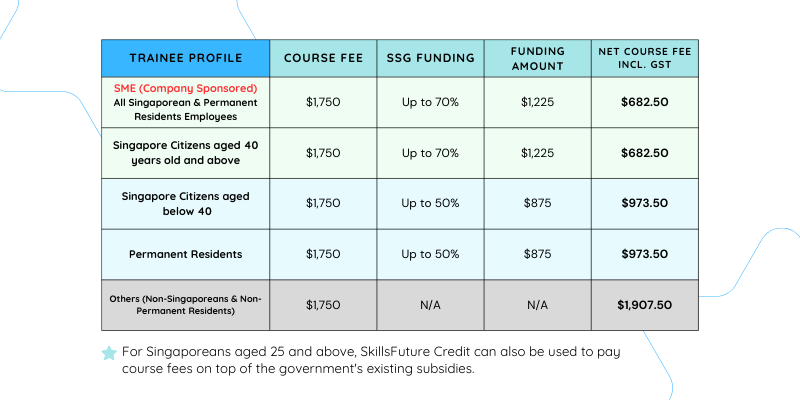
Course fees: If you meet the eligibility criteria, course fees can be subsidised by up to 70%. Moreover, SkillsFuture Credit can be applied to cover course fees in addition to existing government subsidies.

Course Pricing

Skills Covered

PROFICIENCY LEVEL GUIDE
Beginner: Introduce the subject matter without the need to have any prerequisites.
Proficient: Requires learners to have prior knowledge of the subject.
Expert: Involves advanced and more complex understanding of the subject.

  • Software Development (Proficiency level: Expert)
  • Cybersecurity (Proficiency level: Expert)
 Back to all events

Tokyo-Singapore BUSINESS PARTNERSHIP SEMINAR 2025

0%

Overview

Join us as we explore two key topics during the event: 1. How to be prepared to expand to Japan: business environment and industrial trends in Japan

2. How can Singaporean corporates gain access to partnership with SME in Tokyo


We firmly believe that this event will offer invaluable insights and opportunities for you and your organization.

Your participation will undeniably enrich the conversation and contribute to the overall success of the event. 


▼Event Details▼

Ÿ   【Date and Time】Wednesday, 15th January 2025 | 12:00 - 16:00

Ÿ   【Venue】Park Royal Collection Marina Bay (6 Raffles Boulevard Singapore, 039594 Singapore)   *Online Attendance also available

Ÿ   【Participation Fee】Free

Ÿ   【RSVP】Please confirm your attendance from the following forms - https://pco-prime.com/form/sin-seminar/en/ *If you would like to request for a consultation session, please add the details on the forms after ‘Question regarding “Consultation & Networking” (Note)’.

Ÿ   【Program】Simultaneous interpretation service (Japanese ⇔ English) will be available. For more details, please refer to the attached flyer.

Agenda

12:00 – 13:00 (60 mins) Reception open

13:00 - 13:05 (5 mins) Opening Remarks (in Japanese) by Tokyo Metropolitan SME Support Center

13:05 - 13:45 (40 mins)

PART 1:

Business Environment and Industrial Trend in Tokyo (in Japanese) by Access to Tokyo

13:45 - 14:00 (15 mins)

Break

14:00 - 15:00 (60 mins)

PART 2:

Success Brewed in Tokyo: Lessons from Singapore Crown Digital Ella's Expansion (in English) by Crown Digital Pte Ltd.

15:00 - 16:00 (60 mins)

PART 3:

Individual consultations and networking

*Consultation session is for companies interested in expanding or collaborating with SME in Tokyo

Schedule

Date: 15 Jan 2025, Wednesday
Time: 12:00 PM - 4:00 PM (GMT +8:00) Kuala Lumpur, Singapore
Location: Park Royal Collection Marina Bay, 6 Raffles Boulevard Singapore, 039594 and Online

 Back to all events

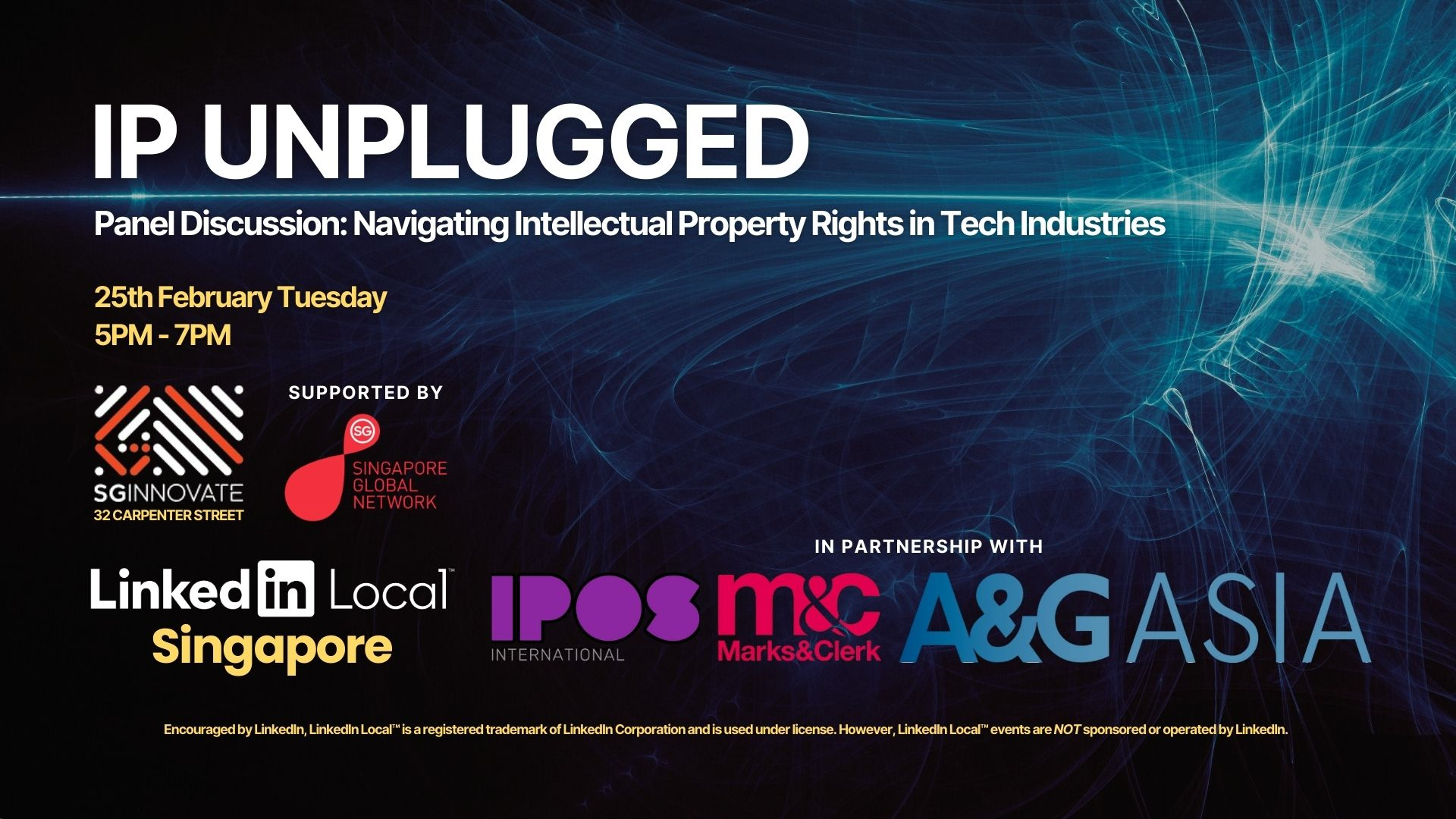
IP Unplugged: Navigating Intellectual Property Rights in Tech Industries

0%

Overview

Let's explore how intellectual property (IP) plays a crucial role in the tech industries, looking into challenges and strategies to manage and use IP effectively!

The panel discussion will cover key topics, including:

  • The Role of IP in Innovation: Discuss how intellectual property fosters innovation and business growth in tech.

  • Emerging Challenges: Explore the impact of new technologies such as automotive, energy storage, automation - robotics, and bio/med tech on IP management.

  • Practical IP Strategies: Learn real-life examples and practical strategies for handling IP challenges, protecting assets, and maximizing value through licensing.

This LinkedIn Local™ - Singapore event is supported by the Singapore Global Network (SGN), a division under Singapore Economic Development Board (EDB). Join SGN to become a member of a 148,000-strong global network of professionals and friends with Singapore at its heart! Learn more at www.singaporeglobalnetwork.gov.sg.

Event Agenda

5pm: Registration · Professional Networking

515pm: Welcome Remarks

520pm: Panel Discussion

6pm: Q&A

630pm: Professional Networking

7pm: End

Linkedin Local™ - Singapore events are live, in-person experiences, that bring together LinkedIn members in Singapore.

Brought to you by LinkedIn Local™ - Singapore digital producer JQ (Kia-khing) Low (Lu) since February 2024, these newsmaking events are to educate and inspire, strengthen existing LinkedIn connections and build new ones.

🌐 Supported and Encouraged by LinkedIn, LinkedIn Local™ is a trademark of LinkedIn Corporation and is used under license. However, LinkedIn Local™ events are not sponsored or operated by LinkedIn 🙌

Supporting Image

Schedule

Date: 25 Feb 2025, Tuesday
Time: 5:00 PM - 7:00 PM (GMT +8:00) Kuala Lumpur, Singapore
Location: 32 Carpenter Street, 059911

Speakers

Moderator's Profile:

Low Pei Lin, Partner, A&G Asia - Allen & Gledhill
Low Pei Lin

Low Pei Lin joined Allen & Gledhill after being called to the Singapore Bar and is now serving as a Partner. A seasoned intellectual property (IP) expert with extensive experience in IP protection, portfolio management, and rights management, Pei Lin is also the first female President of the Association of Singapore Patent Attorneys (ASPA) and the Singapore chapter of FICPI. A Singapore Registered Patent Attorney, she leads a team of patent professionals in drafting and prosecuting patent applications with local/foreign patent offices. Her clients include global news corporations, local/foreign banks, hotel groups, local and overseas institutes of higher learning, government agencies, and multinational corporations. Pei Lin also holds the FICPI South East Asia Patent Drafting certification and actively participates in committee work of international IP organisations, including INTA and APAA. She attained her LL.B. (Hons) degree from the National University of Singapore.

Speaker's Profile:

Lai Ye Siang, IP Strategist , IPOS International
Lai Ye Siang

Lai Ye Siang advises both public agencies and innovative enterprises on intellectual property management and strategy. Prior to joining IPOS International, Ye Siang was a consultant at a patent attorney firm where he advised various enterprises on intellectual property matters. He also has a rich background in the automation and automotive industries as a former engineer. As a Registered Management Consultant (RMC), Ye Siang is also recognised as one of the world's leading IP Strategists by IAM Strategy 300. He has a Bachelor of Engineering (Mechanical) with Honours from Nanyang Technological University, a Bachelor of Laws with Honours from the University of Tasmania and holds qualifications to practice law in Singapore.

Speaker's Profile:

Gianfranco Matteucci, Partner, Marks & Clerk
Gianfranco Matteucci

Gianfranco Matteucci is a Partner of Marks & Clerk and a Singapore Registered Patent Attorney. Chartered in both Singapore and the European Union, Gianfranco has continued his IP attorney journey since 1991 and specializes in fields such as biotechnology, chemistry, oil and gas, pharmaceuticals, plant varieties, biomedical devices, and nanotechnology. Gianfranco is on the WIPO - World Intellectual Property Organisation List of Neutrals, which names independent WIPO arbitrators, mediators, and experts from 70 countries. He was named an "IP Star" by Managing Intellectual Property in 2014, 2015, 2020, and 2021. He has also been listed as an expert by Who’s Who Legal and is a ranked individual in the 2020 & 2021 IAM Patent 1000 rankings, described as “highly sought-after.” Gianfranco graduated with a Laurea in Biological Sciences from the University of Rome, La Sapienza; Italy.

Partners

Marks & ClerkIPOS InternationalSingapore Global NetworkA&G Asia - Singapore (Allen & Gledhill)
 Back to all events

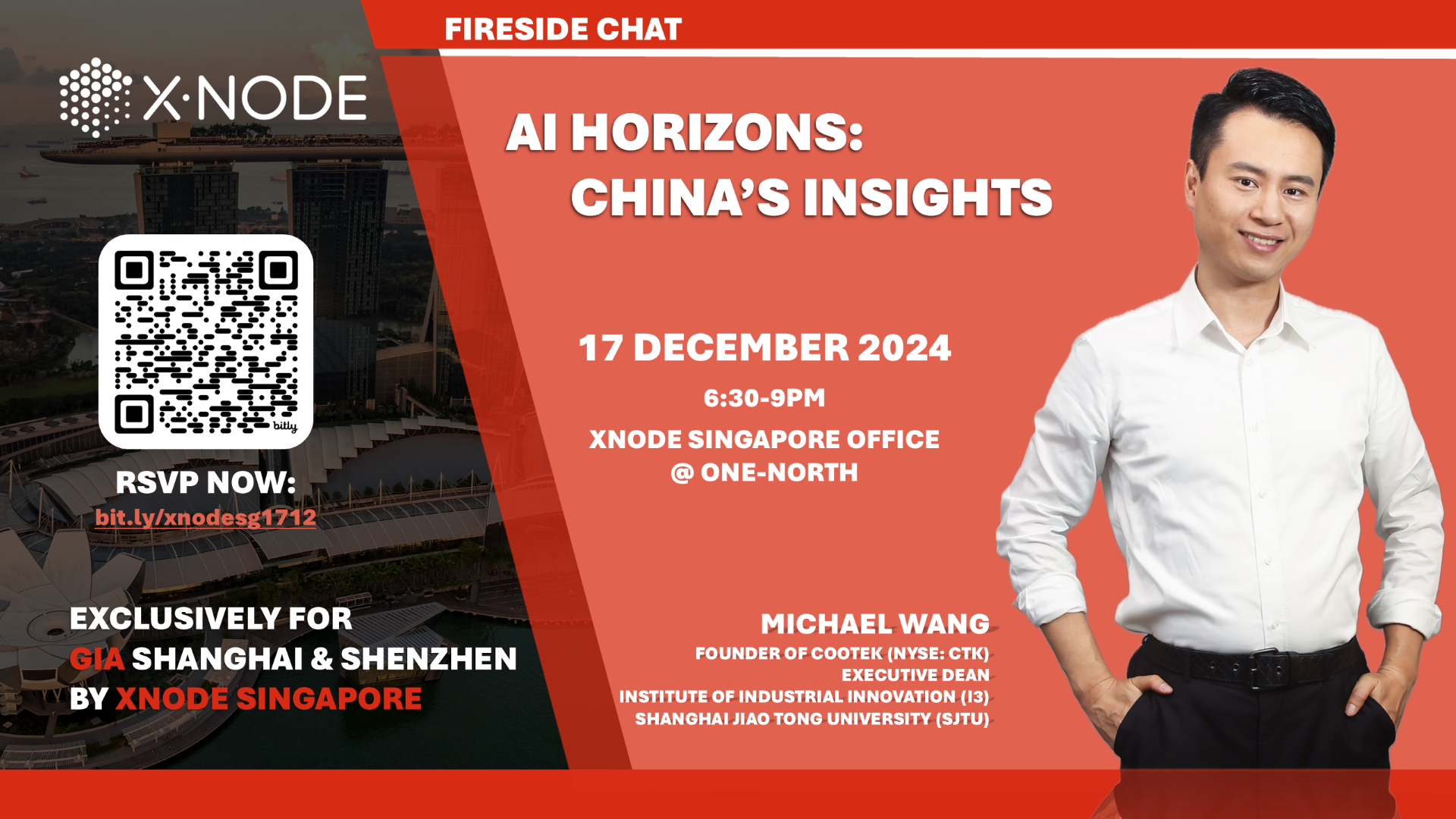
AI HORIZONS: CHINA'S INSIGHTS - A GIA Shanghai & Shenzhen Exclusive by XNode Singapore

0%

Overview

Join us for an exclusive fireside chat with Michael Wang, Founder of CooTek (NYSE: CTK) and Executive Dean of the Institute of Industrial Innovation at Shanghai Jiao Tong University (I3, SJTU). As a trailblazer in AI entrepreneurship and investment, Michael will share his journey from startup founder to mentor of next-generation innovators. Gain insights into China's AI ecosystem, global opportunities, and the strategies for cross-border collaboration. Learn how education, investment, and innovation converge to shape the future of AI enterprises worldwide.

Why Attend? Gain unparalleled insights into:

  • China’s dynamic AI ecosystem and global opportunities.

  • Strategies for cross-border collaboration in the AI space.

  • The intersection of education, investment, and innovation shapes the future of AI enterprises worldwide.

This event is a must-attend for AI entrepreneurs, investors, educators, and industry leaders looking to connect the dots between China and the rest of the world in the rapidly evolving AI landscape.

Agenda:

6:30 - 7:00 PM Registration

7:00 - 8:00 PM Fireside Chat with Michael Wang, followed by Q&A

8:00 - 8:15 PM Updates on GIA Shanghai & Shenzhen

8:15 - 9:00 PM Networking Session

Language: English (might have a tint of Chinese)

Supporting Image

Schedule

Date: 17 Dec 2024, Tuesday
Time: 6:30 PM - 9:00 PM (GMT +8:00) Kuala Lumpur, Singapore
Location: 71 Ayer Rajah Crescent , 139951

 Back to all events

Morning Pitch Asia, AI

0%

Overview

We are back with HYBRYD edition of Morning Pitch, on 29th November 2024, where we feature AI startups. In this session, we are going to host both in-person and online style Morning Pitch Asia! We will invite four startups with cutting-edge technologies.

Morning Pitch is the pitching platform hosted by Deloitte where we aim to create collaborations between Asian large size corporations/investors and startups. The event series was originally launched in Japan in 2013, where it has been organized over 500 times, over 2,450 startups have pitched, and more than 65 IPOs and 475+ business alliances have been created.

Venue:

 In-person*: SGInnovate(32 CARPENTER STREET Singapore 059911)

 Online: Zoom Webinar

 *Due to limitation of capacity on the venue, it would be first-come-first-served basis.

Pitching startups:

Wenti Labs - Wenti Labs helps construction teams to automate safety and qualify assurance data entry with AI Agents.

URL: https://www.wentilabs.com/

blutech.io - blutech.io develops World's Leading AI+IoT Solutions for smart buildings, smart properties and shopping malls.

URL: https://blutech.io/

Fintelite - Fintelite is an AI-based company that provides financial technology solutions with text recognition services via OCR technology.

URL: https://fintelite.ai/

6Estates - 6Estates provides a comprehensive range of Enterprise AI solutions to transform your business.

URL: https://www.6estates.com/

Supporting Image

Schedule

Date: 29 Nov 2024, Friday
Time: 10:00 AM - 11:00 AM (GMT +8:00) Kuala Lumpur, Singapore
Location: 32 Carpenter Street, 059911 and Online

Speakers

Moderator's Profile:

Gempei Asama, Head of ASEAN Region, Deloitte Tohmatsu Venture Support
Gempei Asama

Gempei is Head of ASEAN Region in Deloitte Tohmatsu Venture Support. He is leading Morning Pitch Asia, which aims to create innovative new businesses between startups and large corporations or investors across the Asia Pacific. His expertise is finance and he has a lot of experience in helping startups get funding and expand their footprints into other regions to scale up. He has been supporting a government agency to promote open innovation between ASEAN startups and MNCs in Singapore. Before moving to Singapore, he launched multiple startup supporting programs in Tokyo, Japan, and help quite a few startups from seed to growth stage using his financial expertise. Besides, he was engaged in corporate venturing activity such as building corporate venture capital arms or running acceleration programs with Japanese large corporations.

Be part of Singapore's fastest growing Deep Tech Community

Receive the latest updates on ecosystem events and programmes!