
×
 
 Back to all courses

[Oct Run] Information Systems Security Professional (CISSP)

0%

Overview

If you are seeking to establish yourself as a reputable information security professional, the Certified Information Systems Security Professional (CISSP) certification is widely recognised in Singapore and internationally. Engaging in CISSP online training can validate your managerial and technical expertise, demonstrating your capability to effectively engineer, design, and oversee an organisation's security framework. The CISSP Common Body of Knowledge (CBK) covers a comprehensive range of topics, ensuring its relevance and applicability across various domains within the information security field.

At the end of this course, you will be able to gain comprehensive and up-to-date knowledge that aligns with the certification requirements of (ISC)² (International Information System Security Certification Consortium, Inc.), renowned as the gold standard for security professionals. This certification is essential for a career in security-related roles, equipping you with the skills necessary to safeguard your organization against sophisticated cyber-attacks. You will also develop a solid background in security concerns, communications, infrastructure, basic cryptography, and operations, along with hands-on experience to effectively design, implement, and manage a security program.

Course Description & Learning Outcomes

Course Outline

The 5-day course heavily focuses on the eight fundamental domains of Information Security.

Domain 1: Risk and Security Management

1.1 Understand and apply concepts of integrity, confidentiality and availability

1.2 Assess and apply security governance principles

1.3 Establish compliance requirements

1.4 Understand regulatory and legal issues that concern information security in a global context

1.5 Understand, promote, and adhere to professional ethics

1.6 Develop, document, and implement security policy, procedures, standards and guidelines

1.7 Analyse, identify and prioritise Business Continuity (BC) requirements

1.8 Enforce and contribute to personnel security guidelines and procedures

1.9 Apply and understand risk management concepts

1.10 Apply and understand threat modelling methodologies and concepts

1.11 Implement risk-based management concepts in the supply chain

1.12 Maintain and establish a security education, awareness and training program

Domain 2: Asset Security

2.1 Identify and classify assets and information

2.2 Determine and maintain asset ownership and information

2.3 Protect privacy

2.4 Ensure proper asset retention

2.5 Determine data security controls

2.6 Establish information and asset handling requirements

Domain 3: Security Architecture and Engineering

3.1 Manage and Implement engineering processes using secure design principles

3.2 Recognise the basic concepts of security models

3.3 Select controls based on systems security requirements

3.4 Recognise security capabilities of information systems (e.g., encryption/decryption, memory protection, Trusted Platform Module (TPM),

3.5 Mitigate and assess the vulnerabilities of security architectures, solution elements and designs

3.6 Mitigate and assess weaknesses in web-based systems

3.7 Mitigate and assess weaknesses in mobile systems

3.8 Mitigate and assess weaknesses in embedded devices

3.9 Apply cryptography

3.10 Apply security principles to facility and site design

3.11 Implement facility and site security controls

Domain 4: Communication and Network Security

4.1 Apply secure design concepts in network architectures

4.2 Secure network components

4.3 Apply secure communication channels according to design

Domain 5: Identity and Access Management (IAM)

5.1 Control logical and physical access to assets

5.2 Manage authentication and identification of people, devices, and service

5.3 Integrate identity as a third-party service

5.4 Manage and implement authorisation mechanisms

5.5 Manage the identity and access provisioning lifecycle

Domain 6: Security Assessment and Testing

6.1 Design and verify tests, assessments and audit strategies

6.2 Manage security control testing

6.3 Manage security process data (e.g., technical and administrative)

6.4 Examine test output and generate a report

6.5 Manage or facilitate security audits

Domain 7: Security Operations

7.1 Support and understand investigations

7.2 Understand requirements for investigation types

7.3 Conduct monitoring and logging activities

7.4 Securely provisioning resources

7.5 Apply and understand foundational security operations concepts

7.6 Apply resource protection techniques

7.7 Conduct incident management

7.8 Maintain and operate detective and preventive measures

7.9 Support and implement patch and vulnerability management

7.10 Understand and Engage in change management processes

7.11 Apply recovery strategies

7.12 Apply Disaster Recovery (DR) processes

7.13 Test Disaster Recovery Plans (DRP)

7.14 Participate in Business Continuity (BC) exercises and planning

7.15 Manage and implement physical security

7.16 Address security concerns and personnel safety

Domain 8: Software Development Security

8.1 Understand and incorporate security in the Software Development Life Cycle (SDLC)

8.2 Recognise and apply security controls in development environments

8.3 Evaluate the benefits of software security

8.4 Evaluate the security impact of acquired software

8.5 Define and implement secure coding standards and guidelines

For more information, please click here.

Schedule

Start Date: 14 Oct 2024, Monday
End Date: 18 Oct 2024, Friday

Duration: 5 Days, 35 hours Timing: 9am - 5pm

Location: 3 Kallang Junction, #04-02, Vanguard Campus, Singapore 339265

Pricing

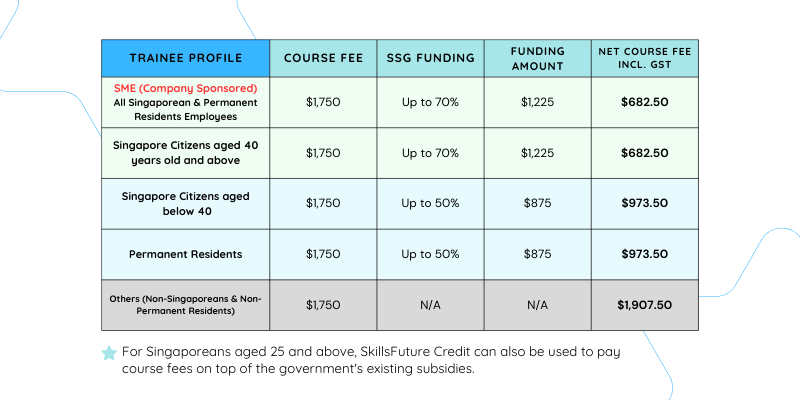
Course fees: If you meet the eligibility criteria, course fees can be subsidised by up to 70%. Moreover, SkillsFuture Credit can be applied to cover course fees in addition to existing government subsidies.

Course Pricing
 Back to all courses

[Sep Run] Information Systems Security Professional (CISSP)

0%

Overview

If you are seeking to establish yourself as a reputable information security professional, the Certified Information Systems Security Professional (CISSP) certification is widely recognised in Singapore and internationally. Engaging in CISSP online training can validate your managerial and technical expertise, demonstrating your capability to effectively engineer, design, and oversee an organisation's security framework. The CISSP Common Body of Knowledge (CBK) covers a comprehensive range of topics, ensuring its relevance and applicability across various domains within the information security field.

At the end of this course, you will be able to gain comprehensive and up-to-date knowledge that aligns with the certification requirements of (ISC)² (International Information System Security Certification Consortium, Inc.), renowned as the gold standard for security professionals. This certification is essential for a career in security-related roles, equipping you with the skills necessary to safeguard your organization against sophisticated cyber-attacks. You will also develop a solid background in security concerns, communications, infrastructure, basic cryptography, and operations, along with hands-on experience to effectively design, implement, and manage a security program.

Course Description & Learning Outcomes

The 5-day course heavily focuses on the eight fundamental domains of Information Security.

Domain 1: Risk and Security Management

1.1 Understand and apply concepts of integrity, confidentiality and availability

1.2 Assess and apply security governance principles

1.3 Establish compliance requirements

1.4 Understand regulatory and legal issues that concern information security in a global context

1.5 Understand, promote, and adhere to professional ethics

1.6 Develop, document, and implement security policy, procedures, standards and guidelines

1.7 Analyse, identify and prioritise Business Continuity (BC) requirements

1.8 Enforce and contribute to personnel security guidelines and procedures

1.9 Apply and understand risk management concepts

1.10 Apply and understand threat modelling methodologies and concepts

1.11 Implement risk-based management concepts in the supply chain

1.12 Maintain and establish a security education, awareness and training program

Domain 2: Asset Security

2.1 Identify and classify assets and information

2.2 Determine and maintain asset ownership and information

2.3 Protect privacy

2.4 Ensure proper asset retention

2.5 Determine data security controls

2.6 Establish information and asset handling requirements

Domain 3: Security Architecture and Engineering

3.1 Manage and Implement engineering processes using secure design principles

3.2 Recognise the basic concepts of security models

3.3 Select controls based on systems security requirements

3.4 Recognise security capabilities of information systems (e.g., encryption/decryption, memory protection, Trusted Platform Module (TPM),

3.5 Mitigate and assess the vulnerabilities of security architectures, solution elements and designs

3.6 Mitigate and assess weaknesses in web-based systems

3.7 Mitigate and assess weaknesses in mobile systems

3.8 Mitigate and assess weaknesses in embedded devices

3.9 Apply cryptography

3.10 Apply security principles to facility and site design

3.11 Implement facility and site security controls

Domain 4: Communication and Network Security

4.1 Apply secure design concepts in network architectures

4.2 Secure network components

4.3 Apply secure communication channels according to design

Domain 5: Identity and Access Management (IAM)

5.1 Control logical and physical access to assets

5.2 Manage authentication and identification of people, devices, and service

5.3 Integrate identity as a third-party service

5.4 Manage and implement authorisation mechanisms

5.5 Manage the identity and access provisioning lifecycle

Domain 6: Security Assessment and Testing

6.1 Design and verify tests, assessments and audit strategies

6.2 Manage security control testing

6.3 Manage security process data (e.g., technical and administrative)

6.4 Examine test output and generate a report

6.5 Manage or facilitate security audits

Domain 7: Security Operations

7.1 Support and understand investigations

7.2 Understand requirements for investigation types

7.3 Conduct monitoring and logging activities

7.4 Securely provisioning resources

7.5 Apply and understand foundational security operations concepts

7.6 Apply resource protection techniques

7.7 Conduct incident management

7.8 Maintain and operate detective and preventive measures

7.9 Support and implement patch and vulnerability management

7.10 Understand and Engage in change management processes

7.11 Apply recovery strategies

7.12 Apply Disaster Recovery (DR) processes

7.13 Test Disaster Recovery Plans (DRP)

7.14 Participate in Business Continuity (BC) exercises and planning

7.15 Manage and implement physical security

7.16 Address security concerns and personnel safety

Domain 8: Software Development Security

8.1 Understand and incorporate security in the Software Development Life Cycle (SDLC)

8.2 Recognise and apply security controls in development environments

8.3 Evaluate the benefits of software security

8.4 Evaluate the security impact of acquired software

8.5 Define and implement secure coding standards and guidelines

For more information, please click here.

Schedule

Start Date: 16 Sep 2024, Monday
End Date: 20 Sep 2024, Friday

Start Date: 16 September 2024, Monday End Date: 20 September 2024, Friday Duration: 5 Days, 35 hours Timing: 9am - 5pm Location: Virtual

Location: Online

Pricing

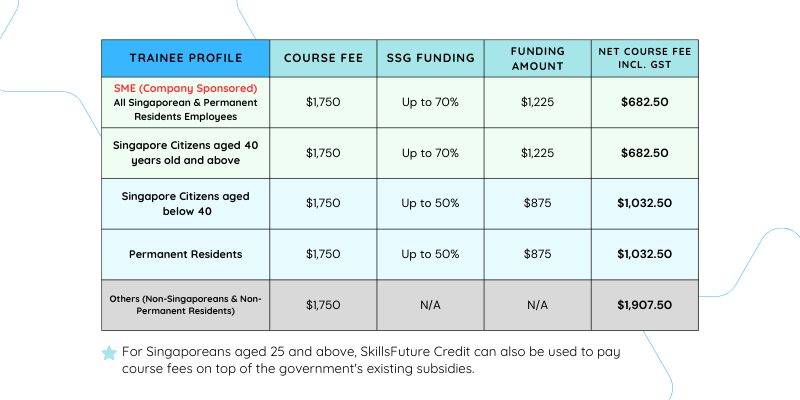
Course fees: If you meet the eligibility criteria, course fees can be subsidised by up to 70%. Moreover, SkillsFuture Credit can be applied to cover course fees in addition to existing government subsidies.

Course Pricing
 Back to all courses

[Sep Run] Certified Information Systems Auditor (CISA)

0%

Overview

Embark on a transformative journey with our comprehensive CISA course, meticulously designed to equip you with the knowledge and skills needed to conquer the ISACA CRISC Exam. Our mission is clear: to ensure your readiness for CISA certification and empower you to effectively manage the risks faced by your organization. Enrol now to enhance your skills and advance your career through this comprehensive CISA course in Singapore.

The course is prepared and delivered based on content from the ISACA CISA (Certified Information Systems Auditor) Review Manual 27th edition, making it an excellent resource for anyone who is seeking CISA certification in Singapore. The course covers five (5) domains, including Information System Auditing Process; Management and Governance of IT; Information Systems Acquisition, Implementation, and Development; Information Systems Operation; and Business Resilience and Protection of Information Assets.

For more information, please click here.

Course Description & Learning Outcomes

Course Outline

The CISA course is conducted over four days, and the content is organised into five domains. Topics covered in each of the domains are as shown below:

Domain 1: Information System Auditing Process

  • Planning

    - IS Audit Standards, Guidelines, and Codes of Ethics

    - Types of Controls

    - Types of Audits and Assessments

    - Risk-Based Audit Planning

    - Business Processes

  • Execution

    - Data Analytics

    - Quality Assurance and Improvement of the Audit Process

    - Sampling Methodology

    - Audit Evidence Collection Techniques

    - Audit Project Management

    - Reporting and Communication and Reporting Techniques


Domain 2: Governance and Management of IT 

  •  IT Governance

    - IT Strategy and IT Governance

    - IT-Related Frameworks

    - IT Policies, Procedures and Standards

    - Organisational Structure

    - Enterprise Architecture

    - Enterprise Risk Management

    - Maturity Models

    - Organisation Affecting Laws, Regulations, and Industry Standards

  • IT Management

    - IT Resource Management

    - IT Service Provider Management and Acquisition

    - IT Performance Monitoring and Reporting

    - Quality Assurance and Quality Management of IT

Domain 3: Information Systems Acquisition, Development and implementation 

  • Quality Assurance and Quality Management of IT

    - Project Management and Governance

    - Feasibility Analysis and Business Case

    - System Development Methodologies

    - Control Identification and Design

  • Implementation of Information Systems

    - Testing Methodologies

    - Configuration and Release Management

    - System Migration, Infrastructure Deployment, and Data Conversion

    - Post-implementation Review

Domain 4: Business Resilience and Information Systems Operation

  • Information Systems Operations

    - Common Technology Components

    - IT Asset Management

    - Production Process Automation and Job Scheduling

    - System Interfaces

    - End-User Computing

    - Data Governance

    - Systems Performance Management

    - Problem and Incident Management

    - Configuration, Change, Release, and Patch Management

    - IT Service Level Management

    - Database Management

  •  Business Resilience

    - Business Impact Analysis (BIA)

    - System Resiliency

    - Data Backup, Storage, and Restoration

    - Business Continuity Plan (BCP)

    - Disaster Recovery Plans (DRP)

Domain 5: Protection of Information Assets 

  • Information Asset Security and Control

    - Information Asset Security Frameworks, Standards, and Guidelines

    - Privacy Principles

    - Environmental Controls and Physical Access

    - Identity and Access Management

    - Network and End-Point Security

    - Data Classification

    - Data Encryption and Encryption-Related Techniques

    - Public Key Infrastructure (PKI)

    - Web-Based Communication Techniques

    - Virtualised Environments

    - Wireless, Mobile, and Internet-of-Things (IoT) Devices

  •  Security Event Management

    - Security Awareness Programs and Trainings

    - Information System Attack Techniques and Methods

    - Security Testing Techniques and Tools

    - Security Monitoring Techniques and Tools

    - Incident Response Management

    - Forensics and Evidence Collection

At the end of this course you will:

- Understand the methodology, phases and activities required to plan, assess risk, conduct an audit and communicate the audit progress, findings and recommendations, including relevant considerations for CISA certification in Singapore.

- Understand the methodology and activities required for IT Strategy Alignment, IT Organisational structure, Implementation and Management of T policies and policies and Practices Compliance to regulatory and legislation requirements and knowledge to evaluate their effectiveness.

- Understand the definitions, methodology and activities required for systems development life cycle, systems implementation and knowledge required to evaluate their effectiveness.

- Understand the definitions, methodology and phases involved in Business continuity, IT Service Operations.

- Understand the components of Physical Security, Logical Access Security, data classification, data life cycle, Security Controls, Threat and Vulnerability Assessment, Security Testing, Security Operations, Security Incident Process, and evaluate their effectiveness, aligning with the principles covered in a CISA course.

Schedule

Start Date: 09 Sep 2024, Monday
End Date: 12 Sep 2024, Thursday

Duration: 4 Days, 32.5 hours Timing: 9am - 6pm

Location: Online

Pricing

Course fees: If you meet the eligibility criteria, course fees can be subsidised by up to 70%. Moreover, SkillsFuture Credit can be applied to cover course fees in addition to existing government subsidies.

Course Pricing
 Back to all courses

[Aug Run] Information Systems Security Professional (CISSP)

0%

Overview

If you are seeking to establish yourself as a reputable information security professional, the Certified Information Systems Security Professional (CISSP) certification is widely recognised in Singapore and internationally. Engaging in CISSP online training can validate your managerial and technical expertise, demonstrating your capability to effectively engineer, design, and oversee an organisation's security framework. The CISSP Common Body of Knowledge (CBK) covers a comprehensive range of topics, ensuring its relevance and applicability across various domains within the information security field.

At the end of this course, you will be able to gain comprehensive and up-to-date knowledge that aligns with the certification requirements of (ISC)² (International Information System Security Certification Consortium, Inc.), renowned as the gold standard for security professionals. This certification is essential for a career in security-related roles, equipping you with the skills necessary to safeguard your organization against sophisticated cyber-attacks. You will also develop a solid background in security concerns, communications, infrastructure, basic cryptography, and operations, along with hands-on experience to effectively design, implement, and manage a security program.

Course Description & Learning Outcomes

Course Outline

The 5-day course heavily focuses on the eight fundamental domains of Information Security.

Domain 1: Risk and Security Management

1.1 Understand and apply concepts of integrity, confidentiality and availability

1.2 Assess and apply security governance principles

1.3 Establish compliance requirements

1.4 Understand regulatory and legal issues that concern information security in a global context

1.5 Understand, promote, and adhere to professional ethics

1.6 Develop, document, and implement security policy, procedures, standards and guidelines

1.7 Analyse, identify and prioritise Business Continuity (BC) requirements

1.8 Enforce and contribute to personnel security guidelines and procedures

1.9 Apply and understand risk management concepts

1.10 Apply and understand threat modelling methodologies and concepts

1.11 Implement risk-based management concepts in the supply chain

1.12 Maintain and establish a security education, awareness and training program

Domain 2: Asset Security

2.1 Identify and classify assets and information

2.2 Determine and maintain asset ownership and information

2.3 Protect privacy

2.4 Ensure proper asset retention

2.5 Determine data security controls

2.6 Establish information and asset handling requirements

Domain 3: Security Architecture and Engineering

3.1 Manage and Implement engineering processes using secure design principles

3.2 Recognise the basic concepts of security models

3.3 Select controls based on systems security requirements

3.4 Recognise security capabilities of information systems (e.g., encryption/decryption, memory protection, Trusted Platform Module (TPM),

3.5 Mitigate and assess the vulnerabilities of security architectures, solution elements and designs

3.6 Mitigate and assess weaknesses in web-based systems

3.7 Mitigate and assess weaknesses in mobile systems

3.8 Mitigate and assess weaknesses in embedded devices

3.9 Apply cryptography

3.10 Apply security principles to facility and site design

3.11 Implement facility and site security controls

Domain 4: Communication and Network Security

4.1 Apply secure design concepts in network architectures

4.2 Secure network components

4.3 Apply secure communication channels according to design

Domain 5: Identity and Access Management (IAM)

5.1 Control logical and physical access to assets

5.2 Manage authentication and identification of people, devices, and service

5.3 Integrate identity as a third-party service

5.4 Manage and implement authorisation mechanisms

5.5 Manage the identity and access provisioning lifecycle

Domain 6: Security Assessment and Testing

6.1 Design and verify tests, assessments and audit strategies

6.2 Manage security control testing

6.3 Manage security process data (e.g., technical and administrative)

6.4 Examine test output and generate a report

6.5 Manage or facilitate security audits

Domain 7: Security Operations

7.1 Support and understand investigations

7.2 Understand requirements for investigation types

7.3 Conduct monitoring and logging activities

7.4 Securely provisioning resources

7.5 Apply and understand foundational security operations concepts

7.6 Apply resource protection techniques

7.7 Conduct incident management

7.8 Maintain and operate detective and preventive measures

7.9 Support and implement patch and vulnerability management

7.10 Understand and Engage in change management processes

7.11 Apply recovery strategies

7.12 Apply Disaster Recovery (DR) processes

7.13 Test Disaster Recovery Plans (DRP)

7.14 Participate in Business Continuity (BC) exercises and planning

7.15 Manage and implement physical security

7.16 Address security concerns and personnel safety

Domain 8: Software Development Security

8.1 Understand and incorporate security in the Software Development Life Cycle (SDLC)

8.2 Recognise and apply security controls in development environments

8.3 Evaluate the benefits of software security

8.4 Evaluate the security impact of acquired software

8.5 Define and implement secure coding standards and guidelines

For more information, please click here.

Schedule

Start Date: 19 Aug 2024, Monday
End Date: 23 Aug 2024, Friday

Duration: 5 Days, 35 hours Timing: 9am - 5pm

Location: 3 Kallang Junction, #04-02, Vanguard Campus,, Singapore 339265

Pricing

Course fees: If you meet the eligibility criteria, course fees can be subsidised by up to 70%. Moreover, SkillsFuture Credit can be applied to cover course fees in addition to existing government subsidies

Course Pricing
 Back to all courses

[Jul Run] Certified Information Systems Auditor (CISA)

0%

Overview

Embark on a transformative journey with our comprehensive CISA course, meticulously designed to equip you with the knowledge and skills needed to conquer the ISACA CRISC Exam. Our mission is clear: to ensure your readiness for CISA certification and empower you to effectively manage the risks faced by your organization. Enrol now to enhance your skills and advance your career through this comprehensive CISA course in Singapore.

The course is prepared and delivered based on content from the ISACA CISA (Certified Information Systems Auditor) Review Manual 27th edition, making it an excellent resource for anyone who is seeking CISA certification in Singapore. The course covers five (5) domains, including Information System Auditing Process; Management and Governance of IT; Information Systems Acquisition, Implementation, and Development; Information Systems Operation; and Business Resilience and Protection of Information Assets.

For more information, please click here.

Course Description & Learning Outcomes

Course Outline

The CISA course is conducted over four days, and the content is organised into five domains. Topics covered in each of the domains are as shown below:

Domain 1: Information System Auditing Process

  • Planning

    - IS Audit Standards, Guidelines, and Codes of Ethics

    - Types of Controls

    - Types of Audits and Assessments

    - Risk-Based Audit Planning

    - Business Processes

  • Execution

    - Data Analytics

    - Quality Assurance and Improvement of the Audit Process

    - Sampling Methodology

    - Audit Evidence Collection Techniques

    - Audit Project Management

    - Reporting and Communication and Reporting Techniques


Domain 2: Governance and Management of IT 

  •  IT Governance

    - IT Strategy and IT Governance

    - IT-Related Frameworks

    - IT Policies, Procedures and Standards

    - Organisational Structure

    - Enterprise Architecture

    - Enterprise Risk Management

    - Maturity Models

    - Organisation Affecting Laws, Regulations, and Industry Standards

  • IT Management

    - IT Resource Management

    - IT Service Provider Management and Acquisition

    - IT Performance Monitoring and Reporting

    - Quality Assurance and Quality Management of IT

Domain 3: Information Systems Acquisition, Development and implementation 

  • Quality Assurance and Quality Management of IT

    - Project Management and Governance

    - Feasibility Analysis and Business Case

    - System Development Methodologies

    - Control Identification and Design

  • Implementation of Information Systems

    - Testing Methodologies

    - Configuration and Release Management

    - System Migration, Infrastructure Deployment, and Data Conversion

    - Post-implementation Review

Domain 4: Business Resilience and Information Systems Operation

  • Information Systems Operations

    - Common Technology Components

    - IT Asset Management

    - Production Process Automation and Job Scheduling

    - System Interfaces

    - End-User Computing

    - Data Governance

    - Systems Performance Management

    - Problem and Incident Management

    - Configuration, Change, Release, and Patch Management

    - IT Service Level Management

    - Database Management

  •  Business Resilience

    - Business Impact Analysis (BIA)

    - System Resiliency

    - Data Backup, Storage, and Restoration

    - Business Continuity Plan (BCP)

    - Disaster Recovery Plans (DRP)

Domain 5: Protection of Information Assets 

  • Information Asset Security and Control

    - Information Asset Security Frameworks, Standards, and Guidelines

    - Privacy Principles

    - Environmental Controls and Physical Access

    - Identity and Access Management

    - Network and End-Point Security

    - Data Classification

    - Data Encryption and Encryption-Related Techniques

    - Public Key Infrastructure (PKI)

    - Web-Based Communication Techniques

    - Virtualised Environments

    - Wireless, Mobile, and Internet-of-Things (IoT) Devices

  •  Security Event Management

    - Security Awareness Programs and Trainings

    - Information System Attack Techniques and Methods

    - Security Testing Techniques and Tools

    - Security Monitoring Techniques and Tools

    - Incident Response Management

    - Forensics and Evidence Collection

At the end of this course you will:

- Understand the methodology, phases and activities required to plan, assess risk, conduct an audit and communicate the audit progress, findings and recommendations, including relevant considerations for CISA certification in Singapore.

- Understand the methodology and activities required for IT Strategy Alignment, IT Organisational structure, Implementation and Management of T policies and policies and Practices Compliance to regulatory and legislation requirements and knowledge to evaluate their effectiveness.

- Understand the definitions, methodology and activities required for systems development life cycle, systems implementation and knowledge required to evaluate their effectiveness.

- Understand the definitions, methodology and phases involved in Business continuity, IT Service Operations.

- Understand the components of Physical Security, Logical Access Security, data classification, data life cycle, Security Controls, Threat and Vulnerability Assessment, Security Testing, Security Operations, Security Incident Process, and evaluate their effectiveness, aligning with the principles covered in a CISA course.

Schedule

Start Date: 08 Jul 2024, Monday
End Date: 11 Jul 2024, Thursday

Duration: 4 Days, 32.5 hours Timing: 9am - 6pm

Location: 3 Kallang Junction, #04-02, Vanguard Campus, Singapore 339265

Pricing

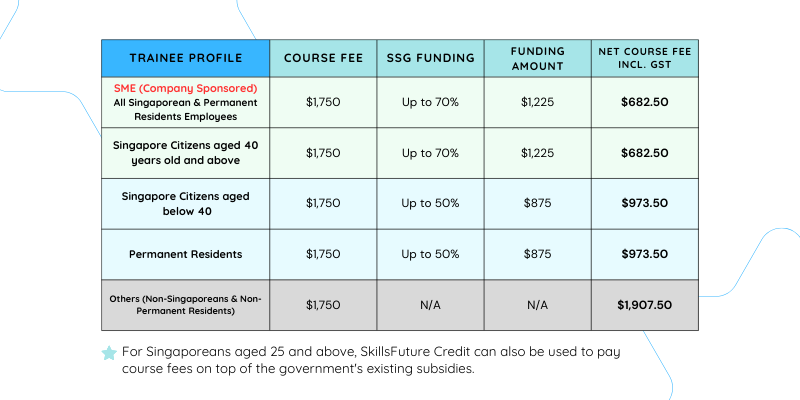
Course fees: If you meet the eligibility criteria, course fees can be subsidised by up to 70%. Moreover, SkillsFuture Credit can be applied to cover course fees in addition to existing government subsidies.
Course Pricing
 Back to all courses

[Part-time Jul Run] Information Systems Security Professional (CISSP)

0%

Overview

Our Certified Ethical Hacker (CEH) certification training course offers you a comprehensive grasp of ethical hacking stages, diverse attack paths, and preventive measures. Delve into the mindset and tactics of hackers, empowering you to fortify your security setup and thwart potential attacks. By understanding system weaknesses and vulnerabilities, you will help organisations strengthen their security protocols and decrease the risk of incidents. Our funded CEH training course is designed to integrate practical experience and a structured approach across all ethical hacking domains and methodologies.

This certification offers you the opportunity to demonstrate essential knowledge and abilities necessary for the role of a certified ethical hacker in Singapore. Through this journey, you will adopt a new mindset regarding the obligations and strategies necessary for ensuring security.

Course Description & Learning Outcomes

In its 11th version, CEH continues to evolve, adapting to the newest operating systems, 

exploits, tools, technologies and strategies. Here are some significant enhancements introduced in CEH v11.

- Incorporating Parrot Security OS

- Re-Mapped to NIST/NICE Framework

- Enhanced Cloud Security, IoT, and OT Modules

-  Modern Malware Analysis

- Covering the Latest Threats – Fileless Malware

- New Lab Designs and Operating Systems

- Increased Lab Time and Hands−on Focus

- Industry’s Most Comprehensive Tools Library


What You Will Learn ?

- Key issues plaguing the information security world include ethical hacking, information security controls, laws, and standards.

- Conduct foot printing and reconnaissance utilising cutting-edge techniques and tools as an essential pre-attack phase required in ethical hacking.

- Network scanning countermeasures and techniques.

- Enumeration countermeasures and techniques.

- Conducting vulnerability analysis, which involved identifying security weaknesses within the network, communication infrastructure, and end systems of the target organization.

- Unveiling system and network weaknesses using techniques such as steganalysis attacks, system hacking methodology, covering traced and steganography.

- Social engineering techniques and how to identify theft attacks to audit human- level vulnerabilities and suggest social engineering countermeasures.

- DoS/DDoS tools and attack techniques to audit a target and DoS/DDoS countermeasures.

- Various forms of malware (such as Trojans, viruses, worms, etc.), conducting system audits to detect malware attacks, analysing malware, and implementing countermeasures.

- Countermeasures, session hijacking techniques to uncover session management at network-level, authentication/authorisation, and cryptographic weaknesses.

- Packet sniffing techniques to discover network vulnerabilities and countermeasures to defend sniffing.

- Assessing vulnerabilities in web applications involves utilizing a comprehensive web application hacking methodology to identify web application attacks and implementing appropriate countermeasures.

- Countermeasures, injection detection tools to detect SQL injection attempts, and SQL injection attack techniques.

- Web server attacks and a comprehensive attack methodology to audit vulnerabilities in web server infrastructure, and countermeasures.

- IDS, honeypot and firewall evasion techniques, evasion tools and techniques to audit a network perimeter for weaknesses, and countermeasures.

- Attack vectors on mobile platforms, exploits targeting Android vulnerabilities, and guidelines along with tools for enhancing mobile security.

- Discover potential risks targeting IoT and OT platforms and acquire strategies for securely safeguarding IoT and OT devices.

- Wireless encryption, wireless hacking tools, wireless hacking methodology, and Wi-Fi security tools.

- Penetration testing, security audit, vulnerability assessment, and penetration testing roadmap.

- Public Key Infrastructure (PKI), cryptography ciphers, cryptanalysis tools, and cryptography attacks.

- Cloud computing concepts (Server less computing, container technology), various threats/attacks, and security techniques and tools.


Course Outline

- Introduction to Ethical Hacking

- Reconnaissance and Foot printing

- Scanning Networks
 Enumeration

- Vulnerability Analysis

- Malware Threats

- System Hacking

- Session Hijacking

- Honeypots, firewalls and IDS

- SQL Injection

- Hacking Wireless Networks

- Hacking Web Applications

- Hacking Mobile Platforms

- Hacking Web Servers

- Sniffing

- IoT Hacking

- Cloud Computing

- Social Engineering
 Denial-of-Service

- Cryptography

The objective of this funded CEH course is to assist you in becoming a master of ethical hacking methodology that can be used in an ethical hacking or penetration testing situation. Our expert-led, funded programs can elevate your cybersecurity journey. With online flexibility and comprehensive content, become a certified ethical hacker ready for any penetration testing scenario, all through our convenient online training courses.

At the end of this course, you will be prepared for EC-Council Certified Ethical Hacker exam 312-50.

For more information, please click here.

Schedule

Start Date: 06 Jul 2024, Saturday
End Date: 03 Aug 2024, Saturday

Class Dates (Every Saturday) 6 July, 13 July, 20 July, 27 July & 3 August Duration: 5 Days, 40 hours Timing: 9am - 6pm Location: TBC

Location: 3 Kallang Junction, #04-02, Vanguard Campus, Singapore 339265 and Online

Pricing

Course fees: If you meet the eligibility criteria, course fees can be subsidised by up to 70%. Moreover, SkillsFuture Credit can be applied to cover course fees in addition to existing government subsidies.

Course Pricing
 Back to all courses

[Jul Run] Information Systems Security Professional (CISSP)

0%

Overview

If you are seeking to establish yourself as a reputable information security professional, the Certified Information Systems Security Professional (CISSP) certification is widely recognised in Singapore and internationally. Engaging in CISSP online training can validate your managerial and technical expertise, demonstrating your capability to effectively engineer, design, and oversee an organisation's security framework. The CISSP Common Body of Knowledge (CBK) covers a comprehensive range of topics, ensuring its relevance and applicability across various domains within the information security field.

At the end of this course, you will be able to gain comprehensive and up-to-date knowledge that aligns with the certification requirements of (ISC)² (International Information System Security Certification Consortium, Inc.), renowned as the gold standard for security professionals. This certification is essential for a career in security-related roles, equipping you with the skills necessary to safeguard your organization against sophisticated cyber-attacks. You will also develop a solid background in security concerns, communications, infrastructure, basic cryptography, and operations, along with hands-on experience to effectively design, implement, and manage a security program.

Course Description & Learning Outcomes

Course Outline

The 5-day course heavily focuses on the eight fundamental domains of Information Security.

Domain 1: Risk and Security Management

1.1 Understand and apply concepts of integrity, confidentiality and availability

1.2 Assess and apply security governance principles

1.3 Establish compliance requirements

1.4 Understand regulatory and legal issues that concern information security in a global context

1.5 Understand, promote, and adhere to professional ethics

1.6 Develop, document, and implement security policy, procedures, standards and guidelines

1.7 Analyse, identify and prioritise Business Continuity (BC) requirements

1.8 Enforce and contribute to personnel security guidelines and procedures

1.9 Apply and understand risk management concepts

1.10 Apply and understand threat modelling methodologies and concepts

1.11 Implement risk-based management concepts in the supply chain

1.12 Maintain and establish a security education, awareness and training program

Domain 2: Asset Security

2.1 Identify and classify assets and information

2.2 Determine and maintain asset ownership and information

2.3 Protect privacy

2.4 Ensure proper asset retention

2.5 Determine data security controls

2.6 Establish information and asset handling requirements

Domain 3: Security Architecture and Engineering

3.1 Manage and Implement engineering processes using secure design principles

3.2 Recognise the basic concepts of security models

3.3 Select controls based on systems security requirements

3.4 Recognise security capabilities of information systems (e.g., encryption/decryption, memory protection, Trusted Platform Module (TPM),

3.5 Mitigate and assess the vulnerabilities of security architectures, solution elements and designs

3.6 Mitigate and assess weaknesses in web-based systems

3.7 Mitigate and assess weaknesses in mobile systems

3.8 Mitigate and assess weaknesses in embedded devices

3.9 Apply cryptography

3.10 Apply security principles to facility and site design

3.11 Implement facility and site security controls

Domain 4: Communication and Network Security

4.1 Apply secure design concepts in network architectures

4.2 Secure network components

4.3 Apply secure communication channels according to design

Domain 5: Identity and Access Management (IAM)

5.1 Control logical and physical access to assets

5.2 Manage authentication and identification of people, devices, and service

5.3 Integrate identity as a third-party service

5.4 Manage and implement authorisation mechanisms

5.5 Manage the identity and access provisioning lifecycle

Domain 6: Security Assessment and Testing

6.1 Design and verify tests, assessments and audit strategies

6.2 Manage security control testing

6.3 Manage security process data (e.g., technical and administrative)

6.4 Examine test output and generate a report

6.5 Manage or facilitate security audits

Domain 7: Security Operations

7.1 Support and understand investigations

7.2 Understand requirements for investigation types

7.3 Conduct monitoring and logging activities

7.4 Securely provisioning resources

7.5 Apply and understand foundational security operations concepts

7.6 Apply resource protection techniques

7.7 Conduct incident management

7.8 Maintain and operate detective and preventive measures

7.9 Support and implement patch and vulnerability management

7.10 Understand and Engage in change management processes

7.11 Apply recovery strategies

7.12 Apply Disaster Recovery (DR) processes

7.13 Test Disaster Recovery Plans (DRP)

7.14 Participate in Business Continuity (BC) exercises and planning

7.15 Manage and implement physical security

7.16 Address security concerns and personnel safety

Domain 8: Software Development Security

8.1 Understand and incorporate security in the Software Development Life Cycle (SDLC)

8.2 Recognise and apply security controls in development environments

8.3 Evaluate the benefits of software security

8.4 Evaluate the security impact of acquired software

8.5 Define and implement secure coding standards and guidelines

For more information, please click here.

Schedule

Start Date: 01 Jul 2024, Monday
End Date: 05 Jul 2024, Friday

Duration: 5 Days, 35 hours Timing: 9am - 5pm

Location: Online

Pricing

Course fees: If you meet the eligibility criteria, course fees can be subsidised by up to 70%. Moreover, SkillsFuture Credit can be applied to cover course fees in addition to existing government subsidies.

Course Pricing
 Back to all courses

[Jun Run] Information Systems Security Professional (CISSP)

0%

Overview

If you are seeking to establish yourself as a reputable information security professional, the Certified Information Systems Security Professional (CISSP) certification is widely recognised in Singapore and internationally. Engaging in CISSP online training can validate your managerial and technical expertise, demonstrating your capability to effectively engineer, design, and oversee an organisation's security framework. The CISSP Common Body of Knowledge (CBK) covers a comprehensive range of topics, ensuring its relevance and applicability across various domains within the information security field.

At the end of this course, you will be able to gain comprehensive and up-to-date knowledge that aligns with the certification requirements of (ISC)² (International Information System Security Certification Consortium, Inc.), renowned as the gold standard for security professionals. This certification is essential for a career in security-related roles, equipping you with the skills necessary to safeguard your organization against sophisticated cyber-attacks. You will also develop a solid background in security concerns, communications, infrastructure, basic cryptography, and operations, along with hands-on experience to effectively design, implement, and manage a security program.

Course Description & Learning Outcomes

Course Outline

The 5-day course heavily focuses on the eight fundamental domains of Information Security.

Domain 1: Risk and Security Management

1.1 Understand and apply concepts of integrity, confidentiality and availability

1.2 Assess and apply security governance principles

1.3 Establish compliance requirements

1.4 Understand regulatory and legal issues that concern information security in a global context

1.5 Understand, promote, and adhere to professional ethics

1.6 Develop, document, and implement security policy, procedures, standards and guidelines

1.7 Analyse, identify and prioritise Business Continuity (BC) requirements

1.8 Enforce and contribute to personnel security guidelines and procedures

1.9 Apply and understand risk management concepts

1.10 Apply and understand threat modelling methodologies and concepts

1.11 Implement risk-based management concepts in the supply chain

1.12 Maintain and establish a security education, awareness and training program

Domain 2: Asset Security

2.1 Identify and classify assets and information

2.2 Determine and maintain asset ownership and information

2.3 Protect privacy

2.4 Ensure proper asset retention

2.5 Determine data security controls

2.6 Establish information and asset handling requirements

Domain 3: Security Architecture and Engineering

3.1 Manage and Implement engineering processes using secure design principles

3.2 Recognise the basic concepts of security models

3.3 Select controls based on systems security requirements

3.4 Recognise security capabilities of information systems (e.g., encryption/decryption, memory protection, Trusted Platform Module (TPM),

3.5 Mitigate and assess the vulnerabilities of security architectures, solution elements and designs

3.6 Mitigate and assess weaknesses in web-based systems

3.7 Mitigate and assess weaknesses in mobile systems

3.8 Mitigate and assess weaknesses in embedded devices

3.9 Apply cryptography

3.10 Apply security principles to facility and site design

3.11 Implement facility and site security controls

Domain 4: Communication and Network Security

4.1 Apply secure design concepts in network architectures

4.2 Secure network components

4.3 Apply secure communication channels according to design

Domain 5: Identity and Access Management (IAM)

5.1 Control logical and physical access to assets

5.2 Manage authentication and identification of people, devices, and service

5.3 Integrate identity as a third-party service

5.4 Manage and implement authorisation mechanisms

5.5 Manage the identity and access provisioning lifecycle

Domain 6: Security Assessment and Testing

6.1 Design and verify tests, assessments and audit strategies

6.2 Manage security control testing

6.3 Manage security process data (e.g., technical and administrative)

6.4 Examine test output and generate a report

6.5 Manage or facilitate security audits

Domain 7: Security Operations

7.1 Support and understand investigations

7.2 Understand requirements for investigation types

7.3 Conduct monitoring and logging activities

7.4 Securely provisioning resources

7.5 Apply and understand foundational security operations concepts

7.6 Apply resource protection techniques

7.7 Conduct incident management

7.8 Maintain and operate detective and preventive measures

7.9 Support and implement patch and vulnerability management

7.10 Understand and Engage in change management processes

7.11 Apply recovery strategies

7.12 Apply Disaster Recovery (DR) processes

7.13 Test Disaster Recovery Plans (DRP)

7.14 Participate in Business Continuity (BC) exercises and planning

7.15 Manage and implement physical security

7.16 Address security concerns and personnel safety

Domain 8: Software Development Security

8.1 Understand and incorporate security in the Software Development Life Cycle (SDLC)

8.2 Recognise and apply security controls in development environments

8.3 Evaluate the benefits of software security

8.4 Evaluate the security impact of acquired software

8.5 Define and implement secure coding standards and guidelines

For more information, please click here.

Schedule

Start Date: 10 Jun 2024, Monday
End Date: 14 Jun 2024, Friday

Duration: 5 Days, 35 hours Timing: 9am - 5pm Location: 3 Kallang Junction, #04-02, Vanguard Campus, Singapore 339265

Location: 3 Kallang Junction, #04-02, Vanguard Campus, Singapore 339265

Pricing

Course fees: If you meet the eligibility criteria, course fees can be subsidised by up to 70%. Moreover, SkillsFuture Credit can be applied to cover course fees in addition to existing government subsidies.
Course Pricing
 Back to all events

Innovation Nexus Connect - Transforming through SaaS and AI

0%

Overview

Innovation Nexus Connect is a dynamic knowledge sharing and business connections platform, and the theme for this edition is Transforming through SaaS and AI”, brought together by Action Community for Entrepreneurship (ACE.SG) in collaboration with Microsoft, Start2 Group, and A*STAR Collaborative Commerce Marketplace (ACCM) and supported by the National Library Board.

Themed “Transforming through SaaS and AI”, we bring together entrepreneurs, founders, and business owners alongside corporate leaders in the SaaS and AI space. Get ready for interactive discussions, workshop, one-on-one conversations, and the exploration of B2B opportunities in this thriving sector.

Calling for Startups:


We understand – building your innovative technology solution takes times and engaging with B2B corporates take longer time.


So, we take the first step, bring you the tech industry leaders, the enterprises and SMEs; You simply show up and do your pitch.


We’re on the hunt to give the top 5 AI-powered companies the opportunity to sell your innovative technology solution, potentially unlocking new doors of opportunities for you.


If this sounds like an incredible opportunity for you, don’t wait and submit your applications today. This Challenge closes on 6 June at 2359hrs.


Calling for companies looking for innovative solutions for digital transformation:


With size comes complexity, large established companies often find it hard to straddle between the tradeoff between efficiency and innovation.


Collaborating with agile startups can be a cost-effective way to tap on fresh solutions and enhance your competitiveness.


And so, we bring you the innovative startups. If you are seeking innovative startups to collaborate or are searching for new technology solutions for your business advancements, reserve your spot by 13 June at 2359 hrs.


The Business Marketplace:


With A*STAR Collaborative Commerce Marketplace (ACCM), startups will be matched with relevant companies for an effective in-person business matching session, as a valuable add-on to this highly anticipated event.

RSVP today: https://bit.ly/3yl8wU6

Supporting Image

Schedule

Date: 20 Jun 2024, Thursday
Time: 2:30 PM - 5:30 PM (GMT +8:00) Kuala Lumpur, Singapore
Location: The POD, Level 16, National Library Building, 188729

Partners

MicrosoftStart2 GroupA*STAR Collaborative Commerce Marketplace (ACCM)
 Back to all events

AI Community Program Launch with NVIDIA & Tribe

0%

Overview

​NVIDIA and Tribe are looking for the most forward-looking AI startups to create and bring to market the next wave of advancement in AI solutions/applications. Together, we are launching a program to work closely with promising AI companies to nurture high-potential tech founders and accelerate market access.

​​Join us for an invite-only meet-and-greet to speak with VP of Developer Relations and Global Head of Startups from NVIDIA, CEO of Tribe, and guests from Square Peg, Temasek, to learn about the resources available to support eligible startups, and to meet like-minded founders building with emerging AI technologies.

​​

Light bites and drinks will be provided.

AGENDA

3.30 – 4.00 PM: Registration & Networking

4.00 – 4.05 PM: Welcome Remarks

4.05 – 4.35 PM: Keynote Address (Richard Kerris, VP of Developer Relations, Head of Media & Entertainment at NVIDIA)

4.35 – 4.55 PM: AI Program Introduction (Li Jung Chiu, Head of Startup and Ecosystem, Asia Pacific South, NVIDIA | Yi Ming Ng, CEO. Tribe)

4.55 – 5.30 PM: Panel Discussion - Big rocks of starting a successful AI startup: Key pillars, challenges, market expectations, recommendations towards path to success (Temasek, Square Peg, AI Startup Founder, NVIDIA)

5.30 – 6.00 PM: Networking & Refreshments

Schedule

Date: 28 May 2024, Tuesday
Time: 3:30 PM - 6:00 PM (GMT +8:00) Kuala Lumpur, Singapore
Location: 21 Collyer Quay, Singapore , 049320

Speakers

Speaker's Profile:

Richard Kerris , Vice President of Developer Relations, Head of Media and Entertainment, NVIDIA
Richard Kerris

Richard Kerris is the vice president of developer relations at NVIDIA and head of media and entertainment at NVIDIA. He is responsible for the industry strategy and marketing of media and entertainment, and he drives company-wide initiatives for developer relations. With a career spanning Alias|Wavefront, Apple, Lucasfilm and other major tech brands, Richard has extensive experience driving marketing and product development with a focus on bringing new ideas to life. Prior to NVIDIA, Richard was the director of Maya at Alias|Wavefront, senior director of developer relations at Apple, and chief technology officer of Lucasfilm. He also serves on the Bay Area Board of the Visual Effects Society and is an active member of the Society of Motion Picture and Television Engineers. He is also a semi-professional photographer and accomplished musician.

Speaker's Profile:

Susan Marshall, Senior Director of Developer Relations, NVIDIA
Susan Marshall

Susan Marshall is a seasoned technology professional with over 25 years of experience in the industry. She currently serves as the Senior Director of Developer Relations at NVIDIA, a role that involves fostering relationships within the developer community and supporting NVIDIA's technological outreach and innovation efforts. Marshall's career includes significant tenures at major tech companies such as Adobe, Apple, and Salesforce, where she held leadership positions. In addition to her role at NVIDIA, Susan Marshall is the founder of Torchlite Technologies, a company that focuses on digital marketing solutions. Her extensive background also includes experience in sales and operations, particularly in fast-growing software startups.

Speaker's Profile:

Benjamin Chan, Head of NVIDIA Inception Startup Program - Rest of Asia Pacific, NVIDIA
Benjamin Chan

Based in Singapore, Ben oversees the NVIDIA Inception Program, where he is responsible for partnering with key AI startups and VCs across Southeast Asia, Australia, and New Zealand. His work includes engaging with top startups, facilitating their access to NVIDIA technologies, supporting co-marketing efforts, connecting them with venture capitalists, and promoting their solutions globally. Ben's career has been deeply associated with the startup ecosystem. He has garnered experience working within startups at various stages, co-founded a startup, delved into venture capital, and facilitated corporate innovation between corporations and startups to incubate new business ventures. He is driven by his passion for startups and their innovative solutions to real-world challenges. Ben holds an MBA from IE Business School.

Speaker's Profile:

Li Jung Chiu, Head of Startup and Ecosystem, Asia Pacific South, NVIDIA
Li Jung Chiu

Based in Singapore, Li Jung (LJ) overseas NVIDIA Inception Program, where she is responsible for key partnerships with startup ecosystem builder of various forms across Southeast Asia, Australia and New Zealand. Her work includes startup outreach, facilitating access to NVIDIA Technologies, and foster network connections with and among the startup ecosystem. LJ has a long-standing history of working with and building the startup ecosystem. Prior to joining NVIDIA, she spent more than a decade of her career in Microsoft. Through various positions, helped developed the startup and developer ecosystem and engagements in Asia, land public cloud operations in new markets, and lead pioneering co-engineering projects with strategically selected Fortune 100 companies in their digital transformation efforts.

Speaker's Profile:

Benjamin Cistecky, Director of AI Pod, Temasek
Benjamin Cistecky

Yi Ming co-founded Tribe Accelerator, Singapore’s first government supported blockchain accelerator. A program to support the growth of blockchain talents and technical innovation. Concurrently, he’s also working on StackUp, a software developer platform currently in development. Yi Ming also leads AngelHack, one of the world’s largest software engineers (developer) community and developer relations company, with more than 300,000 developers and 400 developer ambassadors. With more than 12 years in the business, founded in San Francisco. AngelHack has supported more than 250 global tech organisation to attract, engage, train, retain developers in their ecosystem.

Speaker's Profile:

Daniel Ong, Founder, Jan.ai
Daniel Ong

Daniel is the founder of the Homebrew Computer Company, which builds tools to run local AI. He is the lead maintainer for Jan, a desktop AI app that has been downloaded more than 900k times and is one of the more popular Github repos. Homebrew is also working on Cortex, a developer library to run LLMs easily using Nvidia’s accelerated TensorRT-LLM.

Speaker's Profile:

Yi Ming Ng, CEO, Tribe
Yi Ming Ng

Yi Ming co-founded Tribe Accelerator, Singapore’s first government supported blockchain accelerator. A program to support the growth of blockchain talents and technical innovation. Concurrently, he’s also working on StackUp, a software developer platform currently in development. Yi Ming also leads AngelHack, one of the world’s largest software engineers (developer) community and developer relations company, with more than 300,000 developers and 400 developer ambassadors. With more than 12 years in the business, founded in San Francisco. AngelHack has supported more than 250 global tech organisation to attract, engage, train, retain developers in their ecosystem.

Speaker's Profile:

Ed Barker, Principal, Square Peg
Ed Barker

Ed Barker is a Principal at Square Peg, a leading global venture capital firm that helps founders from its corners of the world shape the future. At Square Peg, Ed leads and supports investments in companies like Pluang, StashAway, LottieFiles and Kula. In 2020, Ed moved to Singapore to set up Square Peg’s Southeast Asia office. Ed came to Square Peg from Boston Consulting Group (BCG) where he worked in various roles across Australia, New Zealand, Europe, and the United States, and was a core member of the Private Equity practice. Ed grew up in the UK surrounded by computers - building, upgrading and occasionally breaking them. He started his career doing everything from problem-solving BSoDs (blue screen of death) to racking and stacking servers. Ed holds a commerce degree from the University of Auckland, New Zealand.

Be part of Singapore's fastest growing Deep Tech Community

Receive the latest updates on ecosystem events and programmes!