
×
 
 Back to all courses

[Dec Run] Information Systems Security Professional (CISSP)

0%

Overview

If you are seeking to establish yourself as a reputable information security professional, the Certified Information Systems Security Professional (CISSP) certification is widely recognised in Singapore and internationally. Engaging in CISSP online training can validate your managerial and technical expertise, demonstrating your capability to effectively engineer, design, and oversee an organisation's security framework. The CISSP Common Body of Knowledge (CBK) covers a comprehensive range of topics, ensuring its relevance and applicability across various domains within the information security field.

At the end of this course, you will be able to gain comprehensive and up-to-date knowledge that aligns with the certification requirements of (ISC)² (International Information System Security Certification Consortium, Inc.), renowned as the gold standard for security professionals. This certification is essential for a career in security-related roles, equipping you with the skills necessary to safeguard your organization against sophisticated cyber-attacks. You will also develop a solid background in security concerns, communications, infrastructure, basic cryptography, and operations, along with hands-on experience to effectively design, implement, and manage a security program.

Course Description & Learning Outcomes

Course Outline

The 5-day course heavily focuses on the eight fundamental domains of Information Security.

Domain 1: Risk and Security Management

1.1 Understand and apply concepts of integrity, confidentiality and availability

1.2 Assess and apply security governance principles

1.3 Establish compliance requirements

1.4 Understand regulatory and legal issues that concern information security in a global context

1.5 Understand, promote, and adhere to professional ethics

1.6 Develop, document, and implement security policy, procedures, standards and guidelines

1.7 Analyse, identify and prioritise Business Continuity (BC) requirements

1.8 Enforce and contribute to personnel security guidelines and procedures

1.9 Apply and understand risk management concepts

1.10 Apply and understand threat modelling methodologies and concepts

1.11 Implement risk-based management concepts in the supply chain

1.12 Maintain and establish a security education, awareness and training program

Domain 2: Asset Security

2.1 Identify and classify assets and information

2.2 Determine and maintain asset ownership and information

2.3 Protect privacy

2.4 Ensure proper asset retention

2.5 Determine data security controls

2.6 Establish information and asset handling requirements

Domain 3: Security Architecture and Engineering

3.1 Manage and Implement engineering processes using secure design principles

3.2 Recognise the basic concepts of security models

3.3 Select controls based on systems security requirements

3.4 Recognise security capabilities of information systems (e.g., encryption/decryption, memory protection, Trusted Platform Module (TPM),

3.5 Mitigate and assess the vulnerabilities of security architectures, solution elements and designs

3.6 Mitigate and assess weaknesses in web-based systems

3.7 Mitigate and assess weaknesses in mobile systems

3.8 Mitigate and assess weaknesses in embedded devices

3.9 Apply cryptography

3.10 Apply security principles to facility and site design

3.11 Implement facility and site security controls

Domain 4: Communication and Network Security

4.1 Apply secure design concepts in network architectures

4.2 Secure network components

4.3 Apply secure communication channels according to design

Domain 5: Identity and Access Management (IAM)

5.1 Control logical and physical access to assets

5.2 Manage authentication and identification of people, devices, and service

5.3 Integrate identity as a third-party service

5.4 Manage and implement authorisation mechanisms

5.5 Manage the identity and access provisioning lifecycle

Domain 6: Security Assessment and Testing

6.1 Design and verify tests, assessments and audit strategies

6.2 Manage security control testing

6.3 Manage security process data (e.g., technical and administrative)

6.4 Examine test output and generate a report

6.5 Manage or facilitate security audits

Domain 7: Security Operations

7.1 Support and understand investigations

7.2 Understand requirements for investigation types

7.3 Conduct monitoring and logging activities

7.4 Securely provisioning resources

7.5 Apply and understand foundational security operations concepts

7.6 Apply resource protection techniques

7.7 Conduct incident management

7.8 Maintain and operate detective and preventive measures

7.9 Support and implement patch and vulnerability management

7.10 Understand and Engage in change management processes

7.11 Apply recovery strategies

7.12 Apply Disaster Recovery (DR) processes

7.13 Test Disaster Recovery Plans (DRP)

7.14 Participate in Business Continuity (BC) exercises and planning

7.15 Manage and implement physical security

7.16 Address security concerns and personnel safety

Domain 8: Software Development Security

8.1 Understand and incorporate security in the Software Development Life Cycle (SDLC)

8.2 Recognise and apply security controls in development environments

8.3 Evaluate the benefits of software security

8.4 Evaluate the security impact of acquired software

8.5 Define and implement secure coding standards and guidelines

For more information, please click here.

Schedule

Start Date: 16 Dec 2024, Monday
End Date: 20 Dec 2024, Friday

Duration: 5 Days, 35 hours Timing: 9am - 5pm

Location: 3 Kallang Junction, #04-02, Vanguard Campus, Singapore 339265

Pricing

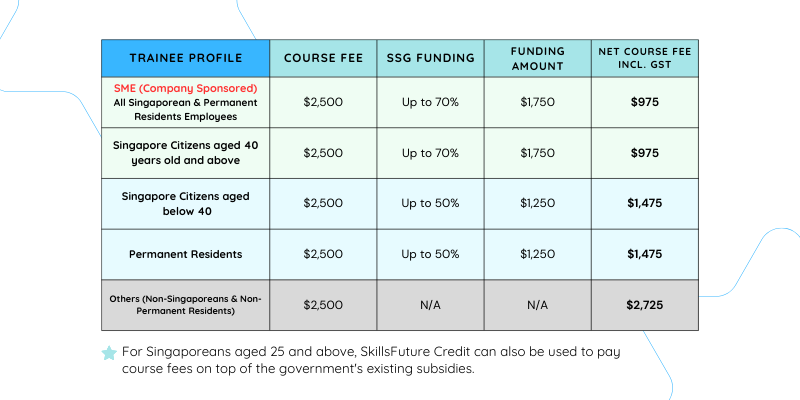
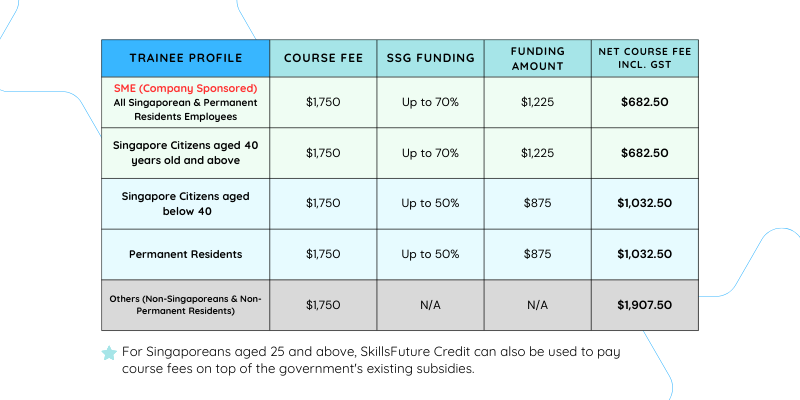
Course fees: If you meet the eligibility criteria, course fees can be subsidised by up to 70%. Moreover, SkillsFuture Credit can be applied to cover course fees in addition to existing government subsidies.
Course Pricing
 Back to all courses

[Jun Run] Certified Information Security Manager (CISM)

0%

Overview

As a working professional based in Singapore, the Certified Information Security Manager (CISM) course offers you a four-day training program packed with intensive learning sessions. Enrolling in this course will enable you to properly acquire the necessary skills and knowledge expected of proficient information security managers.

At the end of this course, you will be excellently prepared for the CISM exam. What's more, regardless of whether you are actively gearing up for the exam or not, obtaining the CISM certification through this training program remains a valuable way for you to equip yourself with insider knowledge of the five core competencies required of all established information security managers.

Course Description & Learning Outcomes

Course Outline

Some of the core topics featured in the CISM course syllabus include:

Introduction

- CISM Certification Prerequisites

- Examination information

- CISM Certification Application

- CISM Certification Maintenance and Renewal

Domain 1 : Information Security Governance

- Introduction and Benefits of Information Security Governance

- Components of Governance Framework

- Roles & Responsibilities

- Information Security Metrics

- Information Security Strategy Frameworks

- Information Security Implementation Program Frameworks

Domain 2 : Information Risk Management and Compliance

- Topics

- Introduction

- Information Asset Classification and Protection

- Roles & Responsibilities

- Introduction to Risk Management

- Risk Management Process

- Risk Identification

- Risk Treatment

- Controls

- Risk Monitoring and Analysis

- HR Risk

- Risk Reporting


Domain 3 : Information Security Programme Development and Management

- Introduction

- Outcomes

- IS Program

- Framework Components

- IS Program Roadmap

- Information Security Infrastructure and Architecture

- Security Program Management Administration

- Services and Operational Activities

- Controls

- Review and Audit

Domain 4 : Information Security Incident Management

- Introduction

- Objectives

- Incident Management Procedures

- Developing Incident Response Plan

- Roles and Responsibilities

- Content of the Incident Response Plan

- Disaster Recovery Procedures and Business Continuity


Examination Preparation and Techniques

- Administration

- Techniques

- Tips and Hints

- FAQ

For more information, please click here

Schedule

Start Date: 18 Jun 2024, Tuesday
End Date: 21 Jun 2024, Friday

Duration: 4 Days, 30 hours Timing: 9am - 5.30pm

Location: 3 Kallang Junction, #04-02, Vanguard Campus, Singapore 339265

Pricing

Course fees: If you meet the eligibility criteria, course fees can be subsidised by up to 70%. Moreover, SkillsFuture Credit can be applied to cover course fees in addition to existing government subsidies.

Course Pricing
 Back to all courses

[Dec Run] Cyber Security Incident Handling And Response (ECIH)

0%

Overview

The Certified Incident Handler (EICIH) program is designed to equip you with fundamental skills for effectively handling and responding to computer security incidents within an information system. Throughout the course, you will explore a range of underlying principles and techniques essential for detecting and responding to both current and emerging computer security threats.

You will also delve into various types of incidents, learn risk assessment methodologies, and gain insights into the laws and policies related to incident handling. Achieving the EICIH certification will not only enhance your skills but also increase your industry acceptance as a seasoned incident handler.

Course Description & Learning Outcomes

You will learn about computer forensics and its role in handling and responding to incidents.

The course also covers incident response teams, incident reporting methods, and incident recovery techniques in detail.

Module 01: Introduction to Incident Response and Handling

Module 02: Risk Assessment

Module 03: Incident Response and Handling Steps

Module 04: CSIRT

Module 05: Handling Network Security Incidents

Module 06: Handling Malicious Code Incidents

Module 07: Handling Insider Threats

Module 08: Forensic Analysis and Incident Response

Module 09: Incident Reporting

Module 10: Incident Recovery

Module 11: Security Policies and Laws

At the end of this course, you will be able to create incident handling and response policies and deal with various types of computer security incidents. You will be proficient in handling and responding to various security incidents such as network security  incidents, malicious code incidents, and insider attack threats.

For more information, please click here.

Schedule

Start Date: 16 Dec 2024, Monday
End Date: 18 Dec 2024, Wednesday

Start Date: 16 December 2024, Monday End Date: 18 December 2024, Wednesday Duration: 3 Days, 24 hours Timing: 9am - 6pm Location: Virtual

Location: Online

Pricing

Course fees: If you meet the eligibility criteria, course fees can be subsidised by up to 70%. Moreover, SkillsFuture Credit can be applied to cover course fees in addition to existing government subsidies.

Course Pricing
 Back to all courses

[Dec Run] Certified Information Security Manager (CISM)

0%

Overview

As a working professional based in Singapore, the Certified Information Security Manager (CISM) course offers you a four-day training program packed with intensive learning sessions. Enrolling in this course will enable you to properly acquire the necessary skills and knowledge expected of proficient information security managers.

At the end of this course, you will be excellently prepared for the CISM exam. What's more, regardless of whether you are actively gearing up for the exam or not, obtaining the CISM certification through this training program remains a valuable way for you to equip yourself with insider knowledge of the five core competencies required of all established information security managers.

Course Description & Learning Outcomes

Course Outline

Some of the core topics featured in the CISM course syllabus include:

Introduction

- CISM Certification Prerequisites

- Examination information

- CISM Certification Application

- CISM Certification Maintenance and Renewal

Domain 1 : Information Security Governance

- Introduction and Benefits of Information Security Governance

- Components of Governance Framework

- Roles & Responsibilities

- Information Security Metrics

- Information Security Strategy Frameworks

- Information Security Implementation Program Frameworks

Domain 2 : Information Risk Management and Compliance

- Topics

- Introduction

- Information Asset Classification and Protection

- Roles & Responsibilities

- Introduction to Risk Management

- Risk Management Process

- Risk Identification

- Risk Treatment

- Controls

- Risk Monitoring and Analysis

- HR Risk

- Risk Reporting


Domain 3 : Information Security Programme Development and Management

- Introduction

- Outcomes

- IS Program

- Framework Components

- IS Program Roadmap

- Information Security Infrastructure and Architecture

- Security Program Management Administration

- Services and Operational Activities

- Controls

- Review and Audit

Domain 4 : Information Security Incident Management

- Introduction

- Objectives

- Incident Management Procedures

- Developing Incident Response Plan

- Roles and Responsibilities

- Content of the Incident Response Plan

- Disaster Recovery Procedures and Business Continuity


Examination Preparation and Techniques

- Administration

- Techniques

- Tips and Hints

- FAQ

For more information, please click here

Schedule

Start Date: 09 Dec 2024, Monday
End Date: 12 Dec 2024, Thursday

Start Date: 9 December 2024, Monday End Date: 12 December 2024, Thursday Duration: 4 Days, 30 hours Timing: 9am - 5.30pm Location: Virtual

Location: Online

Pricing

Course fees: If you meet the eligibility criteria, course fees can be subsidised by up to 70%. Moreover, SkillsFuture Credit can be applied to cover course fees in addition to existing government subsidies.

Course Pricing
 Back to all courses

[Nov Run] CompTIA Security+

0%

Overview

CompTIA Security+ is the pinnacle of cybersecurity, including the most in-demand skills in zero trust, current threats, risk, automation, IoT, and more. Once you are certified, you will grasp the fundamental skills required for career success – and employers will notice.

The CompTIA Security+ examination certifies that you possess the necessary abilities and knowledge to:

- Monitor and protect hybrid environments that include mobile, IoT, cloud, and operational technologies.

- Demonstrate an understanding of applicable policies and regulations, including risk, compliance, and governance concepts.

- Assess the security posture of an enterprise environment and recommend and implement appropriate security solutions.

- Detect, analyse, and respond to security problems and events.

CompTIA Security+ is ISO 17024 compliant and has been authorised by the US Department of Defence to fulfil directive 8140/8570.01-M criteria. ANSI certification is valued by regulators and governments because it instils trust and confidence in the outcomes of an approved programme. Since 1 Jan 2011, over 2.3 million CompTIA ANSI/ISO-accredited examinations have been given.

Course Description & Learning Outcomes

Course Outline

  1. Security Fundamentals

    - Information Security Controls & Cycle

    - Fundamentals of Cryptography

    - Fundamentals of Security Policy

    - Methods of Authentication

  1. Identifying Security Threats and Vulnerabilities

    - Malware

    - Social Engineering

    - Software-Based Threats

    - Network-Based Threats

    - Physical Vulnerabilities and Threats

    - Wireless Vulnerabilities and Threats

  1. Managing Data, Application, and Host Security

    - Manage Data Security

    - Manage Application Security

    - Manage Device and Host Security

    - Manage Mobile Security

  1. Implementing Network Security

    - Configure Security Parameters on Network Devices and Technologies

    - Network Design Components and Elements

    - Secure Wireless Traffic

    - Apply Principles of Secure Network Administration

    - Implement Networking Services and Protocols

  1. Implementing Account Management, Access Control and Authentication

    - Implement Account Management Security Controls

    - Authentication Services and Access Control

  1. Managing Certificates

    - Install a Certificate Authority (CA) Hierarchy

    - Enrol Certificates

    - Secure Network Traffic by Using Certificates

    - Restore and Back Up Certificates and Private Keys

    - Revoke and Renew Certificates

    - Restore Certificates and Private Keys

  2. Implementing Compliance and Operational Security

    - Physical Security

    - Legal Compliance

    - Security Training and Awareness

    - Integrate Systems and Data with Third Parties

  3. Management of Risk

    - Risk Analysis

    - Implement Vulnerability Assessment Tools and Techniques

    - Scan for Vulnerabilities

    - Mitigation and Deterrent Techniques

  4. Managing and Troubleshooting Security Incidents

    - Recover from a Security Incident

    - Respond to Security Incidents

  5. Business Continuity and Disaster Recovery Planning

    - Business Continuity

    - Plan for Disaster Recovery

Threats, Vulnerabilities & Mitigations

This course focuses on responding to common threats, security incidents, vulnerabilities, and cyberattacks, as well as effective mitigation strategies and safeguarding hybrid settings.

Security Architecture

Includes security implications of various architecture models, enterprise infrastructure security concepts, and data protection measures.

General Security Concepts

Includes fundamental cybersecurity concepts and language to lay the groundwork for security controls reviewed throughout the examination.

Security Program Management & Oversight

Updated to better represent the communication and reporting abilities necessary for Security+ job responsibilities in compliance, governance, assessment, security awareness and risk management.

Security Operations

This includes implementing and improving security and vulnerability management approaches, as well as understanding the security implications of proper software, hardware, and data management.

Fo more information, please click here.

Schedule

Start Date: 11 Nov 2024, Monday
End Date: 15 Nov 2024, Friday

Start Date: 11 November 2024, Monday End Date: 15 November 2024, Friday Duration: 5 Days, 40 hours Timing: 9am - 6pm Location: Virtual

Location: Online

Pricing

Course fees: If you meet the eligibility criteria, course fees can be subsidised by up to 70%. Moreover, SkillsFuture Credit can be applied to cover course fees in addition to existing government subsidies.

Course Pricing
 Back to all courses

[Nov Run] Certified Ethical Hacker (CEH)

0%

Overview

Our Certified Ethical Hacker (CEH) certification training course offers you a comprehensive grasp of ethical hacking stages, diverse attack paths, and preventive measures. Delve into the mindset and tactics of hackers, empowering you to fortify your security setup and thwart potential attacks. By understanding system weaknesses and vulnerabilities, you will help organisations strengthen their security protocols and decrease the risk of incidents. Our funded CEH training course is designed to integrate practical experience and a structured approach across all ethical hacking domains and methodologies.

This certification offers you the opportunity to demonstrate essential knowledge and abilities necessary for the role of a certified ethical hacker in Singapore. Through this journey, you will adopt a new mindset regarding the obligations and strategies necessary for ensuring security.

Course Description & Learning Outcomes

In its 11th version, CEH continues to evolve, adapting to the newest operating systems, 

exploits, tools, technologies and strategies. Here are some significant enhancements introduced in CEH v11.

- Incorporating Parrot Security OS

- Re-Mapped to NIST/NICE Framework

- Enhanced Cloud Security, IoT, and OT Modules

-  Modern Malware Analysis

- Covering the Latest Threats – Fileless Malware

- New Lab Designs and Operating Systems

- Increased Lab Time and Hands−on Focus

- Industry’s Most Comprehensive Tools Library


What You Will Learn ?

- Key issues plaguing the information security world include ethical hacking, information security controls, laws, and standards.

- Conduct foot printing and reconnaissance utilising cutting-edge techniques and tools as an essential pre-attack phase required in ethical hacking.

- Network scanning countermeasures and techniques.

- Enumeration countermeasures and techniques.

- Conducting vulnerability analysis, which involved identifying security weaknesses within the network, communication infrastructure, and end systems of the target organization.

- Unveiling system and network weaknesses using techniques such as steganalysis attacks, system hacking methodology, covering traced and steganography.

- Social engineering techniques and how to identify theft attacks to audit human- level vulnerabilities and suggest social engineering countermeasures.

- DoS/DDoS tools and attack techniques to audit a target and DoS/DDoS countermeasures.

- Various forms of malware (such as Trojans, viruses, worms, etc.), conducting system audits to detect malware attacks, analysing malware, and implementing countermeasures.

- Countermeasures, session hijacking techniques to uncover session management at network-level, authentication/authorisation, and cryptographic weaknesses.

- Packet sniffing techniques to discover network vulnerabilities and countermeasures to defend sniffing.

- Assessing vulnerabilities in web applications involves utilizing a comprehensive web application hacking methodology to identify web application attacks and implementing appropriate countermeasures.

- Countermeasures, injection detection tools to detect SQL injection attempts, and SQL injection attack techniques.

- Web server attacks and a comprehensive attack methodology to audit vulnerabilities in web server infrastructure, and countermeasures.

- IDS, honeypot and firewall evasion techniques, evasion tools and techniques to audit a network perimeter for weaknesses, and countermeasures.

- Attack vectors on mobile platforms, exploits targeting Android vulnerabilities, and guidelines along with tools for enhancing mobile security.

- Discover potential risks targeting IoT and OT platforms and acquire strategies for securely safeguarding IoT and OT devices.

- Wireless encryption, wireless hacking tools, wireless hacking methodology, and Wi-Fi security tools.

- Penetration testing, security audit, vulnerability assessment, and penetration testing roadmap.

- Public Key Infrastructure (PKI), cryptography ciphers, cryptanalysis tools, and cryptography attacks.

- Cloud computing concepts (Server less computing, container technology), various threats/attacks, and security techniques and tools.


Course Outline

- Introduction to Ethical Hacking

- Reconnaissance and Foot printing

- Scanning Networks
 Enumeration

- Vulnerability Analysis

- Malware Threats

- System Hacking

- Session Hijacking

- Honeypots, firewalls and IDS

- SQL Injection

- Hacking Wireless Networks

- Hacking Web Applications

- Hacking Mobile Platforms

- Hacking Web Servers

- Sniffing

- IoT Hacking

- Cloud Computing

- Social Engineering
 Denial-of-Service

- Cryptography

The objective of this funded CEH course is to assist you in becoming a master of ethical hacking methodology that can be used in an ethical hacking or penetration testing situation. Our expert-led, funded programs can elevate your cybersecurity journey. With online flexibility and comprehensive content, become a certified ethical hacker ready for any penetration testing scenario, all through our convenient online training courses.

At the end of this course, you will be prepared for EC-Council Certified Ethical Hacker exam 312-50.

For more information, please click here.

Schedule

Start Date: 04 Nov 2024, Monday
End Date: 08 Nov 2024, Friday

Start Date: 4 Nov 2024, Monday End Date: 8 Nov 2024, Friday Duration: 5 Days, 36.25 hours Timing: 9am - 5.15pm Location: Virtual

Location: Online

Pricing

Course fees: If you meet the eligibility criteria, course fees can be subsidised by up to 70%. Moreover, SkillsFuture Credit can be applied to cover course fees in addition to existing government subsidies.

Course Pricing
 Back to all courses

[Oct Run] Cyber Security Incident Handling And Response (ECIH)

0%

Overview

The Certified Incident Handler (EICIH) program is designed to equip you with fundamental skills for effectively handling and responding to computer security incidents within an information system. Throughout the course, you will explore a range of underlying principles and techniques essential for detecting and responding to both current and emerging computer security threats.

You will also delve into various types of incidents, learn risk assessment methodologies, and gain insights into the laws and policies related to incident handling. Achieving the EICIH certification will not only enhance your skills but also increase your industry acceptance as a seasoned incident handler.

Course Description & Learning Outcomes

You will learn about computer forensics and its role in handling and responding to incidents.

The course also covers incident response teams, incident reporting methods, and incident recovery techniques in detail.

Module 01: Introduction to Incident Response and Handling

Module 02: Risk Assessment

Module 03: Incident Response and Handling Steps

Module 04: CSIRT

Module 05: Handling Network Security Incidents

Module 06: Handling Malicious Code Incidents

Module 07: Handling Insider Threats

Module 08: Forensic Analysis and Incident Response

Module 09: Incident Reporting

Module 10: Incident Recovery

Module 11: Security Policies and Laws

At the end of this course, you will be able to create incident handling and response policies and deal with various types of computer security incidents. You will be proficient in handling and responding to various security incidents such as network security  incidents, malicious code incidents, and insider attack threats.

For more information, please click here.

Schedule

Start Date: 28 Oct 2024, Monday
End Date: 30 Oct 2024, Wednesday

Start Date: 28 October 2024, Monday End Date: 30 October 2024, Wednesday Duration: 3 Days, 24 hours Timing: 9am - 6pm Location: Virtual

Location: Online

Pricing

Course fees: If you meet the eligibility criteria, course fees can be subsidised by up to 70%. Moreover, SkillsFuture Credit can be applied to cover course fees in addition to existing government subsidies.

Course Pricing
 Back to all courses

[Oct Run] Certified Information Security Manager (CISM)

0%

Overview

As a working professional based in Singapore, the Certified Information Security Manager (CISM) course offers you a four-day training program packed with intensive learning sessions. Enrolling in this course will enable you to properly acquire the necessary skills and knowledge expected of proficient information security managers.

At the end of this course, you will be excellently prepared for the CISM exam. What's more, regardless of whether you are actively gearing up for the exam or not, obtaining the CISM certification through this training program remains a valuable way for you to equip yourself with insider knowledge of the five core competencies required of all established information security managers.

Course Description & Learning Outcomes

Course Outline

Some of the core topics featured in the CISM course syllabus include:

Introduction

- CISM Certification Prerequisites

- Examination information

- CISM Certification Application

- CISM Certification Maintenance and Renewal

Domain 1 : Information Security Governance

- Introduction and Benefits of Information Security Governance

- Components of Governance Framework

- Roles & Responsibilities

- Information Security Metrics

- Information Security Strategy Frameworks

- Information Security Implementation Program Frameworks

Domain 2 : Information Risk Management and Compliance

- Topics

- Introduction

- Information Asset Classification and Protection

- Roles & Responsibilities

- Introduction to Risk Management

- Risk Management Process

- Risk Identification

- Risk Treatment

- Controls

- Risk Monitoring and Analysis

- HR Risk

- Risk Reporting


Domain 3 : Information Security Programme Development and Management

- Introduction

- Outcomes

- IS Program

- Framework Components

- IS Program Roadmap

- Information Security Infrastructure and Architecture

- Security Program Management Administration

- Services and Operational Activities

- Controls

- Review and Audit

Domain 4 : Information Security Incident Management

- Introduction

- Objectives

- Incident Management Procedures

- Developing Incident Response Plan

- Roles and Responsibilities

- Content of the Incident Response Plan

- Disaster Recovery Procedures and Business Continuity


Examination Preparation and Techniques

- Administration

- Techniques

- Tips and Hints

- FAQ

For more information, please click here

Schedule

Start Date: 07 Oct 2024, Monday
End Date: 10 Oct 2024, Thursday

Duration: 4 Days, 30 hours Timing: 9am - 5.30pm

Location: 3 Kallang Junction, #04-02, Vanguard Campus, Singapore 339265

Pricing

Course fees: If you meet the eligibility criteria, course fees can be subsidised by up to 70%. Moreover, SkillsFuture Credit can be applied to cover course fees in addition to existing government subsidies.

Course Pricing
 Back to all courses

[Sep Run] CompTIA Security+

0%

Overview

CompTIA Security+ is the pinnacle of cybersecurity, including the most in-demand skills in zero trust, current threats, risk, automation, IoT, and more. Once you are certified, you will grasp the fundamental skills required for career success – and employers will notice.

The CompTIA Security+ examination certifies that you possess the necessary abilities and knowledge to:

- Monitor and protect hybrid environments that include mobile, IoT, cloud, and operational technologies.

- Demonstrate an understanding of applicable policies and regulations, including risk, compliance, and governance concepts.

- Assess the security posture of an enterprise environment and recommend and implement appropriate security solutions.

- Detect, analyse, and respond to security problems and events.

CompTIA Security+ is ISO 17024 compliant and has been authorised by the US Department of Defence to fulfil directive 8140/8570.01-M criteria. ANSI certification is valued by regulators and governments because it instils trust and confidence in the outcomes of an approved programme. Since 1 Jan 2011, over 2.3 million CompTIA ANSI/ISO-accredited examinations have been given.

Course Description & Learning Outcomes

Course Outline

  1. Security Fundamentals

    - Information Security Controls & Cycle

    - Fundamentals of Cryptography

    - Fundamentals of Security Policy

    - Methods of Authentication

  1. Identifying Security Threats and Vulnerabilities

    - Malware

    - Social Engineering

    - Software-Based Threats

    - Network-Based Threats

    - Physical Vulnerabilities and Threats

    - Wireless Vulnerabilities and Threats

  1. Managing Data, Application, and Host Security

    - Manage Data Security

    - Manage Application Security

    - Manage Device and Host Security

    - Manage Mobile Security

  1. Implementing Network Security

    - Configure Security Parameters on Network Devices and Technologies

    - Network Design Components and Elements

    - Secure Wireless Traffic

    - Apply Principles of Secure Network Administration

    - Implement Networking Services and Protocols

  1. Implementing Account Management, Access Control and Authentication

    - Implement Account Management Security Controls

    - Authentication Services and Access Control

  1. Managing Certificates

    - Install a Certificate Authority (CA) Hierarchy

    - Enrol Certificates

    - Secure Network Traffic by Using Certificates

    - Restore and Back Up Certificates and Private Keys

    - Revoke and Renew Certificates

    - Restore Certificates and Private Keys

  2. Implementing Compliance and Operational Security

    - Physical Security

    - Legal Compliance

    - Security Training and Awareness

    - Integrate Systems and Data with Third Parties

  3. Management of Risk

    - Risk Analysis

    - Implement Vulnerability Assessment Tools and Techniques

    - Scan for Vulnerabilities

    - Mitigation and Deterrent Techniques

  4. Managing and Troubleshooting Security Incidents

    - Recover from a Security Incident

    - Respond to Security Incidents

  5. Business Continuity and Disaster Recovery Planning

    - Business Continuity

    - Plan for Disaster Recovery

Threats, Vulnerabilities & Mitigations

This course focuses on responding to common threats, security incidents, vulnerabilities, and cyberattacks, as well as effective mitigation strategies and safeguarding hybrid settings.

Security Architecture

Includes security implications of various architecture models, enterprise infrastructure security concepts, and data protection measures.

General Security Concepts

Includes fundamental cybersecurity concepts and language to lay the groundwork for security controls reviewed throughout the examination.

Security Program Management & Oversight

Updated to better represent the communication and reporting abilities necessary for Security+ job responsibilities in compliance, governance, assessment, security awareness and risk management.

Security Operations

This includes implementing and improving security and vulnerability management approaches, as well as understanding the security implications of proper software, hardware, and data management.

Fo more information, please click here.

Schedule

Start Date: 09 Sep 2024, Monday
End Date: 13 Sep 2024, Friday

Start Date: 9 September 2024, Monday End Date: 13 September 2024, Friday Duration: 5 Days, 40 hours Timing: 9am - 6pm Location: Virtual

Location: Online

Pricing

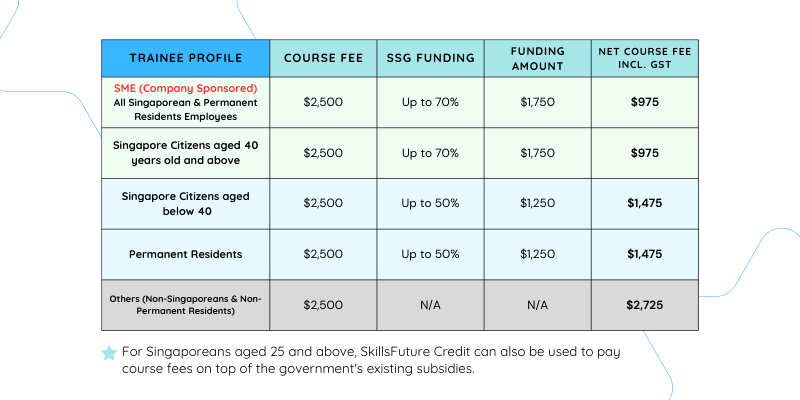
Course fees: If you meet the eligibility criteria, course fees can be subsidised by up to 70%. Moreover, SkillsFuture Credit can be applied to cover course fees in addition to existing government subsidies.
Course Pricing
 Back to all courses

[Sep Run] Certified Ethical Hacker (CEH)

0%

Overview

Our Certified Ethical Hacker (CEH) certification training course offers you a comprehensive grasp of ethical hacking stages, diverse attack paths, and preventive measures. Delve into the mindset and tactics of hackers, empowering you to fortify your security setup and thwart potential attacks. By understanding system weaknesses and vulnerabilities, you will help organisations strengthen their security protocols and decrease the risk of incidents. Our funded CEH training course is designed to integrate practical experience and a structured approach across all ethical hacking domains and methodologies.

This certification offers you the opportunity to demonstrate essential knowledge and abilities necessary for the role of a certified ethical hacker in Singapore. Through this journey, you will adopt a new mindset regarding the obligations and strategies necessary for ensuring security.

Course Description & Learning Outcomes

In its 11th version, CEH continues to evolve, adapting to the newest operating systems, 

exploits, tools, technologies and strategies. Here are some significant enhancements introduced in CEH v11.

- Incorporating Parrot Security OS

- Re-Mapped to NIST/NICE Framework

- Enhanced Cloud Security, IoT, and OT Modules

-  Modern Malware Analysis

- Covering the Latest Threats – Fileless Malware

- New Lab Designs and Operating Systems

- Increased Lab Time and Hands−on Focus

- Industry’s Most Comprehensive Tools Library


What You Will Learn ?

- Key issues plaguing the information security world include ethical hacking, information security controls, laws, and standards.

- Conduct foot printing and reconnaissance utilising cutting-edge techniques and tools as an essential pre-attack phase required in ethical hacking.

- Network scanning countermeasures and techniques.

- Enumeration countermeasures and techniques.

- Conducting vulnerability analysis, which involved identifying security weaknesses within the network, communication infrastructure, and end systems of the target organization.

- Unveiling system and network weaknesses using techniques such as steganalysis attacks, system hacking methodology, covering traced and steganography.

- Social engineering techniques and how to identify theft attacks to audit human- level vulnerabilities and suggest social engineering countermeasures.

- DoS/DDoS tools and attack techniques to audit a target and DoS/DDoS countermeasures.

- Various forms of malware (such as Trojans, viruses, worms, etc.), conducting system audits to detect malware attacks, analysing malware, and implementing countermeasures.

- Countermeasures, session hijacking techniques to uncover session management at network-level, authentication/authorisation, and cryptographic weaknesses.

- Packet sniffing techniques to discover network vulnerabilities and countermeasures to defend sniffing.

- Assessing vulnerabilities in web applications involves utilizing a comprehensive web application hacking methodology to identify web application attacks and implementing appropriate countermeasures.

- Countermeasures, injection detection tools to detect SQL injection attempts, and SQL injection attack techniques.

- Web server attacks and a comprehensive attack methodology to audit vulnerabilities in web server infrastructure, and countermeasures.

- IDS, honeypot and firewall evasion techniques, evasion tools and techniques to audit a network perimeter for weaknesses, and countermeasures.

- Attack vectors on mobile platforms, exploits targeting Android vulnerabilities, and guidelines along with tools for enhancing mobile security.

- Discover potential risks targeting IoT and OT platforms and acquire strategies for securely safeguarding IoT and OT devices.

- Wireless encryption, wireless hacking tools, wireless hacking methodology, and Wi-Fi security tools.

- Penetration testing, security audit, vulnerability assessment, and penetration testing roadmap.

- Public Key Infrastructure (PKI), cryptography ciphers, cryptanalysis tools, and cryptography attacks.

- Cloud computing concepts (Server less computing, container technology), various threats/attacks, and security techniques and tools.


Course Outline

- Introduction to Ethical Hacking

- Reconnaissance and Foot printing

- Scanning Networks
 Enumeration

- Vulnerability Analysis

- Malware Threats

- System Hacking

- Session Hijacking

- Honeypots, firewalls and IDS

- SQL Injection

- Hacking Wireless Networks

- Hacking Web Applications

- Hacking Mobile Platforms

- Hacking Web Servers

- Sniffing

- IoT Hacking

- Cloud Computing

- Social Engineering
 Denial-of-Service

- Cryptography

The objective of this funded CEH course is to assist you in becoming a master of ethical hacking methodology that can be used in an ethical hacking or penetration testing situation. Our expert-led, funded programs can elevate your cybersecurity journey. With online flexibility and comprehensive content, become a certified ethical hacker ready for any penetration testing scenario, all through our convenient online training courses.

At the end of this course, you will be prepared for EC-Council Certified Ethical Hacker exam 312-50.

For more information, please click here.

Schedule

Start Date: 02 Sep 2024, Monday
End Date: 06 Sep 2024, Friday

Start Date: 2 September 2024, Monday End Date: 6 September 2024, Friday Duration: 5 Days, 36.25 hours Timing: 9am - 5.15pm Location: Virtual

Location: Online

Pricing

Course fees: If you meet the eligibility criteria, course fees can be subsidised by up to 70%. Moreover, SkillsFuture Credit can be applied to cover course fees in addition to existing government subsidies.
Course Pricing

Be part of Singapore's fastest growing Deep Tech Community

Receive the latest updates on ecosystem events and programmes!