
×
 
 Back to all courses

[Aug Run] Cyber Security Incident Handling And Response (ECIH)

0%

Overview

The Certified Incident Handler (EICIH) program is designed to equip you with fundamental skills for effectively handling and responding to computer security incidents within an information system. Throughout the course, you will explore a range of underlying principles and techniques essential for detecting and responding to both current and emerging computer security threats.

You will also delve into various types of incidents, learn risk assessment methodologies, and gain insights into the laws and policies related to incident handling. Achieving the EICIH certification will not only enhance your skills but also increase your industry acceptance as a seasoned incident handler.

Course Description & Learning Outcomes

You will learn about computer forensics and its role in handling and responding to incidents.

The course also covers incident response teams, incident reporting methods, and incident recovery techniques in detail.

Module 01: Introduction to Incident Response and Handling

Module 02: Risk Assessment

Module 03: Incident Response and Handling Steps

Module 04: CSIRT

Module 05: Handling Network Security Incidents

Module 06: Handling Malicious Code Incidents

Module 07: Handling Insider Threats

Module 08: Forensic Analysis and Incident Response

Module 09: Incident Reporting

Module 10: Incident Recovery

Module 11: Security Policies and Laws

At the end of this course, you will be able to create incident handling and response policies and deal with various types of computer security incidents. You will be proficient in handling and responding to various security incidents such as network security  incidents, malicious code incidents, and insider attack threats.

For more information, please click here.

Schedule

Start Date: 12 Aug 2024, Monday
End Date: 14 Aug 2024, Wednesday

Start Date: 12 August 2024, Monday End Date: 14 August 2024, Wednesday Duration: 3 Days, 24 hours Timing: 9am - 6pm Location: Virtual

Location: Online

Pricing

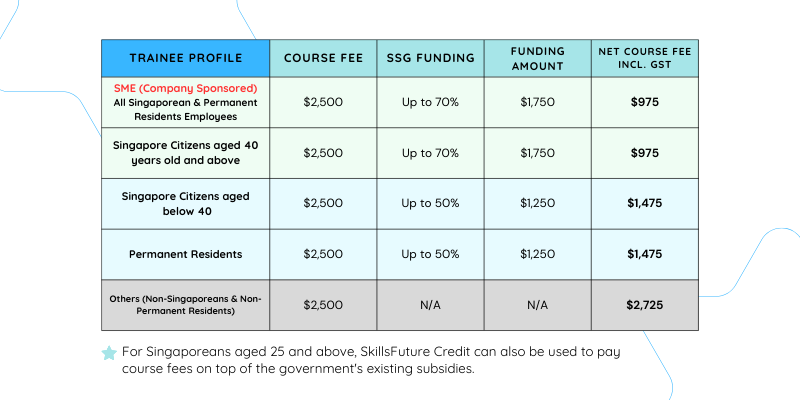
Course fees: If you meet the eligibility criteria, course fees can be subsidised by up to 70%. Moreover, SkillsFuture Credit can be applied to cover course fees in addition to existing government subsidies.

Course Pricing
 Back to all courses

[Aug Run] Certified Information Security Manager (CISM)

0%

Overview

As a working professional based in Singapore, the Certified Information Security Manager (CISM) course offers you a four-day training program packed with intensive learning sessions. Enrolling in this course will enable you to properly acquire the necessary skills and knowledge expected of proficient information security managers.

At the end of this course, you will be excellently prepared for the CISM exam. What's more, regardless of whether you are actively gearing up for the exam or not, obtaining the CISM certification through this training program remains a valuable way for you to equip yourself with insider knowledge of the five core competencies required of all established information security managers.

Course Description & Learning Outcomes

Course Outline

Some of the core topics featured in the CISM course syllabus include:

Introduction

- CISM Certification Prerequisites

- Examination information

- CISM Certification Application

- CISM Certification Maintenance and Renewal

Domain 1 : Information Security Governance

- Introduction and Benefits of Information Security Governance

- Components of Governance Framework

- Roles & Responsibilities

- Information Security Metrics

- Information Security Strategy Frameworks

- Information Security Implementation Program Frameworks

Domain 2 : Information Risk Management and Compliance

- Topics

- Introduction

- Information Asset Classification and Protection

- Roles & Responsibilities

- Introduction to Risk Management

- Risk Management Process

- Risk Identification

- Risk Treatment

- Controls

- Risk Monitoring and Analysis

- HR Risk

- Risk Reporting


Domain 3 : Information Security Programme Development and Management

- Introduction

- Outcomes

- IS Program

- Framework Components

- IS Program Roadmap

- Information Security Infrastructure and Architecture

- Security Program Management Administration

- Services and Operational Activities

- Controls

- Review and Audit

Domain 4 : Information Security Incident Management

- Introduction

- Objectives

- Incident Management Procedures

- Developing Incident Response Plan

- Roles and Responsibilities

- Content of the Incident Response Plan

- Disaster Recovery Procedures and Business Continuity


Examination Preparation and Techniques

- Administration

- Techniques

- Tips and Hints

- FAQ

For more information, please click here

Schedule

Start Date: 05 Aug 2024, Monday
End Date: 08 Aug 2024, Thursday

Start Date: 5 August 2024, Monday End Date: 8 August 2024, Thursday Duration: 4 Days, 30 hours Timing: 9am - 5.30pm Location: Virtual

Location: Online

Pricing

Course fees: If you meet the eligibility criteria, course fees can be subsidised by up to 70%. Moreover, SkillsFuture Credit can be applied to cover course fees in addition to existing government subsidies.

Course Pricing
 Back to all courses

[Jul Run] CompTIA Security+

0%

Overview

CompTIA Security+ is the pinnacle of cybersecurity, including the most in-demand skills in zero trust, current threats, risk, automation, IoT, and more. Once you are certified, you will grasp the fundamental skills required for career success – and employers will notice.

The CompTIA Security+ examination certifies that you possess the necessary abilities and knowledge to:

- Monitor and protect hybrid environments that include mobile, IoT, cloud, and operational technologies.

- Demonstrate an understanding of applicable policies and regulations, including risk, compliance, and governance concepts.

- Assess the security posture of an enterprise environment and recommend and implement appropriate security solutions.

- Detect, analyse, and respond to security problems and events.

CompTIA Security+ is ISO 17024 compliant and has been authorised by the US Department of Defence to fulfil directive 8140/8570.01-M criteria. ANSI certification is valued by regulators and governments because it instils trust and confidence in the outcomes of an approved programme. Since 1 Jan 2011, over 2.3 million CompTIA ANSI/ISO-accredited examinations have been given.

Course Description & Learning Outcomes

Course Outline

  1. Security Fundamentals

    - Information Security Controls & Cycle

    - Fundamentals of Cryptography

    - Fundamentals of Security Policy

    - Methods of Authentication

  1. Identifying Security Threats and Vulnerabilities

    - Malware

    - Social Engineering

    - Software-Based Threats

    - Network-Based Threats

    - Physical Vulnerabilities and Threats

    - Wireless Vulnerabilities and Threats

  1. Managing Data, Application, and Host Security

    - Manage Data Security

    - Manage Application Security

    - Manage Device and Host Security

    - Manage Mobile Security

  1. Implementing Network Security

    - Configure Security Parameters on Network Devices and Technologies

    - Network Design Components and Elements

    - Secure Wireless Traffic

    - Apply Principles of Secure Network Administration

    - Implement Networking Services and Protocols

  1. Implementing Account Management, Access Control and Authentication

    - Implement Account Management Security Controls

    - Authentication Services and Access Control

  1. Managing Certificates

    - Install a Certificate Authority (CA) Hierarchy

    - Enrol Certificates

    - Secure Network Traffic by Using Certificates

    - Restore and Back Up Certificates and Private Keys

    - Revoke and Renew Certificates

    - Restore Certificates and Private Keys

  2. Implementing Compliance and Operational Security

    - Physical Security

    - Legal Compliance

    - Security Training and Awareness

    - Integrate Systems and Data with Third Parties

  3. Management of Risk

    - Risk Analysis

    - Implement Vulnerability Assessment Tools and Techniques

    - Scan for Vulnerabilities

    - Mitigation and Deterrent Techniques

  4. Managing and Troubleshooting Security Incidents

    - Recover from a Security Incident

    - Respond to Security Incidents

  5. Business Continuity and Disaster Recovery Planning

    - Business Continuity

    - Plan for Disaster Recovery

Threats, Vulnerabilities & Mitigations

This course focuses on responding to common threats, security incidents, vulnerabilities, and cyberattacks, as well as effective mitigation strategies and safeguarding hybrid settings.

Security Architecture

Includes security implications of various architecture models, enterprise infrastructure security concepts, and data protection measures.

General Security Concepts

Includes fundamental cybersecurity concepts and language to lay the groundwork for security controls reviewed throughout the examination.

Security Program Management & Oversight

Updated to better represent the communication and reporting abilities necessary for Security+ job responsibilities in compliance, governance, assessment, security awareness and risk management.

Security Operations

This includes implementing and improving security and vulnerability management approaches, as well as understanding the security implications of proper software, hardware, and data management.

Fo more information, please click here.

Schedule

Start Date: 29 Jul 2024, Monday
End Date: 02 Aug 2024, Friday

Start Date: 29 July 2024, Monday End Date: 2 August 2024, Friday Duration: 5 Days, 40 hours Timing: 9am - 6pm Location: Virtual

Location: Online

Pricing

Course fees: If you meet the eligibility criteria, course fees can be subsidised by up to 70%. Moreover, SkillsFuture Credit can be applied to cover course fees in addition to existing government subsidies.

Course Pricing
 Back to all courses

[Jul Run] Certified Ethical Hacker (CEH)

0%

Overview

Our Certified Ethical Hacker (CEH) certification training course offers you a comprehensive grasp of ethical hacking stages, diverse attack paths, and preventive measures. Delve into the mindset and tactics of hackers, empowering you to fortify your security setup and thwart potential attacks. By understanding system weaknesses and vulnerabilities, you will help organisations strengthen their security protocols and decrease the risk of incidents. Our funded CEH training course is designed to integrate practical experience and a structured approach across all ethical hacking domains and methodologies.

This certification offers you the opportunity to demonstrate essential knowledge and abilities necessary for the role of a certified ethical hacker in Singapore. Through this journey, you will adopt a new mindset regarding the obligations and strategies necessary for ensuring security.

Course Description & Learning Outcomes

In its 11th version, CEH continues to evolve, adapting to the newest operating systems, 

exploits, tools, technologies and strategies. Here are some significant enhancements introduced in CEH v11.

- Incorporating Parrot Security OS

- Re-Mapped to NIST/NICE Framework

- Enhanced Cloud Security, IoT, and OT Modules

-  Modern Malware Analysis

- Covering the Latest Threats – Fileless Malware

- New Lab Designs and Operating Systems

- Increased Lab Time and Hands−on Focus

- Industry’s Most Comprehensive Tools Library


What You Will Learn ?

- Key issues plaguing the information security world include ethical hacking, information security controls, laws, and standards.

- Conduct foot printing and reconnaissance utilising cutting-edge techniques and tools as an essential pre-attack phase required in ethical hacking.

- Network scanning countermeasures and techniques.

- Enumeration countermeasures and techniques.

- Conducting vulnerability analysis, which involved identifying security weaknesses within the network, communication infrastructure, and end systems of the target organization.

- Unveiling system and network weaknesses using techniques such as steganalysis attacks, system hacking methodology, covering traced and steganography.

- Social engineering techniques and how to identify theft attacks to audit human- level vulnerabilities and suggest social engineering countermeasures.

- DoS/DDoS tools and attack techniques to audit a target and DoS/DDoS countermeasures.

- Various forms of malware (such as Trojans, viruses, worms, etc.), conducting system audits to detect malware attacks, analysing malware, and implementing countermeasures.

- Countermeasures, session hijacking techniques to uncover session management at network-level, authentication/authorisation, and cryptographic weaknesses.

- Packet sniffing techniques to discover network vulnerabilities and countermeasures to defend sniffing.

- Assessing vulnerabilities in web applications involves utilizing a comprehensive web application hacking methodology to identify web application attacks and implementing appropriate countermeasures.

- Countermeasures, injection detection tools to detect SQL injection attempts, and SQL injection attack techniques.

- Web server attacks and a comprehensive attack methodology to audit vulnerabilities in web server infrastructure, and countermeasures.

- IDS, honeypot and firewall evasion techniques, evasion tools and techniques to audit a network perimeter for weaknesses, and countermeasures.

- Attack vectors on mobile platforms, exploits targeting Android vulnerabilities, and guidelines along with tools for enhancing mobile security.

- Discover potential risks targeting IoT and OT platforms and acquire strategies for securely safeguarding IoT and OT devices.

- Wireless encryption, wireless hacking tools, wireless hacking methodology, and Wi-Fi security tools.

- Penetration testing, security audit, vulnerability assessment, and penetration testing roadmap.

- Public Key Infrastructure (PKI), cryptography ciphers, cryptanalysis tools, and cryptography attacks.

- Cloud computing concepts (Server less computing, container technology), various threats/attacks, and security techniques and tools.


Course Outline

- Introduction to Ethical Hacking

- Reconnaissance and Foot printing

- Scanning Networks
 Enumeration

- Vulnerability Analysis

- Malware Threats

- System Hacking

- Session Hijacking

- Honeypots, firewalls and IDS

- SQL Injection

- Hacking Wireless Networks

- Hacking Web Applications

- Hacking Mobile Platforms

- Hacking Web Servers

- Sniffing

- IoT Hacking

- Cloud Computing

- Social Engineering
 Denial-of-Service

- Cryptography

The objective of this funded CEH course is to assist you in becoming a master of ethical hacking methodology that can be used in an ethical hacking or penetration testing situation. Our expert-led, funded programs can elevate your cybersecurity journey. With online flexibility and comprehensive content, become a certified ethical hacker ready for any penetration testing scenario, all through our convenient online training courses.

At the end of this course, you will be prepared for EC-Council Certified Ethical Hacker exam 312-50.

For more information, please click here.

Schedule

Start Date: 15 Jul 2024, Monday
End Date: 19 Jul 2024, Friday

Start Date: 15 July 2024, Monday End Date: 19 July 2024, Friday Duration: 5 Days, 36.25 hours Timing: 9am - 5.15pm Location: Virtual

Location: Online

Pricing

Course fees: If you meet the eligibility criteria, course fees can be subsidised by up to 70%. Moreover, SkillsFuture Credit can be applied to cover course fees in addition to existing government subsidies.

Course Pricing
 Back to all events

Pie & AI - Improving Customer Experience With AI

0%

Overview

🔥 Get ready to ignite your journey towards customer experience with the power of AI!

Join us for an immersive fireside chat, Pie & AI on 29th May 2024, 2-4pm where we'll dive into the world of customer experiences and the game-changing potential of artificial intelligence.

Hear from CEO & Founder of AIxlerator and co-founder of Lazada, Tim Rath and other guests in an engaging fireside chat moderated by Ambassador of DeepLearning.AI, Kirsty Tan. Learn how cutting-edge AI solutions can transform customer experiences, fostering satisfaction, loyalty, and business growth. From personalised recommendations to predictive analytics, explore the endless possibilities AI brings to every interaction.

Limited seats are available, reserve your spot now: https://bit.ly/3QAi8kg

Join us for an engaging fireside chat as we delve into the realm of customer experiences and the transformative power of artificial intelligence (AI).

Discover the pain points plaguing modern customer interactions and explore the challenges businesses face in meeting evolving consumer demands. From cumbersome processes to disconnected touchpoints, we'll uncover the hurdles hindering seamless customer journeys.

Our discussion will center on empowering startups to leverage AI technologies effectively. Learn how cutting-edge AI solutions can transform customer experiences, fostering satisfaction, loyalty, and business growth. From personalized recommendations to predictive analytics, explore the endless possibilities AI brings to every interaction.

Don't miss out on this opportunity to gain insights and inspiration for your startup's journey towards AI-driven excellence in customer experiences. Sign up now to reserve your spot and embark on the path to revolutionizing your business!

Supporting Image

Schedule

Date: 29 May 2024, Wednesday
Time: 2:00 PM - 4:00 PM (GMT +8:00) Kuala Lumpur, Singapore
Location: 70 Pasir Panjang Road, #03-71, Mapletree Business City, 117371

Partners

DeepLearning.AIGoogle
 Back to all courses

Cyber Security Incident Handling And Response (ECIH)

0%

Overview

The Certified Incident Handler (EICIH) program is designed to equip you with fundamental skills for effectively handling and responding to computer security incidents within an information system. Throughout the course, you will explore a range of underlying principles and techniques essential for detecting and responding to both current and emerging computer security threats.

You will also delve into various types of incidents, learn risk assessment methodologies, and gain insights into the laws and policies related to incident handling. Achieving the EICIH certification will not only enhance your skills but also increase your industry acceptance as a seasoned incident handler.

Course Description & Learning Outcomes

You will learn about computer forensics and its role in handling and responding to incidents.

The course also covers incident response teams, incident reporting methods, and incident recovery techniques in detail.

Module 01: Introduction to Incident Response and Handling

Module 02: Risk Assessment

Module 03: Incident Response and Handling Steps

Module 04: CSIRT

Module 05: Handling Network Security Incidents

Module 06: Handling Malicious Code Incidents

Module 07: Handling Insider Threats

Module 08: Forensic Analysis and Incident Response

Module 09: Incident Reporting

Module 10: Incident Recovery

Module 11: Security Policies and Laws

At the end of this course, you will be able to create incident handling and response policies and deal with various types of computer security incidents. You will be proficient in handling and responding to various security incidents such as network security  incidents, malicious code incidents, and insider attack threats.

For more information, please click here.

Schedule

Start Date: 12 Aug 2024, Monday
End Date: 18 Dec 2024, Wednesday

Course Duration: 3 Days, 24 hours Course Timing: 9am - 6pm Course Schedule Dates: Location: Virtual (Mon to Weds) - 12th to 14th Aug - 28th to 30th Oct - 16th to 18th Dec

Location: Online

Pricing

Course fees: If you meet the eligibility criteria, course fees can be subsidised by up to 70%. Moreover, SkillsFuture Credit can be applied to cover course fees in addition to existing government subsidies.

Course Pricing
 Back to all courses

CompTIA Security+

0%

Overview

CompTIA Security+ is the pinnacle of cybersecurity, including the most in-demand skills in zero trust, current threats, risk, automation, IoT, and more. Once you are certified, you will grasp the fundamental skills required for career success – and employers will notice.

The CompTIA Security+ examination certifies that you possess the necessary abilities and knowledge to:

- Monitor and protect hybrid environments that include mobile, IoT, cloud, and operational technologies.

- Demonstrate an understanding of applicable policies and regulations, including risk, compliance, and governance concepts.

- Assess the security posture of an enterprise environment and recommend and implement appropriate security solutions.

- Detect, analyse, and respond to security problems and events.

CompTIA Security+ is ISO 17024 compliant and has been authorised by the US Department of Defence to fulfil directive 8140/8570.01-M criteria. ANSI certification is valued by regulators and governments because it instils trust and confidence in the outcomes of an approved programme. Since 1 Jan 2011, over 2.3 million CompTIA ANSI/ISO-accredited examinations have been given.

Course Description & Learning Outcomes

Course Outline

  1. Security Fundamentals

    - Information Security Controls & Cycle

    - Fundamentals of Cryptography

    - Fundamentals of Security Policy

    - Methods of Authentication

  1. Identifying Security Threats and Vulnerabilities

    - Malware

    - Social Engineering

    - Software-Based Threats

    - Network-Based Threats

    - Physical Vulnerabilities and Threats

    - Wireless Vulnerabilities and Threats

  1. Managing Data, Application, and Host Security

    - Manage Data Security

    - Manage Application Security

    - Manage Device and Host Security

    - Manage Mobile Security

  1. Implementing Network Security

    - Configure Security Parameters on Network Devices and Technologies

    - Network Design Components and Elements

    - Secure Wireless Traffic

    - Apply Principles of Secure Network Administration

    - Implement Networking Services and Protocols

  1. Implementing Account Management, Access Control and Authentication

    - Implement Account Management Security Controls

    - Authentication Services and Access Control

  1. Managing Certificates

    - Install a Certificate Authority (CA) Hierarchy

    - Enrol Certificates

    - Secure Network Traffic by Using Certificates

    - Restore and Back Up Certificates and Private Keys

    - Revoke and Renew Certificates

    - Restore Certificates and Private Keys

  2. Implementing Compliance and Operational Security

    - Physical Security

    - Legal Compliance

    - Security Training and Awareness

    - Integrate Systems and Data with Third Parties

  3. Management of Risk

    - Risk Analysis

    - Implement Vulnerability Assessment Tools and Techniques

    - Scan for Vulnerabilities

    - Mitigation and Deterrent Techniques

  4. Managing and Troubleshooting Security Incidents

    - Recover from a Security Incident

    - Respond to Security Incidents

  5. Business Continuity and Disaster Recovery Planning

    - Business Continuity

    - Plan for Disaster Recovery

Threats, Vulnerabilities & Mitigations

This course focuses on responding to common threats, security incidents, vulnerabilities, and cyberattacks, as well as effective mitigation strategies and safeguarding hybrid settings.

Security Architecture

Includes security implications of various architecture models, enterprise infrastructure security concepts, and data protection measures.

General Security Concepts

Includes fundamental cybersecurity concepts and language to lay the groundwork for security controls reviewed throughout the examination.

Security Program Management & Oversight

Updated to better represent the communication and reporting abilities necessary for Security+ job responsibilities in compliance, governance, assessment, security awareness and risk management.

Security Operations

This includes implementing and improving security and vulnerability management approaches, as well as understanding the security implications of proper software, hardware, and data management.

Fo more information, please click here.

Schedule

Start Date: 29 Jul 2024, Monday
End Date: 21 Dec 2024, Saturday

Course Duration: 5 Days, 40 hours Course Timing: 9am - 6pm Course Schedule Dates: Location: Virtual (Mon to Fri) - 29th Jul to 2nd Aug - 9th to 13th Sep - 11th to 15h Nov Part-time (Every Sat) - 31st Aug and 7th, 14th, 21st, 28th Sep - 23rd, 30th Nov and 7th, 14th, 21st Dec

Location: Online

Pricing

Course fees: If you meet the eligibility criteria, course fees can be subsidised by up to 70%. Moreover, SkillsFuture Credit can be applied to cover course fees in addition to existing government subsidies.

Course Pricing
 Back to all courses

Certified Ethical Hacker (CEH)

0%

Overview

Our Certified Ethical Hacker (CEH) certification training course offers you a comprehensive grasp of ethical hacking stages, diverse attack paths, and preventive measures. Delve into the mindset and tactics of hackers, empowering you to fortify your security setup and thwart potential attacks. By understanding system weaknesses and vulnerabilities, you will help organisations strengthen their security protocols and decrease the risk of incidents. Our funded CEH training course is designed to integrate practical experience and a structured approach across all ethical hacking domains and methodologies.

This certification offers you the opportunity to demonstrate essential knowledge and abilities necessary for the role of a certified ethical hacker in Singapore. Through this journey, you will adopt a new mindset regarding the obligations and strategies necessary for ensuring security.

Course Description & Learning Outcomes

In its 11th version, CEH continues to evolve, adapting to the newest operating systems, 

exploits, tools, technologies and strategies. Here are some significant enhancements introduced in CEH v11.

- Incorporating Parrot Security OS

- Re-Mapped to NIST/NICE Framework

- Enhanced Cloud Security, IoT, and OT Modules

-  Modern Malware Analysis

- Covering the Latest Threats – Fileless Malware

- New Lab Designs and Operating Systems

- Increased Lab Time and Hands−on Focus

- Industry’s Most Comprehensive Tools Library


What You Will Learn ?

- Key issues plaguing the information security world include ethical hacking, information security controls, laws, and standards.

- Conduct foot printing and reconnaissance utilising cutting-edge techniques and tools as an essential pre-attack phase required in ethical hacking.

- Network scanning countermeasures and techniques.

- Enumeration countermeasures and techniques.

- Conducting vulnerability analysis, which involved identifying security weaknesses within the network, communication infrastructure, and end systems of the target organization.

- Unveiling system and network weaknesses using techniques such as steganalysis attacks, system hacking methodology, covering traced and steganography.

- Social engineering techniques and how to identify theft attacks to audit human- level vulnerabilities and suggest social engineering countermeasures.

- DoS/DDoS tools and attack techniques to audit a target and DoS/DDoS countermeasures.

- Various forms of malware (such as Trojans, viruses, worms, etc.), conducting system audits to detect malware attacks, analysing malware, and implementing countermeasures.

- Countermeasures, session hijacking techniques to uncover session management at network-level, authentication/authorisation, and cryptographic weaknesses.

- Packet sniffing techniques to discover network vulnerabilities and countermeasures to defend sniffing.

- Assessing vulnerabilities in web applications involves utilizing a comprehensive web application hacking methodology to identify web application attacks and implementing appropriate countermeasures.

- Countermeasures, injection detection tools to detect SQL injection attempts, and SQL injection attack techniques.

- Web server attacks and a comprehensive attack methodology to audit vulnerabilities in web server infrastructure, and countermeasures.

- IDS, honeypot and firewall evasion techniques, evasion tools and techniques to audit a network perimeter for weaknesses, and countermeasures.

- Attack vectors on mobile platforms, exploits targeting Android vulnerabilities, and guidelines along with tools for enhancing mobile security.

- Discover potential risks targeting IoT and OT platforms and acquire strategies for securely safeguarding IoT and OT devices.

- Wireless encryption, wireless hacking tools, wireless hacking methodology, and Wi-Fi security tools.

- Penetration testing, security audit, vulnerability assessment, and penetration testing roadmap.

- Public Key Infrastructure (PKI), cryptography ciphers, cryptanalysis tools, and cryptography attacks.

- Cloud computing concepts (Server less computing, container technology), various threats/attacks, and security techniques and tools.


Course Outline

- Introduction to Ethical Hacking

- Reconnaissance and Foot printing

- Scanning Networks
 Enumeration

- Vulnerability Analysis

- Malware Threats

- System Hacking

- Session Hijacking

- Honeypots, firewalls and IDS

- SQL Injection

- Hacking Wireless Networks

- Hacking Web Applications

- Hacking Mobile Platforms

- Hacking Web Servers

- Sniffing

- IoT Hacking

- Cloud Computing

- Social Engineering
 Denial-of-Service

- Cryptography

The objective of this funded CEH course is to assist you in becoming a master of ethical hacking methodology that can be used in an ethical hacking or penetration testing situation. Our expert-led, funded programs can elevate your cybersecurity journey. With online flexibility and comprehensive content, become a certified ethical hacker ready for any penetration testing scenario, all through our convenient online training courses.

At the end of this course, you will be prepared for EC-Council Certified Ethical Hacker exam 312-50.

For more information, please click here.

Schedule

Start Date: 15 Jul 2024, Monday
End Date: 21 Dec 2024, Saturday

Course Duration: 5 Days, 36.25 hours Course Timing: 9am - 5.15pm Course Schedule Dates: Virtual (Mon to Fri) - 15th to 19th Jul - 2nd to 6th Sep - 4th to 8th Nov Part-time (Every Sat) - 31st Aug and 7th, 14th, 21st, 28th Sep - 23rd, 30th Nov and 7th, 14th, 21st Dec

Location: Online

Pricing

Course fees: If you meet the eligibility criteria, course fees can be subsidised by up to 70%. Moreover, SkillsFuture Credit can be applied to cover course fees in addition to existing government subsidies.

Course Pricing
 Back to all courses

Certified Information Systems Auditor (CISA)

0%

Overview

Embark on a transformative journey with our comprehensive CISA course, meticulously designed to equip you with the knowledge and skills needed to conquer the ISACA CRISC Exam. Our mission is clear: to ensure your readiness for CISA certification and empower you to effectively manage the risks faced by your organization. Enrol now to enhance your skills and advance your career through this comprehensive CISA course in Singapore.

The course is prepared and delivered based on content from the ISACA CISA (Certified Information Systems Auditor) Review Manual 27th edition, making it an excellent resource for anyone who is seeking CISA certification in Singapore. The course covers five (5) domains, including Information System Auditing Process; Management and Governance of IT; Information Systems Acquisition, Implementation, and Development; Information Systems Operation; and Business Resilience and Protection of Information Assets.

For more information, please click here.

Course Description & Learning Outcomes

Course Outline

The CISA course is conducted over four days, and the content is organised into five domains. Topics covered in each of the domains are as shown below:

Domain 1: Information System Auditing Process

  • Planning

    - IS Audit Standards, Guidelines, and Codes of Ethics

    - Types of Controls

    - Types of Audits and Assessments

    - Risk-Based Audit Planning

    - Business Processes

  • Execution

    - Data Analytics

    - Quality Assurance and Improvement of the Audit Process

    - Sampling Methodology

    - Audit Evidence Collection Techniques

    - Audit Project Management

    - Reporting and Communication and Reporting Techniques


Domain 2: Governance and Management of IT 

  •  IT Governance

    - IT Strategy and IT Governance

    - IT-Related Frameworks

    - IT Policies, Procedures and Standards

    - Organisational Structure

    - Enterprise Architecture

    - Enterprise Risk Management

    - Maturity Models

    - Organisation Affecting Laws, Regulations, and Industry Standards

  • IT Management

    - IT Resource Management

    - IT Service Provider Management and Acquisition

    - IT Performance Monitoring and Reporting

    - Quality Assurance and Quality Management of IT

Domain 3: Information Systems Acquisition, Development and implementation 

  • Quality Assurance and Quality Management of IT

    - Project Management and Governance

    - Feasibility Analysis and Business Case

    - System Development Methodologies

    - Control Identification and Design

  • Implementation of Information Systems

    - Testing Methodologies

    - Configuration and Release Management

    - System Migration, Infrastructure Deployment, and Data Conversion

    - Post-implementation Review

Domain 4: Business Resilience and Information Systems Operation

  • Information Systems Operations

    - Common Technology Components

    - IT Asset Management

    - Production Process Automation and Job Scheduling

    - System Interfaces

    - End-User Computing

    - Data Governance

    - Systems Performance Management

    - Problem and Incident Management

    - Configuration, Change, Release, and Patch Management

    - IT Service Level Management

    - Database Management

  •  Business Resilience

    - Business Impact Analysis (BIA)

    - System Resiliency

    - Data Backup, Storage, and Restoration

    - Business Continuity Plan (BCP)

    - Disaster Recovery Plans (DRP)

Domain 5: Protection of Information Assets 

  • Information Asset Security and Control

    - Information Asset Security Frameworks, Standards, and Guidelines

    - Privacy Principles

    - Environmental Controls and Physical Access

    - Identity and Access Management

    - Network and End-Point Security

    - Data Classification

    - Data Encryption and Encryption-Related Techniques

    - Public Key Infrastructure (PKI)

    - Web-Based Communication Techniques

    - Virtualised Environments

    - Wireless, Mobile, and Internet-of-Things (IoT) Devices

  •  Security Event Management

    - Security Awareness Programs and Trainings

    - Information System Attack Techniques and Methods

    - Security Testing Techniques and Tools

    - Security Monitoring Techniques and Tools

    - Incident Response Management

    - Forensics and Evidence Collection

At the end of this course you will:

- Understand the methodology, phases and activities required to plan, assess risk, conduct an audit and communicate the audit progress, findings and recommendations, including relevant considerations for CISA certification in Singapore.

- Understand the methodology and activities required for IT Strategy Alignment, IT Organisational structure, Implementation and Management of T policies and policies and Practices Compliance to regulatory and legislation requirements and knowledge to evaluate their effectiveness.

- Understand the definitions, methodology and activities required for systems development life cycle, systems implementation and knowledge required to evaluate their effectiveness.

- Understand the definitions, methodology and phases involved in Business continuity, IT Service Operations.

- Understand the components of Physical Security, Logical Access Security, data classification, data life cycle, Security Controls, Threat and Vulnerability Assessment, Security Testing, Security Operations, Security Incident Process, and evaluate their effectiveness, aligning with the principles covered in a CISA course.

Schedule

Start Date: 08 Jul 2024, Monday
End Date: 07 Nov 2024, Thursday

Course Duration: 4 Days, 32.25 hours Course Timing: 9am - 6pm Course Schedule Dates: Location: Classroom - 8th to 11th July - 4th to 7th Nov Location: Virtual - 9th to 12th Sep

Location: BridgingMinds Network Pte Ltd 3 Kallang Junction, #04-02, Vanguard Campus , Singapore 339265 and Online

Pricing

Course fees: If you meet the eligibility criteria, course fees can be subsidised by up to 70%. Moreover, SkillsFuture Credit can be applied to cover course fees in addition to existing government subsidies.

Course Pricing
 Back to all courses

Certified Information Security Manager (CISM)

0%

Overview

As a working professional based in Singapore, the Certified Information Security Manager (CISM) course offers you a four-day training program packed with intensive learning sessions. Enrolling in this course will enable you to properly acquire the necessary skills and knowledge expected of proficient information security managers.

At the end of this course, you will be excellently prepared for the CISM exam. What's more, regardless of whether you are actively gearing up for the exam or not, obtaining the CISM certification through this training program remains a valuable way for you to equip yourself with insider knowledge of the five core competencies required of all established information security managers.

Course Description & Learning Outcomes

Course Outline

Some of the core topics featured in the CISM course syllabus include:

Introduction

- CISM Certification Prerequisites

- Examination information

- CISM Certification Application

- CISM Certification Maintenance and Renewal

Domain 1 : Information Security Governance

- Introduction and Benefits of Information Security Governance

- Components of Governance Framework

- Roles & Responsibilities

- Information Security Metrics

- Information Security Strategy Frameworks

- Information Security Implementation Program Frameworks

Domain 2 : Information Risk Management and Compliance

- Topics

- Introduction

- Information Asset Classification and Protection

- Roles & Responsibilities

- Introduction to Risk Management

- Risk Management Process

- Risk Identification

- Risk Treatment

- Controls

- Risk Monitoring and Analysis

- HR Risk

- Risk Reporting


Domain 3 : Information Security Programme Development and Management

- Introduction

- Outcomes

- IS Program

- Framework Components

- IS Program Roadmap

- Information Security Infrastructure and Architecture

- Security Program Management Administration

- Services and Operational Activities

- Controls

- Review and Audit

Domain 4 : Information Security Incident Management

- Introduction

- Objectives

- Incident Management Procedures

- Developing Incident Response Plan

- Roles and Responsibilities

- Content of the Incident Response Plan

- Disaster Recovery Procedures and Business Continuity


Examination Preparation and Techniques

- Administration

- Techniques

- Tips and Hints

- FAQ

For more information, please click here

Schedule

Start Date: 18 Jun 2024, Tuesday
End Date: 21 Dec 2024, Saturday

Course Duration: 4 Days, 30 hours Course Timing: 9am - 5.30pm Course Schedule Dates: Location: Classroom - 18th to 21st Jun - 7th to 10th Oct Location: Virtual - 5th to 8th Aug - 9th to 12th Dec

Location: 3 Kallang Junction, #04-02, Vanguard Campus, Singapore 339265 and Online

Pricing

Course fees: If you meet the eligibility criteria, course fees can be subsidised by up to 70%. Moreover, SkillsFuture Credit can be applied to cover course fees in addition to existing government subsidies.

Course Pricing

Be part of Singapore's fastest growing Deep Tech Community

Receive the latest updates on ecosystem events and programmes!